Porsche Patents a Split Rear Wing That Leaves a Gap for the Mirror
German patent application DE102025119020A1, published Nov 19, 2026, describes a rear wing made of two halves that sit flush in the deck and open a gap down the middle as they rise, so the driver can still see through the rear-view mirror. Each half can tilt on its own. The filing does not name a model or confirm production.
By Exotic Car TrendsPublished 6 min read
The current 911 GT3 RS, whose rear wing sits higher than the roof, a first for a production Porsche. That is the visibility problem the new patent is trying to solve.
The rear wing on today's 911 GT3 RS is so tall that its upper edge sits higher than the roof, which Porsche called a first for one of its production cars when the model was revealed. That helps on a track. It also costs the driver a large part of the view in the rear-view mirror, which matters on the street in the US and Canada as much as it does in Germany. A German patent application published Nov 19, 2026 describes a different arrangement: a wing that lies flush in the rear deck as two separate halves and opens a gap down the middle of the car as it rises.
The application is DE102025119020A1, titled in English as "Motor vehicle and methods for operating it." It was filed on May 16, 2025, and published on Nov 19, 2026, according to the bibliographic record on Patsnap Eureka. Dr. Ing. h.c. F. Porsche AG is named as the applicant. CarMoses, which first reported the filing on Nov 19, says Volkswagen is listed as a co-applicant, with one of the inventors based in Wolfsburg. AutoSpies ran the same story on Nov 20. This is a patent application, not a production announcement. The filing does not name a model, and there is no confirmation that the split wing will appear on a 911, a GT3 RS or any other car sold in the US or Canada.
The current GT3 RS wing: a fixed main plane and a hydraulically adjustable upper element, on swan-neck supports. Porsche says this is the first production Porsche whose wing stands higher than the roof.
How the two halves are supposed to work
The official abstract is plain about the problem it is trying to solve: today's rear air-guide devices can be hard to move between a stowed position and a raised one without blocking the driver's rearward view or spoiling the look of the car. The proposed fix is two air-guide elements placed side by side across the tail. They move on joints whose pivot axes run in the car's length, so they can sit flush with the body at rest and stand out from it when raised. A cover panel closes the hole they leave in the deck. The angle of each element can be adjusted to make lift or downforce.
Advertisement
CarMoses, working from the filing, fills in the mechanism in more detail. At rest the inner edges of the halves touch, so the deck reads as one closed surface. Each half rides on four links arranged as a parallelogram. As the halves rise they also swing outward, and the space between them grows, which is the gap the driver would look through. A body-colored panel stored under the halves then rises to seal the opening. The rear links telescope so each half can change its angle of attack. In the example given, those links are hydraulic cylinders. Set steep, the pair can work as an air brake.
Drawings from DE102025119020A1: the two wing halves raised over the rear window, and the same halves stowed and deployed above a panel that seals the deck.
A wing that can help turn the car, and wink when you walk away
Because each half has its own drive, the filing also describes using them unevenly. In a corner, the half above the inside wheels would get a steeper angle than the outside half, adding downforce where grip is falling away and creating a yaw effect CarMoses says the filing calls aerodynamic torque vectoring. The same asymmetry could be used to counter a slide. The filing, as reported, has no downforce figures and no proof that two short halves with a hole between them would match a full-width wing.
The oddest function is a goodbye gesture. After the car is parked and locked, at least one half stays up, flicks its angle in what the filing calls a wink, then folds away. When the driver walks up or unlocks the car, a half deploys and winks again. That would come with the same hardware, but it is theater, not downforce.
A split rear wing is not a new idea. Porsche already sells 911s, including the Turbo S, with an extendable, tilting rear wing, just not one that splits down the middle to preserve the view. CarMoses notes that Porsche patented a different kind of split spoiler in 2005, and that Pagani's Huayra was raising only its inside flaps in corners as far back as 2011. The difference this time is the open gap, which is the point of the design.
A related patent: an active wing in the fender
The split-wing filing is not the only recent Porsche aero patent to make the press this week. On Nov 19, CarBuzz reported a separate application, DE102025117077A1, for a movable wing set into a fender. It was filed on May 5, 2025, and published on Nov 5, 2026. The abstract describes a wing that sits flush with the fender's outer skin when retracted and becomes aerodynamically effective for downforce when extended, plus a mechanism to move it between those positions.
Advertisement
CarBuzz says the flap is hinged at the top, could add a little downforce at the corner where it is installed, and would stay out of the airflow when closed. It would live near today's 911 GT3 RS fender vents, but it would not do the same job: those vents, used on the RS since 2015, let high-pressure air out of the wheel arches. This flap would work on air flowing along the side of the car. Like the split rear wing, this is only a patent. CarBuzz notes that a filing is not confirmation of production intent, and no model is named.
What happens next
Nothing in either filing, and nothing Porsche has said publicly that we have seen, commits these ideas to a future GT3 RS, Turbo or any other model. Companies file patents to protect ideas, including ones they never build. Until Porsche shows a split rear wing or an active fender flap on a car, the honest reading is that both remain research. We will update this article if a prototype appears or if Porsche confirms either system for production.
Analysis
Our take
The split wing is the more interesting of the two filings, because it attacks a real compromise on a car people already buy. Every tall-wing 911 GT3 and GT3 RS sold in the US and Canada trades some of the view behind the car for downforce. Shrinking the wing would give the view back and give up the grip. Splitting it and leaving a gap is an attempt to keep both. Whether two shorter halves with a hole between them can actually do that is the part the patent does not, and cannot, prove.
The wink and the torque-vectoring claims are easier to overread. A wing that tips a goodbye is a party trick. Using the halves to help turn the car only matters at speeds where the wing is making serious downforce, and there are no numbers here. The fender flap is a smaller idea in a place Porsche already spends a lot of attention, with the same caveat that a patent is not a parts list.
Analysis
What it means for buyers
If you own or want a current 911 GT3 RS, or any other street-legal Porsche with a tall fixed or active wing, this filing does not change the car you can buy now. The RS wing will still sit above the roof, and the rearward view will still be limited. There is no reason, from these documents alone, to delay or rush a purchase in hopes that the next GT car will arrive with a split wing or an active fender flap. Watch for a prototype or an official mention. Until then, treat both patents as ideas, not as features on a future window sticker.
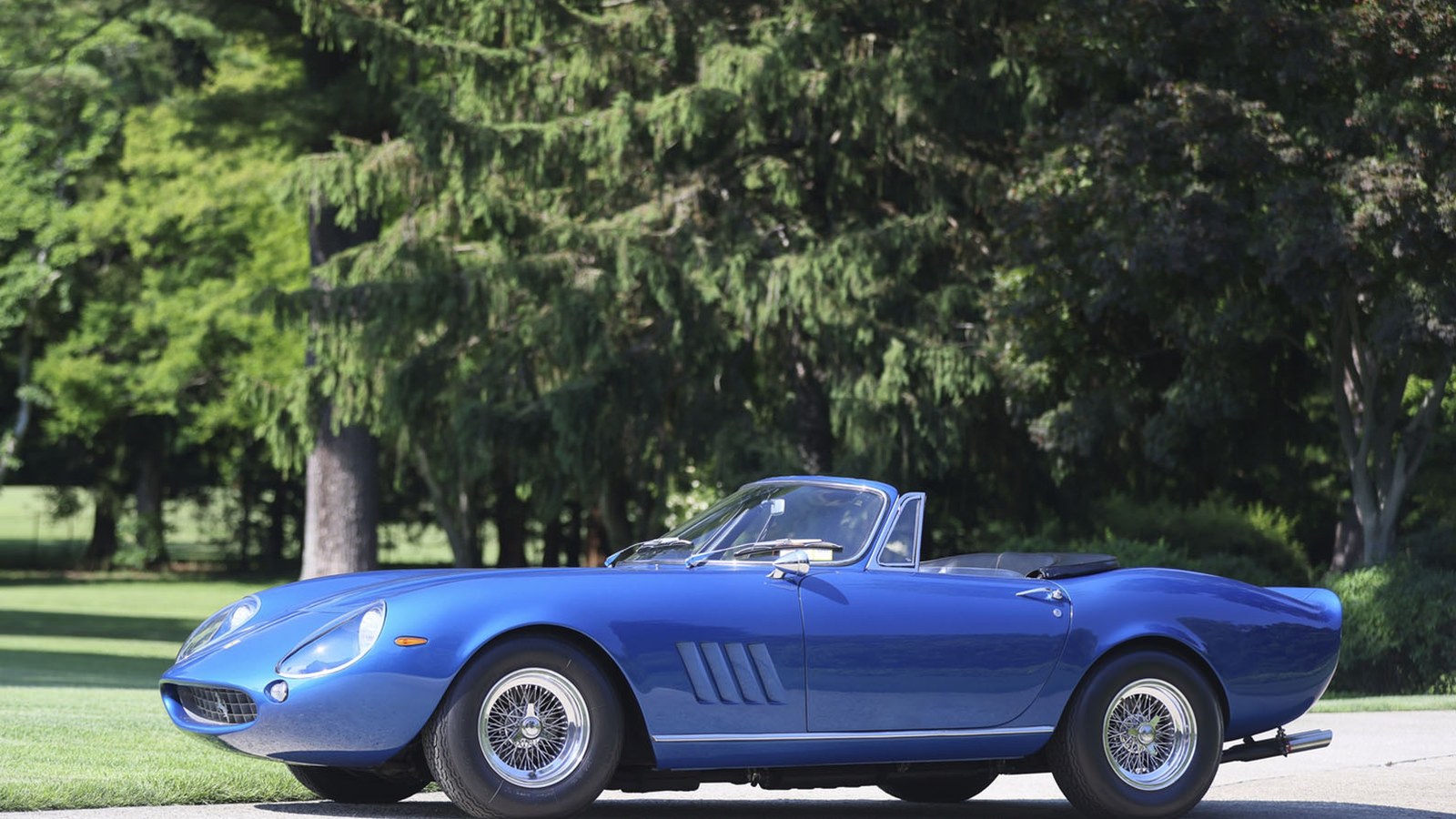
Rétromobile left Paris for the first time in 50 years, and the New York edition opens today at the Javits Center with Steve McQueen's $15,000,000 to $20,000,000 Ferrari NART Spider, Jerry Seinfeld's Targa Florio winning Porsche 908/03 and the Maybach that JAY-Z and Ye cut apart in the "Otis" video.
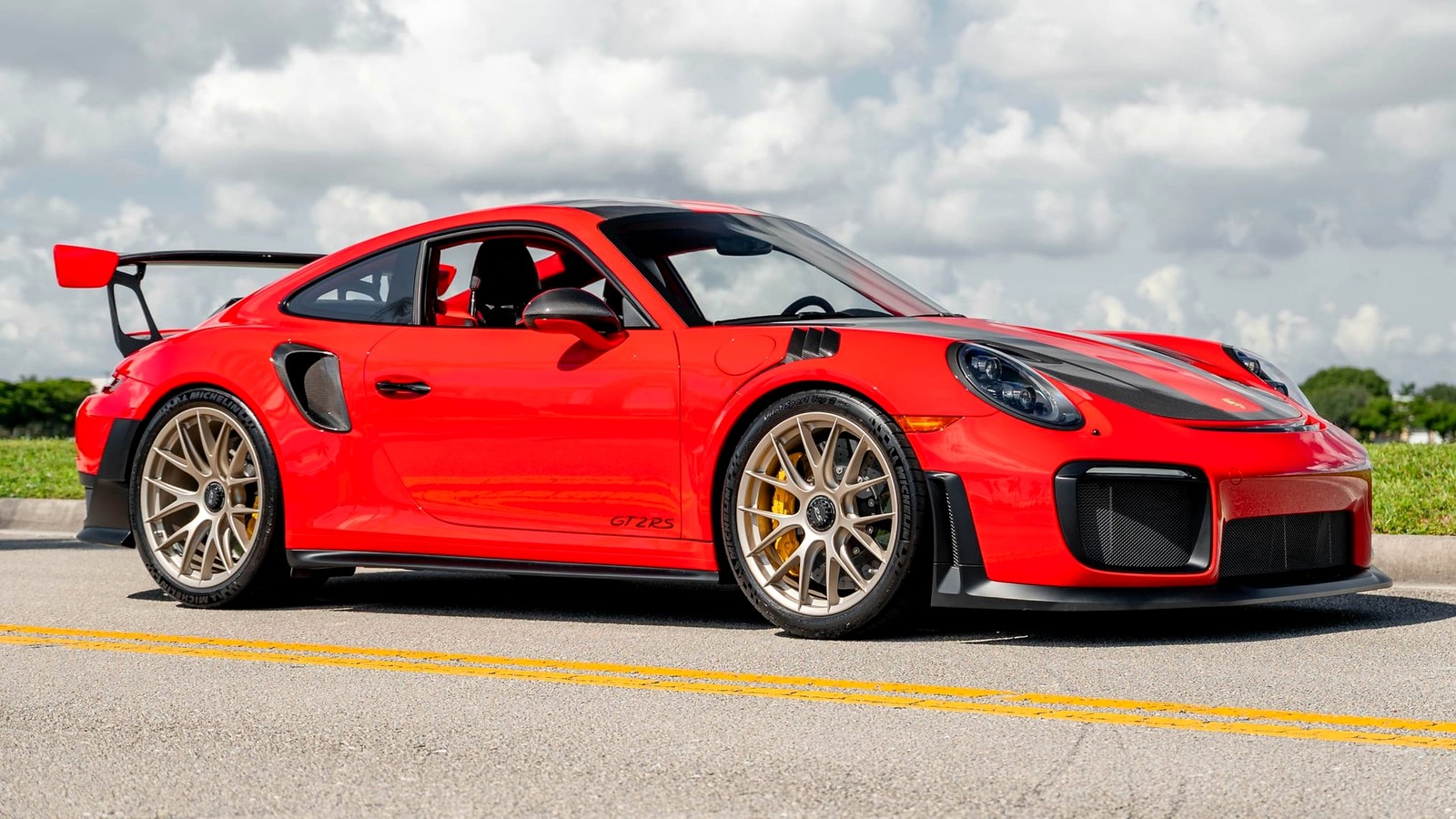
From Nov 5 to Nov 19, 2026, 40 of 77 Porsche 911 GT2 RS listings in the US and Canada had their price cut, and only 3 went up. The typical asking price slipped from $770,551 to $761,440. On Bring a Trailer, five of the last seven GT2 RS lots did not sell, and most bids landed well below what dealers are asking.
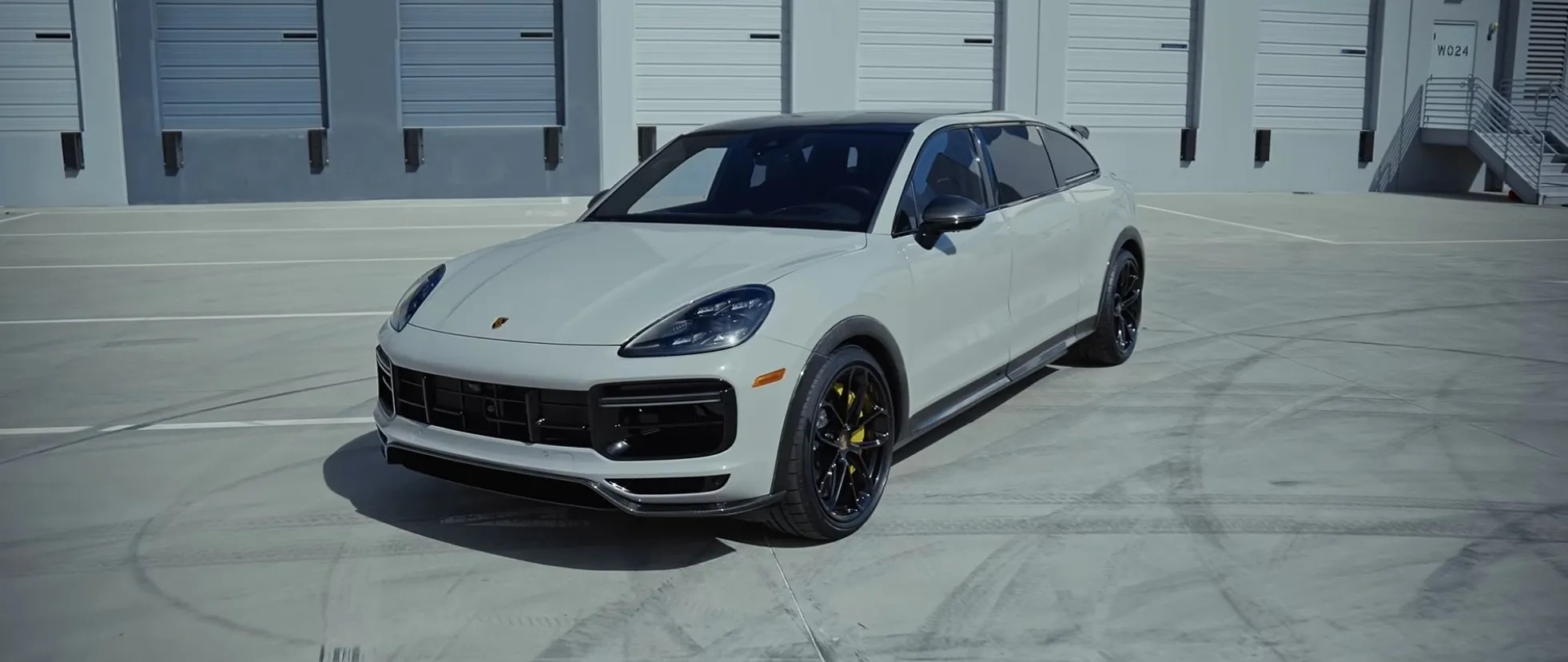
Two years after Mark Zuckerberg posted the finished van, West Coast Customs has released a video of the build. The shop cut a 2023 Porsche Cayenne Turbo GT in half, stretched it about 30 inches, and engineered powered sliding doors and a third row for his wife, Priscilla Chan.