Karma Eximius 1: A one-off V8 hybrid track car with close to 1,200 hp, shown at Wynn
Karma has started a bespoke program called Eximius. Its first car is a one-off, four-seat track version of the Revero for a single client. Karma says the plug-in series hybrid will get a 6.2-liter V8 and close to 1,200 hp before delivery in 2027, with 0 to 60 mph in 2.7 seconds.
By Exotic Car TrendsPublished 4 min read
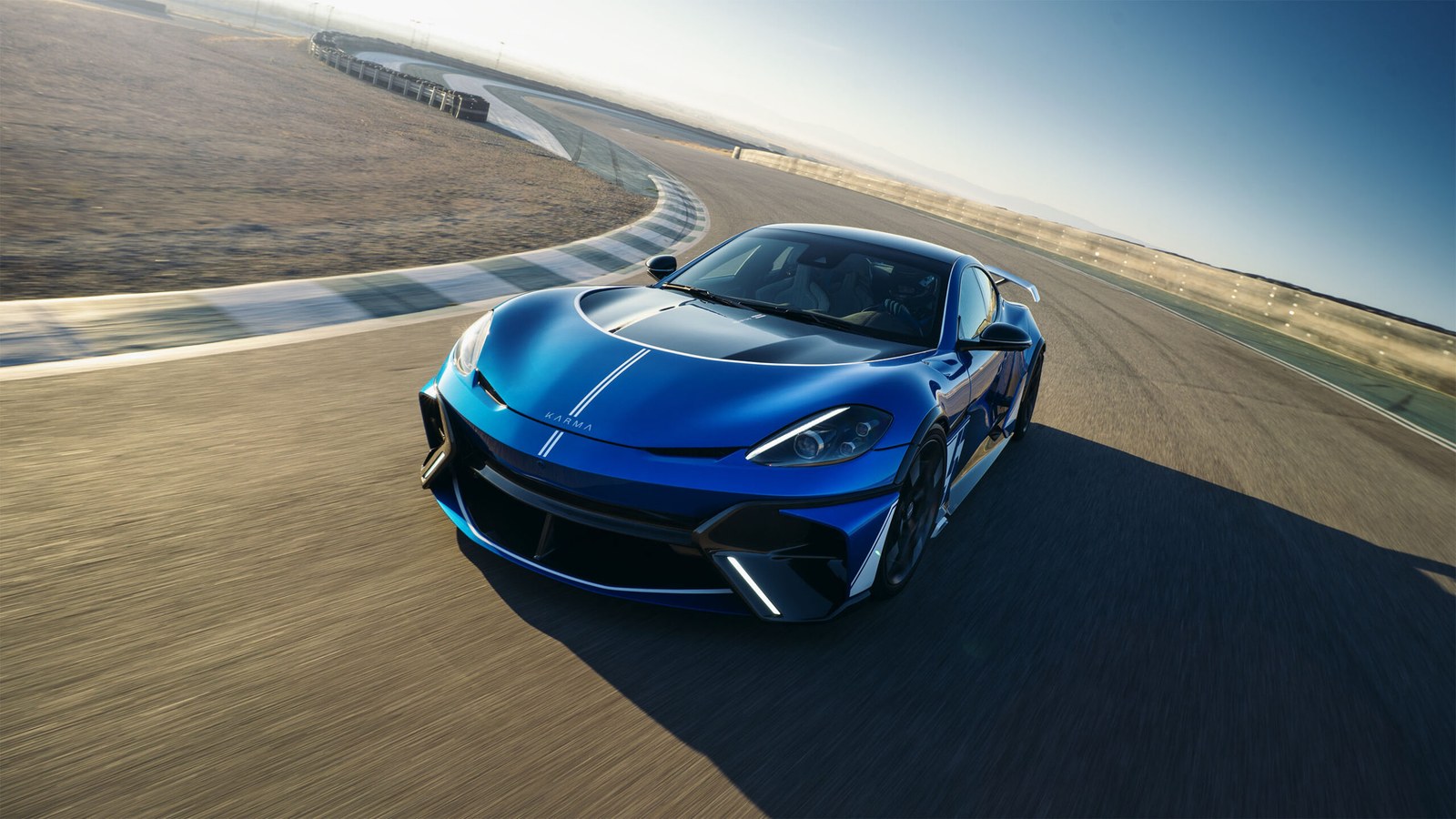
Rendering. Karma's Eximius 1, a one-off track version of the Revero.
Karma Automotive used the Concours at Wynn Las Vegas to launch Eximius, a new program for one-off cars. The first one, Eximius 1, was shown on Oct 31, 2026. It's a Revero sedan rebuilt as a four-seat track car with carbon bodywork, a full-width rear wing and racing seats. Karma says that before it's delivered in 2027, it will get a plug-in series hybrid system built around a 6.2-liter V8, with close to 1,200 hp in total (Karma via PR Newswire).
The buyer is an existing Revero owner, and Karma hasn't named them. CEO Marques McCammon said the car "began as a conversation with an elite client who loves their Karma Revero, but wanted something more extreme and unexpected." He added that the program "effectively deletes the word 'no'" from conversations about what's possible. Karma calls the car "ongoing development," so the performance numbers are still targets.
Powertrain and performance
Karma's numbers are 550 hp from the engine side and 645 hp from the battery, for close to 1,200 hp. Car and Driver adds the two together and reports 1,195 hp (Car and Driver). Karma estimates 0 to 60 mph in 2.7 seconds and a top speed above 200 mph. It's still a series hybrid, the way every Karma has been: the combustion engine mainly makes electricity, and electric motors drive the wheels. The Revero it's based on uses a small turbocharged three-cylinder as its generator. Replacing that with a 6.2-liter V8 is the biggest engineering change here.
Powertrain: plug-in series hybrid with a 6.2-liter V8, rated at 550 hp from the engine and 645 hp from the battery (close to 1,200 hp combined)
Performance (estimated): 0 to 60 mph in 2.7 seconds, top speed above 200 mph
Body: carbon-fiber panels, 50 mm (about 2 inches) wider than a Revero, full-width rear wing, large diffuser
Delivery: 2027, to one client
Design
Every panel except the outer body surface is made of carbon fiber. On the hood and front doors, the bare carbon fades into Karma's Borealis Blue paint. The front lights in the air intakes are angled to form a "><" shape, and the same shape appears again on the rear wing. The "Comet Line" arc on the hood is part of Karma's new design language. Behind each front wheel, a panel carries the number 5, which Karma says matters to the owner. Twin exhaust tips sit behind the driver's-side front wheel.
Inside, there's blue-tinted carbon on the seats, the flat-bottom steering wheel and all four doors, which are bare carbon with a single armrest. The front seats are Recaro carbon buckets trimmed in blue Alcantara, blue leather and a lighter Alcantara Karma calls Moondust. The pedals are machined from billet aluminum. The center console has only the basics: the gear selector, window switches, a key holder and an emergency kill switch. The owner's carbon racing helmet is strapped into the back seat.
Rendering. The Revero's shape is still there under the wing and wider arches.
Rendering. Bare carbon on the hood fades into Borealis Blue paint.
Rendering. The number 5 was the owner's request.
Rendering. The cabin has Recaro carbon buckets, blue Alcantara and a simplified console.
Rendering. The owner's helmet has its own spot in the back.
Where Eximius fits at Karma
Eximius sits above Karma's existing Studio personalization program. Studio handles trim and finishes. Eximius lets a client change the body, the powertrain and other performance parts, working directly with Karma's design and engineering teams. Car and Driver reports that Karma will build no more than nine Eximius cars from each production model (Car and Driver). Karma builds its cars at its plant in Moreno Valley, California.
The Revero itself is being phased out. The Gyesera Grand Coupe, a four-seat plug-in series hybrid with the same basic design idea, reaches dealers in December 2026. The two-door Amaris GT is due in the fourth quarter of 2027, and the Kaveya, a coupe with more than 1,000 hp, in the first quarter of 2028. Karma grew out of Fisker Automotive's original Karma sedan, so Eximius 1 also works as a send-off for the Revero.
Analysis
Our take
Eximius 1 tells you more about Karma than about the car market. The company builds cars in the hundreds, and it's using a concours reveal to show it can do the kind of one-off work that Porsche Sonderwunsch, Bugatti Sur Mesure and Rolls-Royce Coachbuild do for much bigger brands. Putting a 6.2-liter V8 into a car designed around a three-cylinder generator is a serious engineering job. That's why we're cautious until the car is finished. Karma's own numbers are estimates, the release says the powertrain will be fitted before delivery, and the official images look like renderings.
What it means for buyers
This specific car is already spoken for, and Karma hasn't given a price. What matters for other buyers is that the program exists. A Karma owner who wants more than Studio can offer now has a factory route to a car that's truly one of one, built in California. Expect each one to cost far more than a production Karma. Resale is the big unknown. Factory one-offs from small brands have a much thinner collector market than one-offs from Ferrari or Rolls-Royce, so for now, think of an Eximius car as something you buy to keep and use, not as an investment.
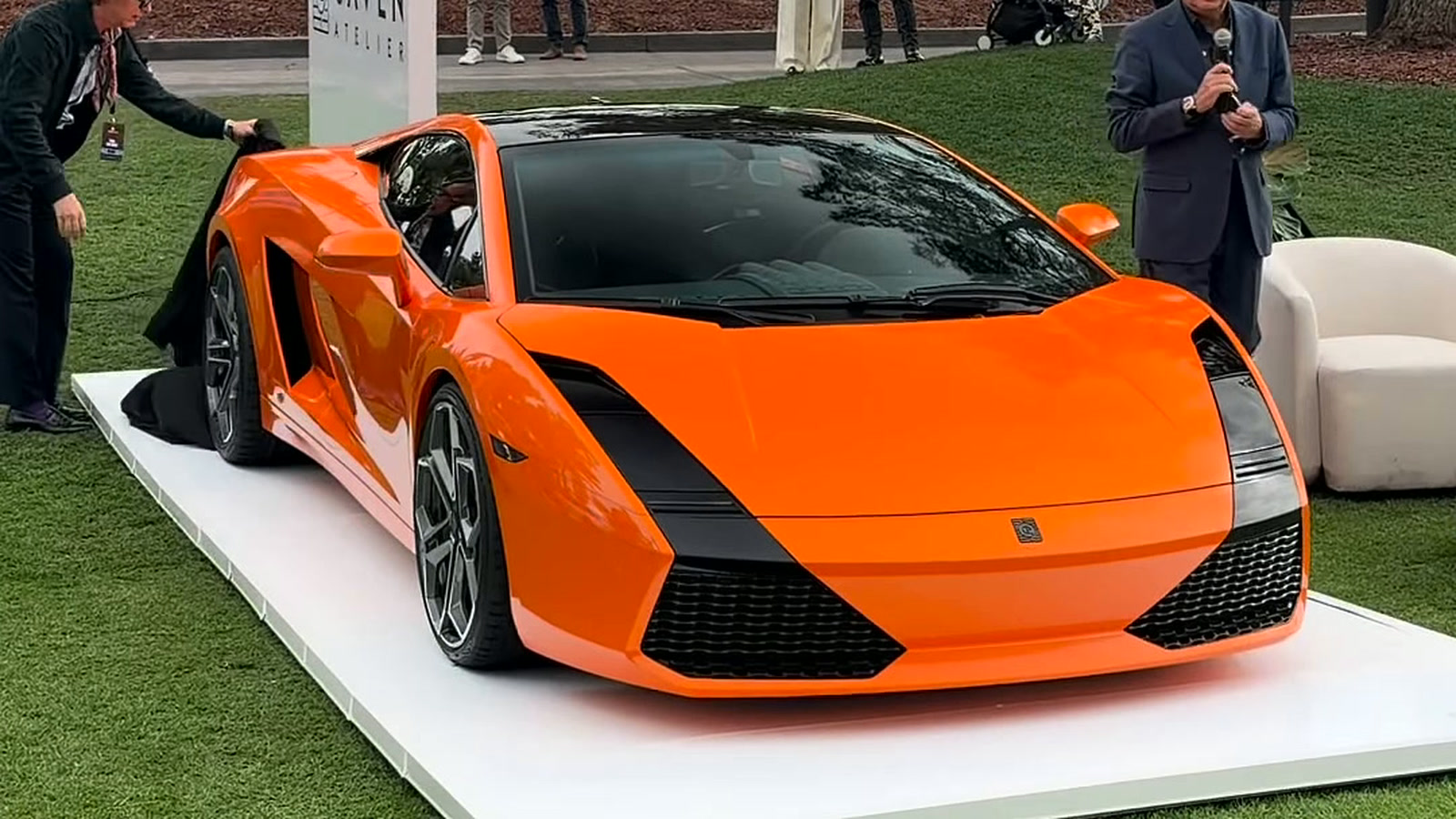
Fabrizio Giugiaro, who designed the original Lamborghini Gallardo at Italdesign, has redrawn it for CAVËN Atelier. The HOMMAGE 26 has a new carbon body, a manual V10 that revs to 8,500 rpm and up to 560 hp. Only 25 will be built, each from a first-generation Gallardo, starting at €900,000 (about $1,005,000) before taxes and the donor car.