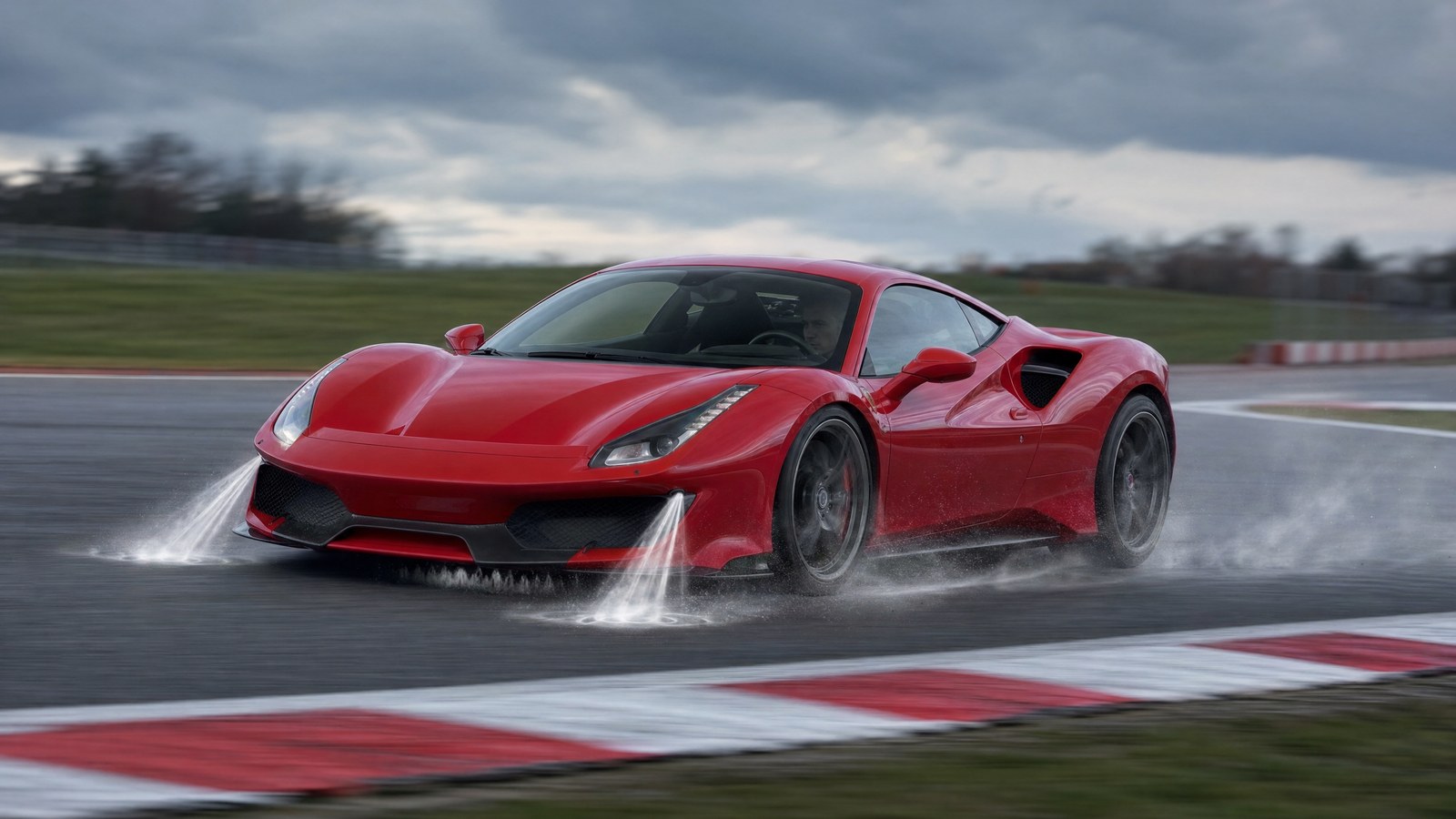
Ferrari has a patent for a car that fires jets of compressed air to push itself down onto the road, giving the tires more grip so the car can corner, brake and accelerate harder. Ferrari CEO Benedetto Vigna confirmed it in an interview with the Hindustan Times, reported on Oct 18, 2026. He spoke in New Delhi, where Ferrari had just shown its first electric car, the Luce, in India for the first time. According to the paper, it's the first time Ferrari has confirmed the patent on the record.
Yes, there is a patent from Ferrari in 2019 from our colleague. I know it very well.
— Ferrari CEO Benedetto Vigna, to the Hindustan Times
The colleague is Ferrari engineer Fabrizio Favaretto, the named inventor on US patent 11,072,381, "High-performance car with gas pushers" (Google Patents). The idea is the opposite of a flying car. Every jet in the design is there to keep the car on the ground, not lift it off.
How Ferrari's air-jet patent works
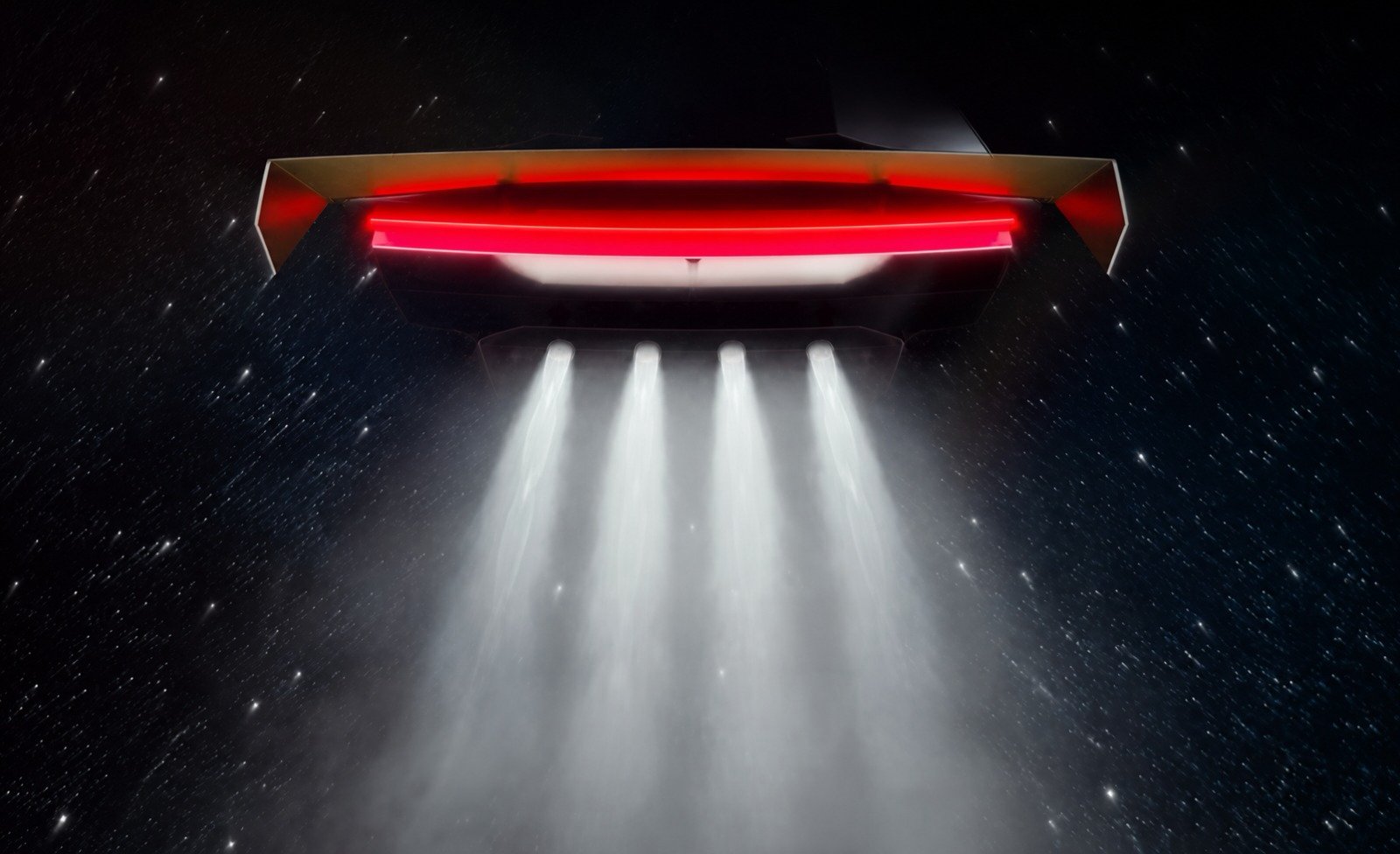
Once a car's tires reach the edge of their grip, it can't accelerate, brake or turn any harder. Ferrari's patent gets around that by adding a push that doesn't come from the tires at all. A tank of compressed air (the patent gives 700 to 900 bar as an example, roughly 10,000 to 13,000 psi, per The Drive) feeds small nozzles that fire air out faster than the speed of sound. The patent describes several jets, each with its own job:
- Down: a jet near the middle of the car points straight up, pushing the car down for more grip.
- Sideways: side jets push back against the force that throws a car outward in a corner.
- Braking: a front jet helps slow the car.
- Acceleration: a rear jet adds a shove when pulling away.
- Under the floor: a jet speeds up the air under the car, lowering the pressure there and pulling the car toward the road. The Drive compared it to a fan car without the fan.
Each jet has several nozzles of different sizes. As the tank empties and pressure drops, the car's computer switches to a bigger nozzle to keep the push steady. The patent's example is a push of about 5,000 newtons, or roughly 1,100 pounds of force (Google Patents).
To refill the tank, a compressor driven by the wheels kicks in when the car brakes, turning energy that would normally be lost as heat in the brakes into stored air. A simpler version skips the compressor: the tank is filled while the car is parked, and the jets are saved for emergencies or a single fast lap. Another swaps the air for small fuel-burning pulse jets. By the patent's estimate, the whole system adds about 40 to 45 kg, or roughly 90 to 100 pounds (Google Patents; Hindustan Times).
Why push down instead of lift
Pressing a car harder into the road is the same goal as the wings and body shaping on a modern Ferrari, just done with air jets. The patent spells out the payoff: on racing slicks, every extra pound pressing the car down can turn into about 1.5 pounds of extra grip, while on a good road tire it's closer to 0.8 pounds. So the downward jet pays off most on track tires.
The patent also admits a catch. Firing jets around the body could upset the airflow the car already relies on for downforce, so it suggests using them mainly at low speeds, such as pulling away or a very tight bend, or in an emergency stop (Google Patents). The Drive noted that jets moving air that fast would also be extremely loud.
When Ferrari filed it
- Dec 27, 2018: first filed in Italy.
- Dec 23, 2019: filed in the US. That's the "2019" Vigna mentioned.
- Jul 2, 2020: US application published.
- Jul 27, 2021: granted as US patent 11,072,381. Google Patents lists it as active.
The Drive and other car sites wrote about it in 2023, but Ferrari hadn't confirmed it on the record until now, according to the Hindustan Times.
The Tesla Roadster connection
The patent is back in the news because of Tesla. On Oct 15, 2026, at a SpaceX test site in Texas, Tesla's new Roadster rose on jets of compressed air and cleared a row of five parked Teslas (Hindustan Times; Mint). Both companies reached for the same basic idea, gas jets on a car, but aimed them in opposite directions: Tesla to lift the car, Ferrari to hold it down. Full details are in our Tesla Roadster coverage.
Vigna didn't claim Tesla copied anything. Asked about Tesla's demonstration, he described the test Ferrari applies to any new technology: "What is important is that we understand if the technology we bring forward is a technology that delivers unique emotion, driving thrill, or something that is more on the sensational side."
What happens next
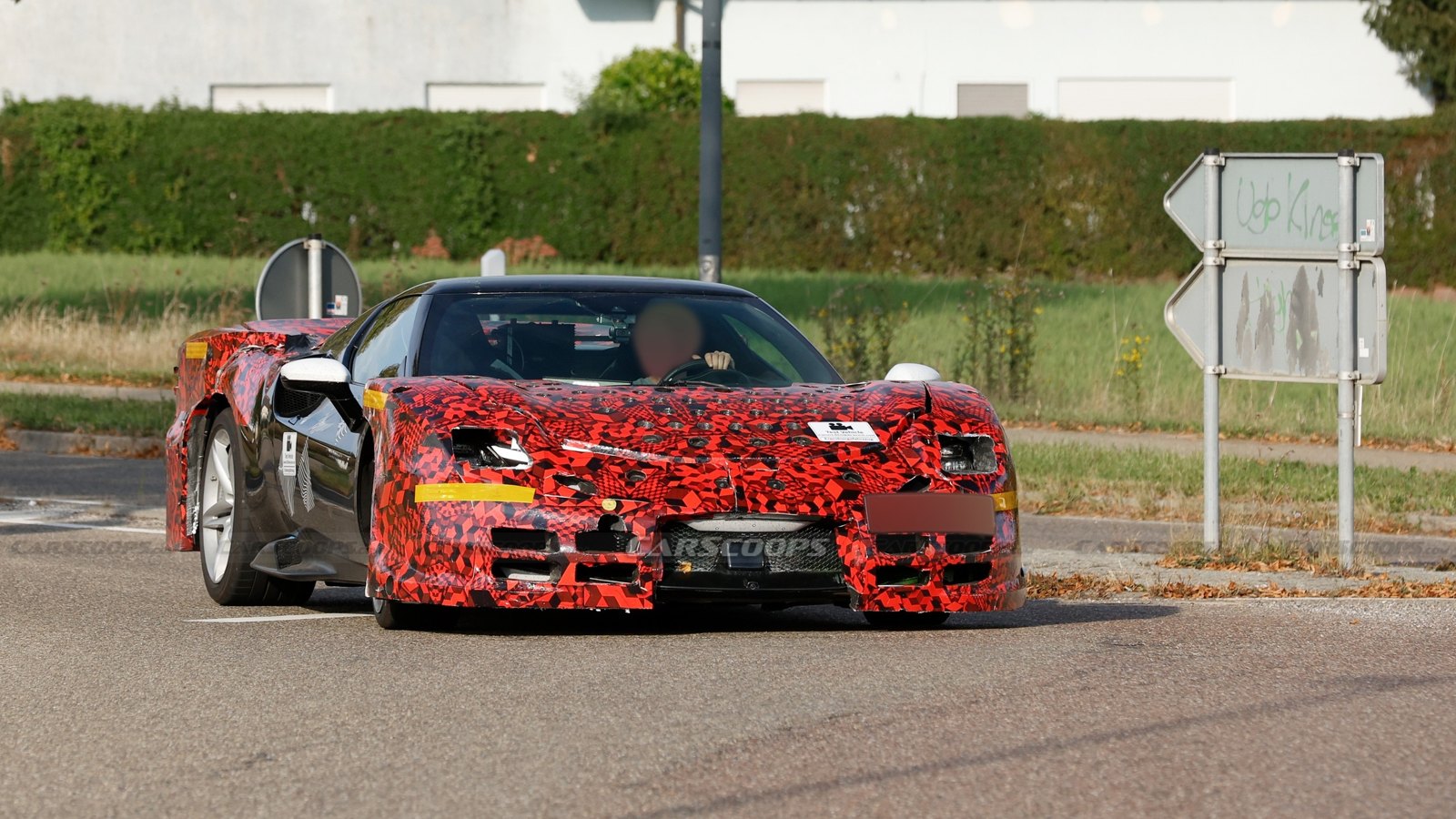
Ferrari owns the patent, and its CEO knows it well. What isn't confirmed is any plan to use it: Ferrari hasn't announced a production car with air jets, and no Ferrari on sale today has them. A patent protects an idea; it isn't a promise to build it.
Analysis
Our take
This is clever engineering with a very Ferrari goal: making a car faster around a corner, not putting on a show. The smartest part is the wheel-driven compressor, which lets the car make its own air under braking instead of needing a fill-up after every run.
The hurdles are real, though: air stored at extreme pressure, the noise, and jets that can fight the car's own aerodynamics at speed. Until Ferrari shows a car, this is a look at how Maranello thinks, not a preview of a showroom feature.
Analysis
What it means for buyers
Nothing changes for Ferrari prices today. No car you can buy has this system and Ferrari hasn't said one is coming, so it's no reason to delay a purchase or to expect current models to lose value. Current asking prices are on our Ferrari market dashboard.