The McLaren F1 GT: The Rare Longtail Road Car Most Fans Have Never Seen
McLaren built just three road-going F1 GT Longtails in 1997, mostly to win a rules fight with Porsche and Mercedes. The first one, the green XP GT prototype, has just changed hands.
By Exotic Car TrendsPublished 6 min read
McLaren F1 chassis 056, the XP GT: the first of just three F1 GT Longtail road cars.
Most car fans know the McLaren F1. Ask them about the McLaren F1 GT, and you'll usually get a blank look. That's because McLaren only built three of them, and for most of their lives you couldn't see any of them. One sat in the factory, one went to a royal family in Brunei and one went to a museum in Japan (Hagerty, Supercar Nostalgia).
The F1 GT is the road-going "Longtail": an F1 stretched by about two feet, with a longer nose, a long swept-up tail and wider rear fenders, built in 1997 so McLaren could go racing with the same shape (McLaren, Wikipedia). The very first one, a dark green prototype called XP GT, has just changed hands again, which makes this a good moment to tell its story.
A road car built to win a rules fight
Gordon Murray, who designed the F1, never meant it to race. Owners talked him into it, and the racing F1 GTR won the 1995 Le Mans 24 Hours on its first try (Octane, Galerie Automobile). Then Porsche showed up in 1996 with the 911 GT1, a purpose-built racing car with just enough road versions to make it legal. It beat the McLarens on its debut at Brands Hatch that September (Hagerty).
Advertisement
Murray thought that bent the rules, but he played along. Back in May 1996 he'd already sketched a red "McLaren F1 Evolution" with a longer nose and tail for more grip. To race it, he needed a road car with the same body first. In his words, quoted by Hagerty from the book Driving Ambition, McLaren had to "build a new road car, sell one a month before the first race, have dealers, brochures and parts back-up for it." He called it "a major crash program" (Hagerty).
That road car became the F1 GT. Its job was to make the 1997 F1 GTR Longtail race car legal. McLaren built ten of those racers, with a slightly smaller 6.0-liter V12 and a sequential gearbox. They won five rounds of the 1997 FIA GT Championship and finished second and third overall at Le Mans that year (McLaren). Mercedes still took the championship, and 1997 turned out to be the F1's last season as a factory racer (Hagerty).
That long, upswept tail is the whole point. There's no bolt-on rear wing; the stretched bodywork makes the downforce.
What makes a Longtail different
Park an F1 GT next to a regular F1, and you can spot it right away. Here's what changed:
Much longer. Spec sheets list it at about 194 inches long, roughly 25 inches more than a standard F1, and close to five inches wider (Wikipedia).
No rear wing. The F1 LM had a big rear wing. The GT doesn't, because the long tail alone makes enough downforce. The nose gets extra vents and the fenders are widened to fit bigger wheels (Wikipedia, Supercar Nostalgia).
Same V12, a little lighter. It keeps the road car's 6.1-liter BMW V12 with 618 horsepower, which is more than the air-restricted race car was allowed to make. Kidston says it was about 44 pounds lighter than a standard F1 (Octane, Galerie Automobile).
A fancier cabin. It still has three seats with the driver in the middle, but the GT added ribbed, perforated seat centers and covered the usually bare carbon fiber chassis sides in leather. The F1 book Driving Ambition called it a "stretch limo" version of the world's fastest production car (Supercar Nostalgia, Hagerty).
McLaren itself calls the F1 GT "the ultimate iteration of the F1 concept" (Galerie Automobile, Octane).
Inside, the GT is a proper road car: three seats with the driver in the middle, trimmed here in cream leather.
The brochure that was really a prank
McLaren didn't need to advertise a three-car run. Murray made a brochure anyway, and the reason is great. According to McLaren's Mark Roberts, Murray wanted to walk into a rules meeting with Porsche and Mercedes, slap down a real brochure and price list, and ask where their road cars were. "That's Gordon's sense of humor," Roberts told Hagerty. "Just to wind them up" (Hagerty).
So about a week after the XP GT was finished in early 1997, Roberts, photographer Colin Curwood and a small crew drove it north. They stopped at RAF Leeming in Yorkshire to shoot it next to a BAE Hawk jet, then spent three days chasing light in the snowy Scottish Highlands, including the Skye Bridge. They'd planned to haul it on a trailer but gave up and just drove it, and Roberts says it was "really reliable" (Hagerty, Supercar Nostalgia).
Two fun details from those photos: the car still had a red interior, which Roberts swapped for cream right after the trip because red "never really suited a GT car." That cream cabin became the template for the other two. It was also wearing OZ split-rim wheels, which it still had at Silverstone that May before getting the five-spoke wheels it wears today (Hagerty, Supercar Nostalgia).
A page from McLaren's 1997 F1 GT brochure, shot with this exact car in the snowy Scottish Highlands.
The XP GT on show in Paris at Rétromobile in March 2022, one of its rare public outings.
Where the three cars went
Chassis 056, XP GT. The prototype, and the only F1 ever painted Silverstone Green. McLaren kept it at Woking for 20 years and showed it only now and then, including Brussels in 2013 and Geneva in 2015, where it sat next to the new 675LT and P1 GTR (Supercar Nostalgia, Jalopnik).
Chassis 054. Black with a metal-flake finish, sent to the Brunei royal family in mid-1997 as the tenth and last F1 in their collection. It has stayed in Brunei, apart from the odd trip back to the factory, and Hagerty says it may barely have been driven (Supercar Nostalgia, Hagerty).
Chassis 058. Built in Dark Burgundy for Japanese collector Yoshio Tsuzuki and his ZAZ Museum in Nagoya. The only other F1 officially done in that color was Rowan Atkinson's, though the shades differ. It later went back to McLaren and came out in a silver-and-black two-tone (Supercar Nostalgia, Hagerty).
Why so few people know it
It's mostly about who had them. A factory heritage collection, a royal garage and a private museum are about as hidden as a car can get. The famous Longtails are the race cars, the Gulf-liveried GTRs from Le Mans, and they get the attention (McLaren). Even McLaren's modern "LT" badge, which started with the 675LT in 2015, traces back to those racers rather than the road car that made them legal (McLaren).
So the F1 GT is a strange case: arguably the most complete version of the F1, and a car almost nobody has seen in person.
Advertisement
It just changed hands
Which brings us to the news. In 2017 McLaren sold the XP GT to a collector through Geneva dealer Kidston, and it was shown at Rétromobile in Paris in 2022 (Octane, Autonews.fr). This October, Kidston said it had sold the car again in a private deal for its European owner. Nearly 30 years after it was built, it shows just 175 miles (Galerie Automobile, Octane).
Neither the buyer nor the price was made public, though Octane says it understands the figure is up there with the most valuable cars ever sold. Simon Kidston called it "a true unicorn" and "a true one-off" (Octane).
Of the three F1 GTs, this is the one with the best story. It's the first one built, the car in the brochure, the only green F1 and a car that has barely moved in almost 30 years. Whoever owns it now, we hope it gets out to a few more shows, because it deserves to be better known.
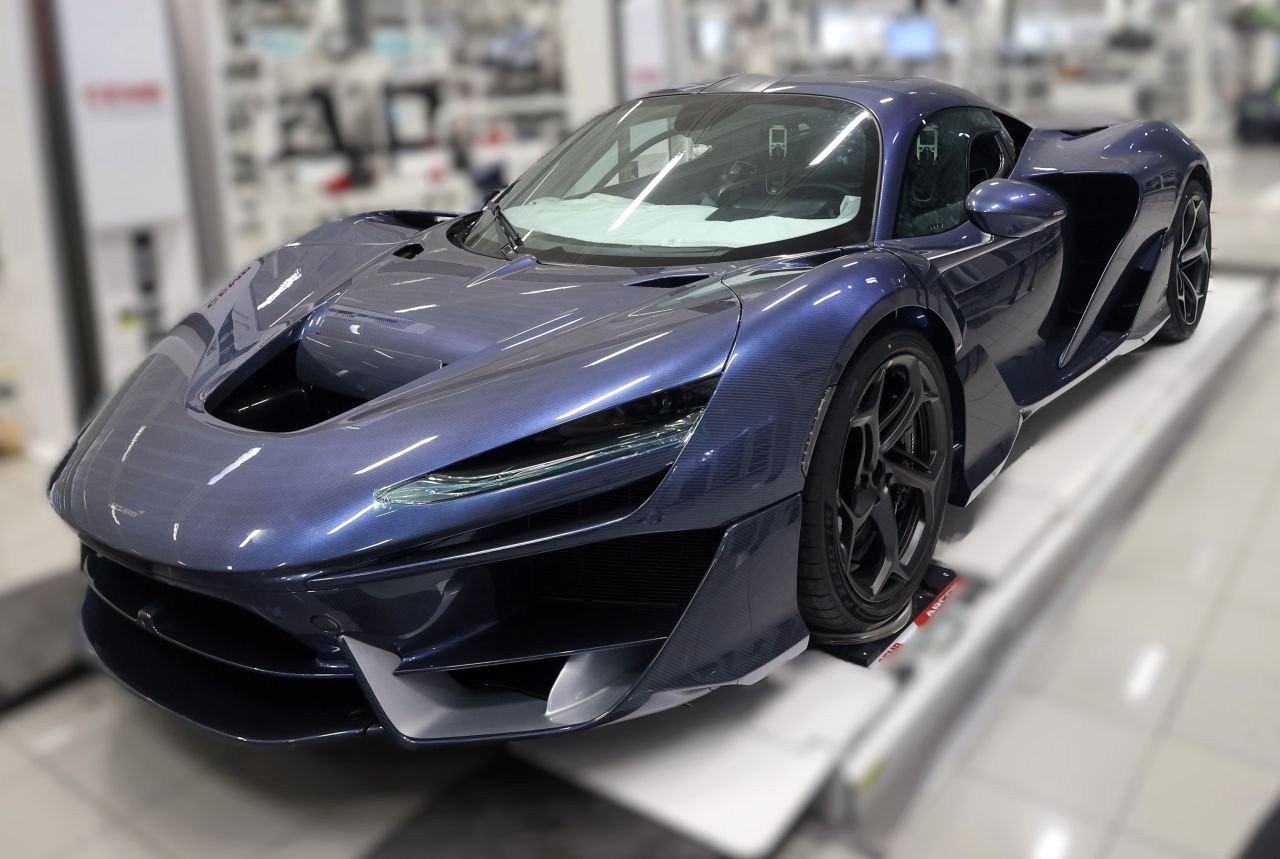
Two finished customer W1s, one in Crystal Blue exposed carbon and one in orange-and-black MSO Carbon Tarocco, have been photographed at the end of the line in Woking. McLaren's 1,258 hp hypercar is finally about to reach owners.
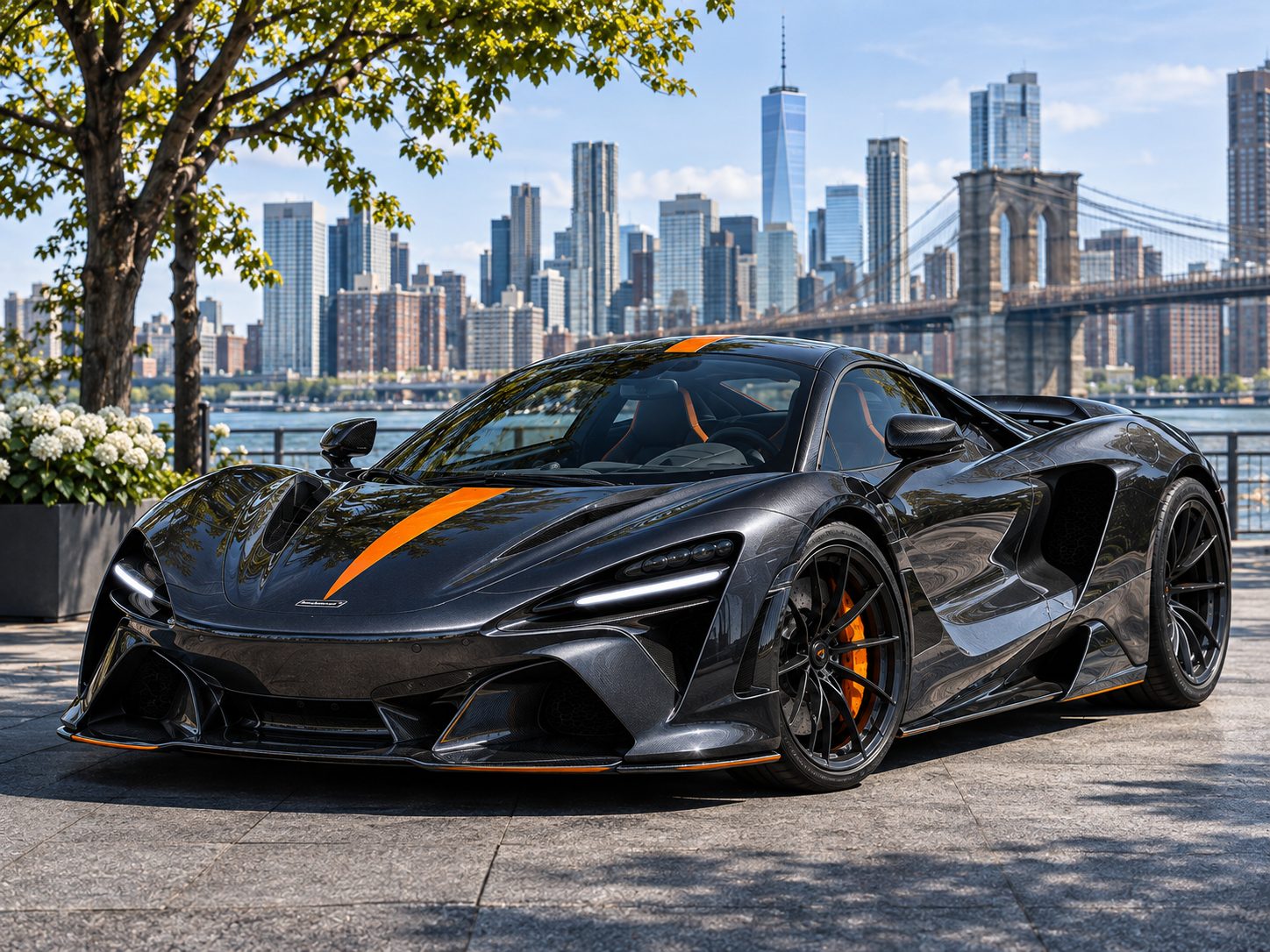
We've been invited to a private McLaren preview in New York on Nov 21, 2026, a first look at the company's newest supercar before it debuts in 2027. We can't say for sure, but we think this could be the 820 — and we can't wait to see it.
Updated Nov 12, 2026 · Published Nov 10, 2026 · 3 min read
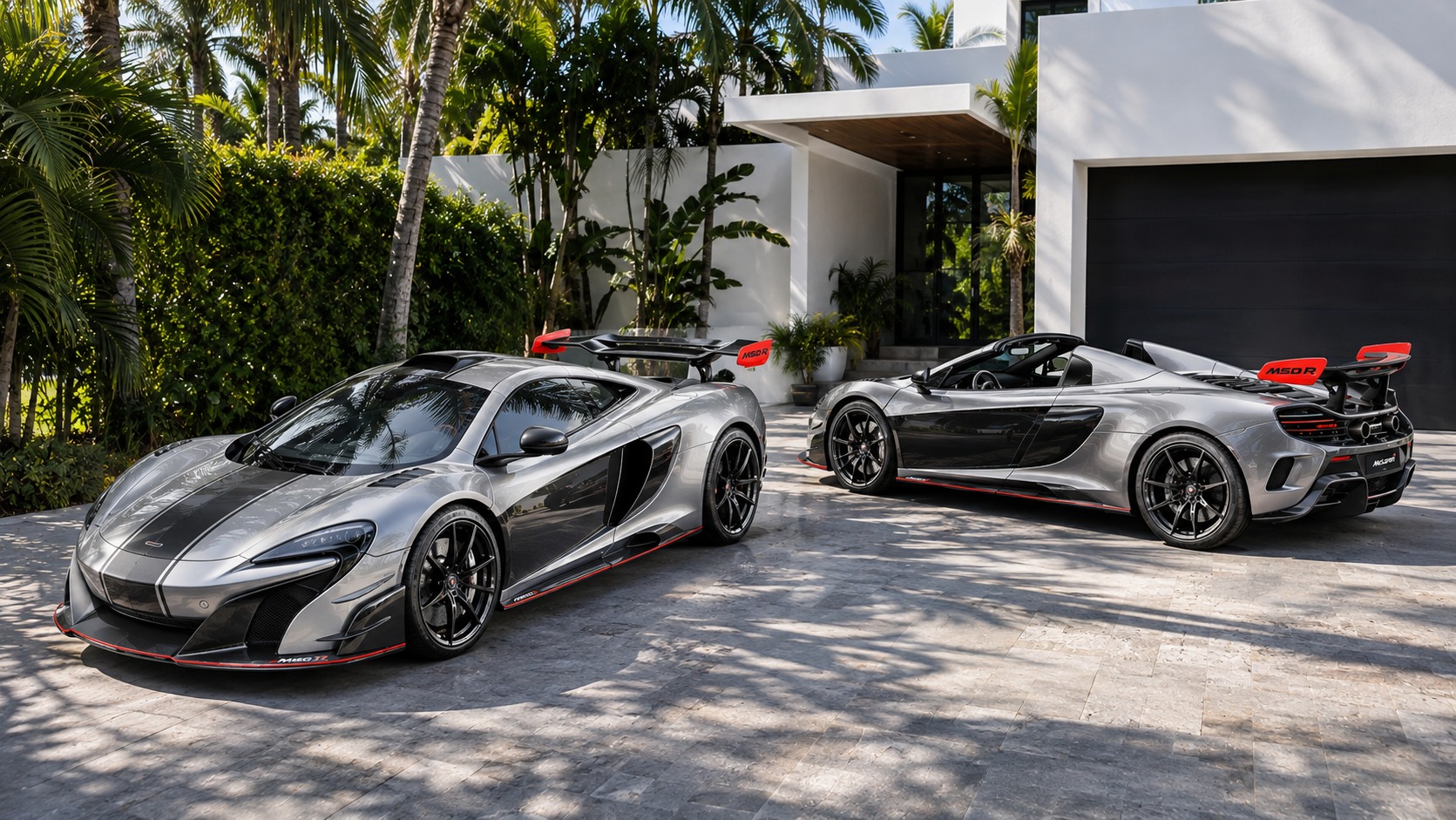
The 675LT was limited to 500 Coupés and 500 Spiders. The MSO HS was rarer still, with just 25 built. But in 2017, McLaren created something almost nobody talks about: one MSO R Coupé and one MSO R Spider, commissioned together for a single customer.