Dione Tesoro: the Testarossa they always wanted, built by hand over 2 years and 8 months
Tom and Debra Kazamek took a red 1980s Testarossa coupe, cut the roof off, put the flat-twelve under glass and rebuilt nearly everything you touch. The result is bold, a little outrageous, and the best argument yet for reimagining an icon.
By Exotic Car TrendsPublished 6 min read
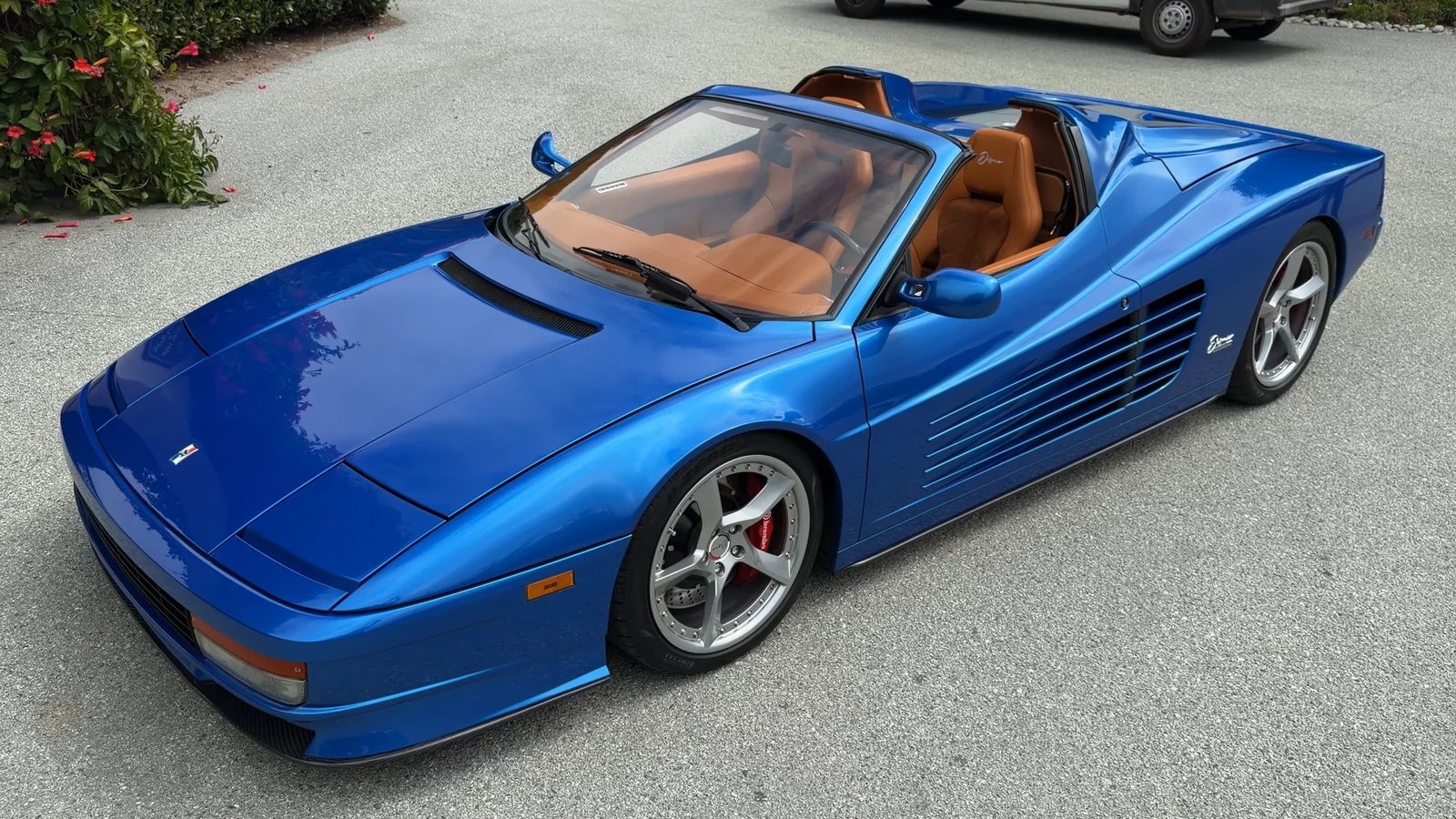
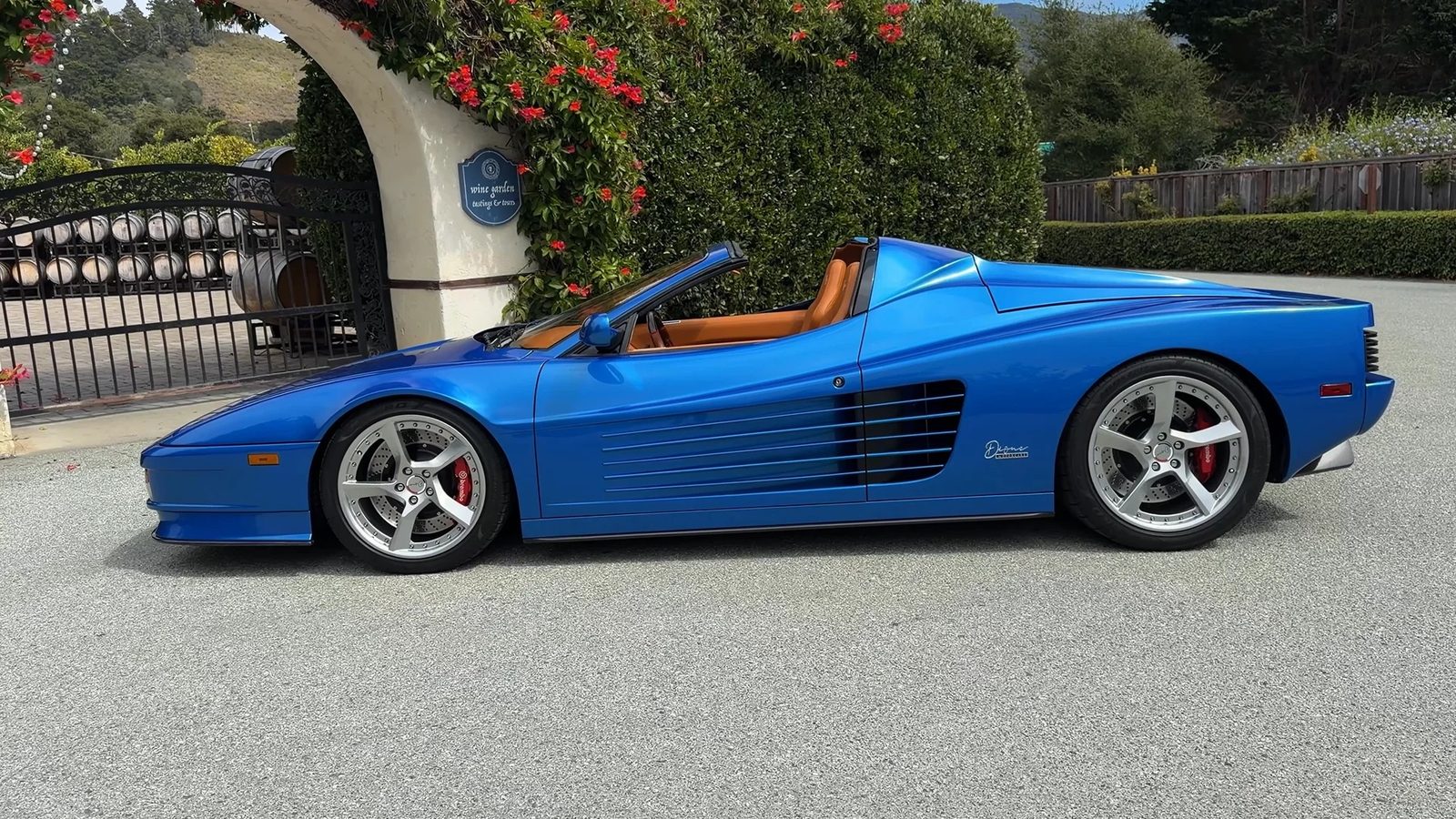
The Dione Tesoro, a Ferrari Testarossa reimagined as an open-top GT.
Every Testarossa owner has a list. The steering wheel lies almost flat, like a bus driver's. The driving position feels like it was designed around somebody else. The fuel system is pure 1980s. And from the moment the car appeared in 1984, people have wondered what it would be like with the roof off.
Tom Kazamek has owned a completely stock 1991 Testarossa, and he carried his own version of that list around for about seven years. He'd already retired, but the idea kept nagging at him, so he went back to work. Together with his wife Debra, he started Dione Motorcars, named for the Greek goddess and run alongside their Touchdown Classic Cars business in Manhattan Beach, California. Two years and eight months and roughly 400 new parts later, the list is crossed off. The car is called Tesoro, Italian for "treasure."
It isn't subtle, and Tom didn't intend it to be.
A red coupe on the lift
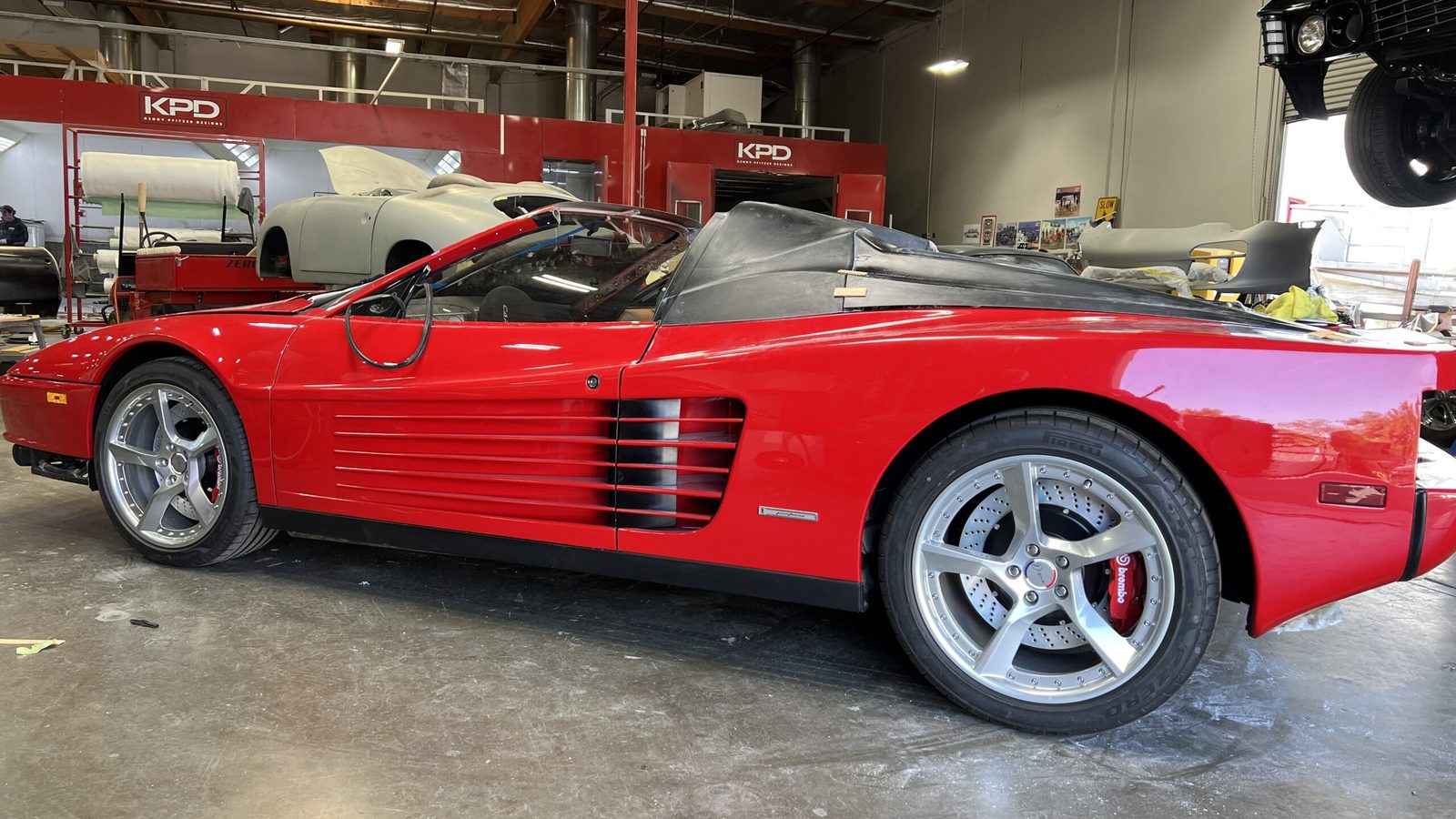
The build started with a red Testarossa coupe. By early 2025 it was sitting in a Southern California shop with no roof, its famous side strakes still red and its cabin open to the rafters. Taking the roof off a mid-engine car is the easy part. Keeping it from flexing like a wet noodle afterwards is the hard part, and the 1980s convertible conversions are remembered mostly for getting that wrong.
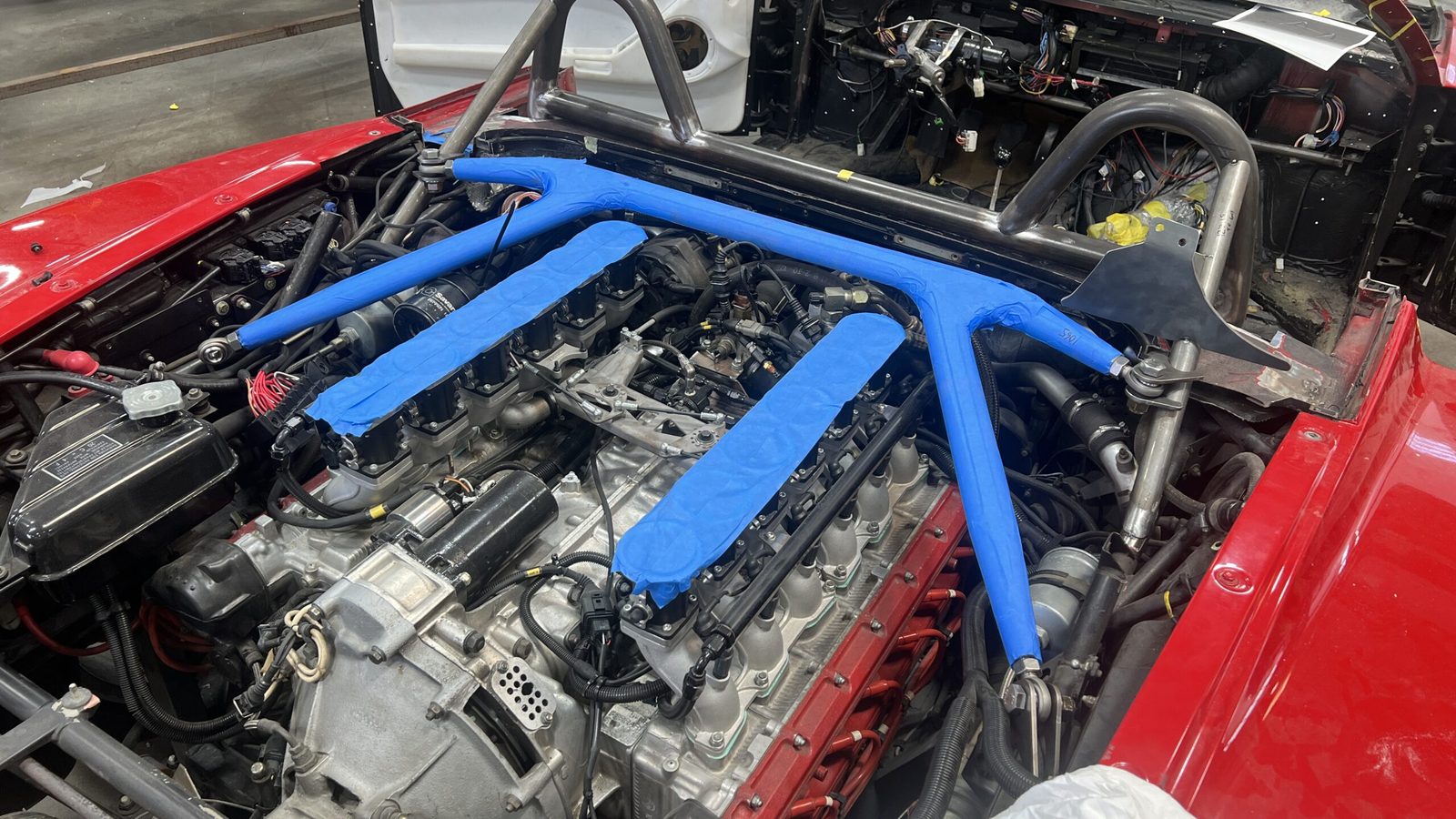
The Tesoro is stiffened in four separate places: roll hoops tied straight into the chassis, a brace across the engine bay, reinforced side structures and an upgraded subframe. You never see most of it. What you notice is that the car feels solid with the top off.
Still red, already roofless: the donor car in early 2025.Roll hoops and bracing going in, June 2025.
The back half, redrawn
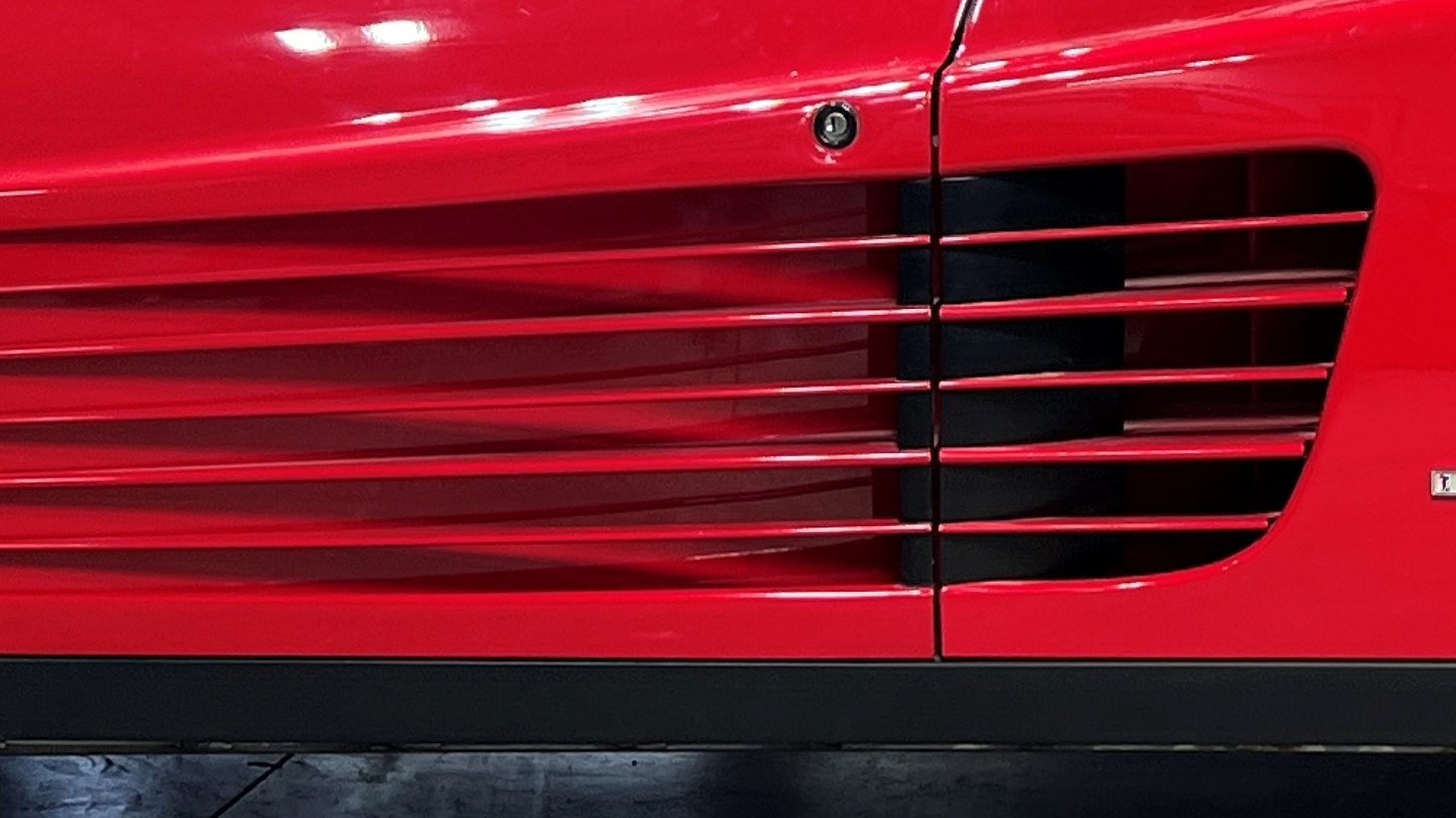
The usual approach is to chop the roof and add a soft top, which is how the old conversions were done. Tom wanted something else. On the Tesoro, the line of the doors carries up and back into a sculpted fairing behind the seats, the way a modern open supercar is shaped. From the side it still reads instantly as a Testarossa. From the rear three-quarter it looks like something Ferrari might have sketched in the 2000s and never built.
That fairing took time. Tom designed it in 3D, and it went through at least five versions before the shape was right. The team 3D-scanned the car's back half so each new panel would fit the original metal exactly. A carbon front spoiler, side skirts and a new rear diffuser were added along the way. So were LED taillights whose lines echo the strakes, and new machined housings for the pop-up headlights, which still flip up exactly the way they should.
The roof isn't gone completely, either. A two-piece, targa-style hardtop lifts off and stows in the front trunk. On a sunny day it's an open car, and if the weather turns you can put the roof back on.
Fairing, version five.The finished profile.
The flat-twelve, on display
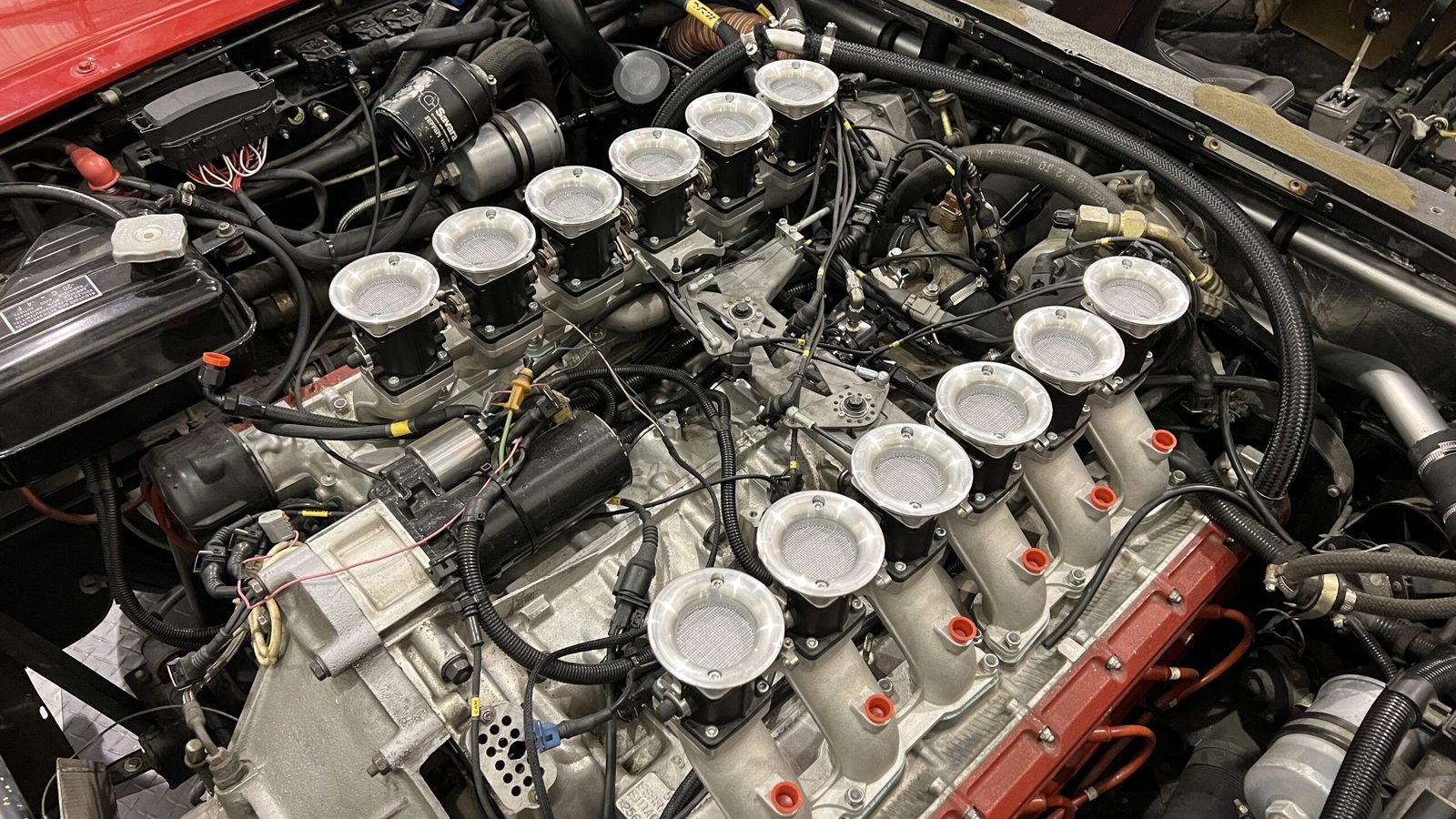
The Testarossa's 4.9-liter flat-twelve used to be buried under the engine cover. The Tesoro puts it on show. The engine got modern fuel injection and new electronics, then twelve individual throttle bodies, one per cylinder, each topped with its own polished filter. Build photos show it at Ed Pink Racing Engines, a famous Southern California race-engine shop.
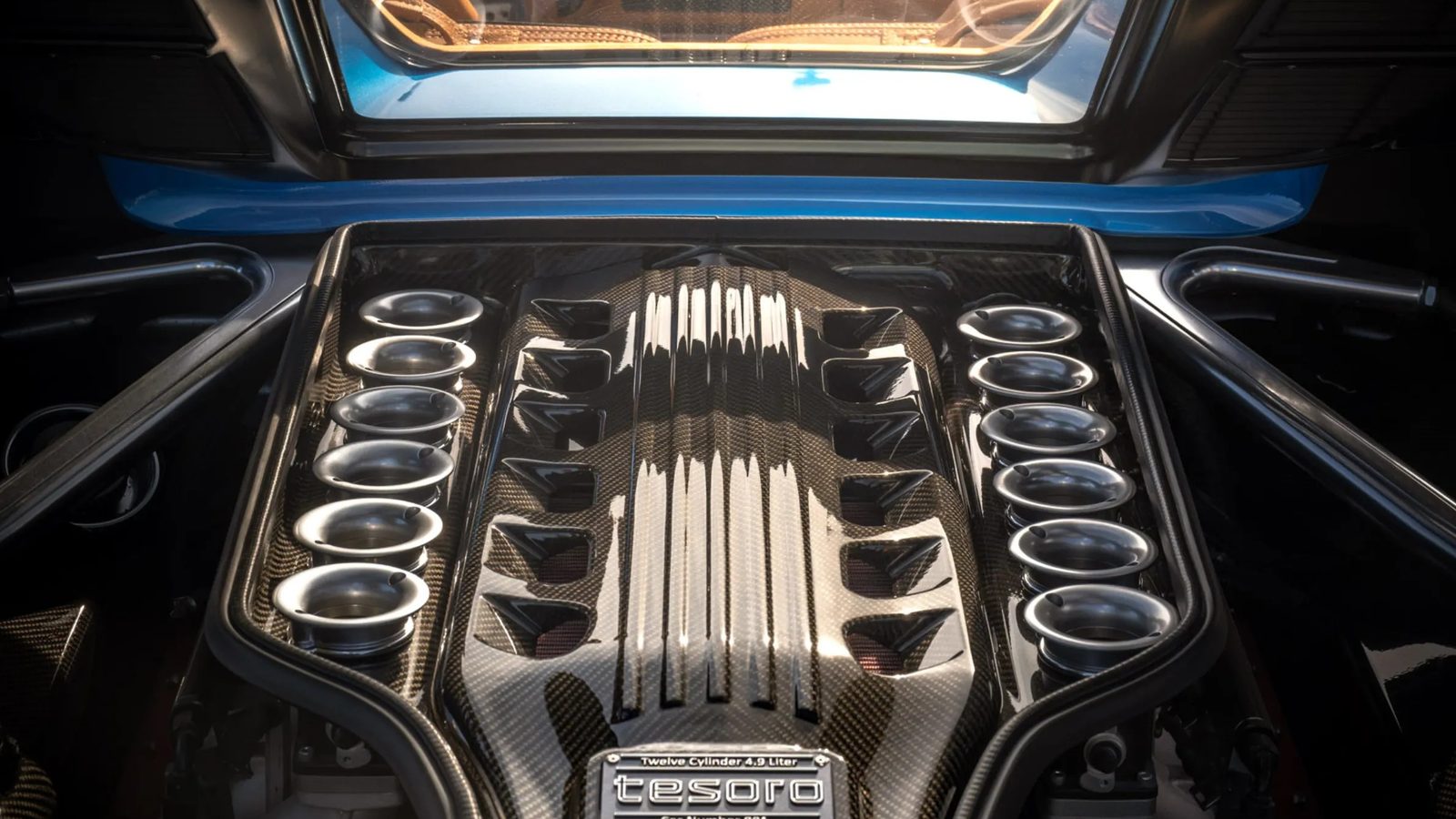
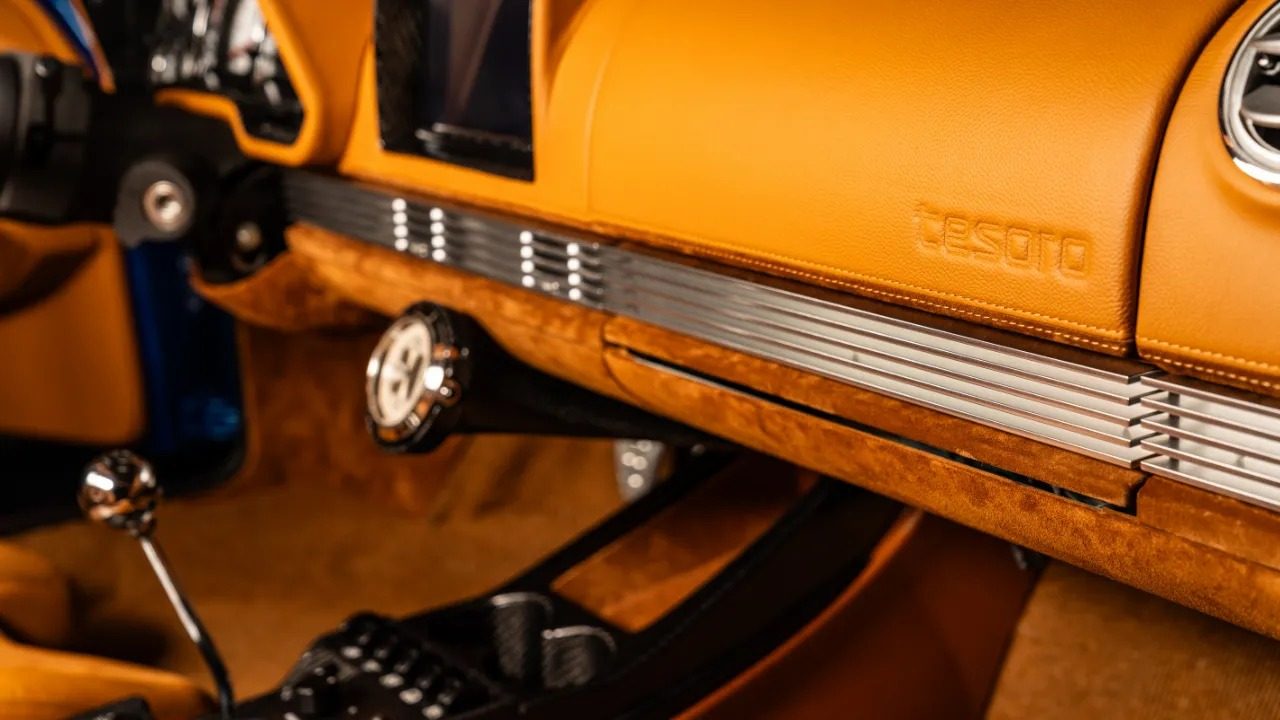
Over all of it sits a glass engine cover. Its fins pick up the side strakes, so the whole back of the car feels designed in one go. A small machined plate on the engine just says "tesoro." Dione hasn't released power figures, and the company is focused on the sound more than the numbers. Tom's verdict is that it sounds amazing, and an open cockpit with twelve throttle bodies right behind your head would be hard to make sound any other way.
Twelve throttle bodies, one per cylinder.The flat-twelve under glass.
Still a real driver's car
This is the part enthusiasts will like most. Dione modernized the car without numbing it. You still get a gated five-speed manual, three pedals and analog gauges, with no electronic driving aids. Around those, almost everything is new:
Steering. The wheel now sits at a natural angle, and speed-sensitive electric power steering takes the effort out of parking.
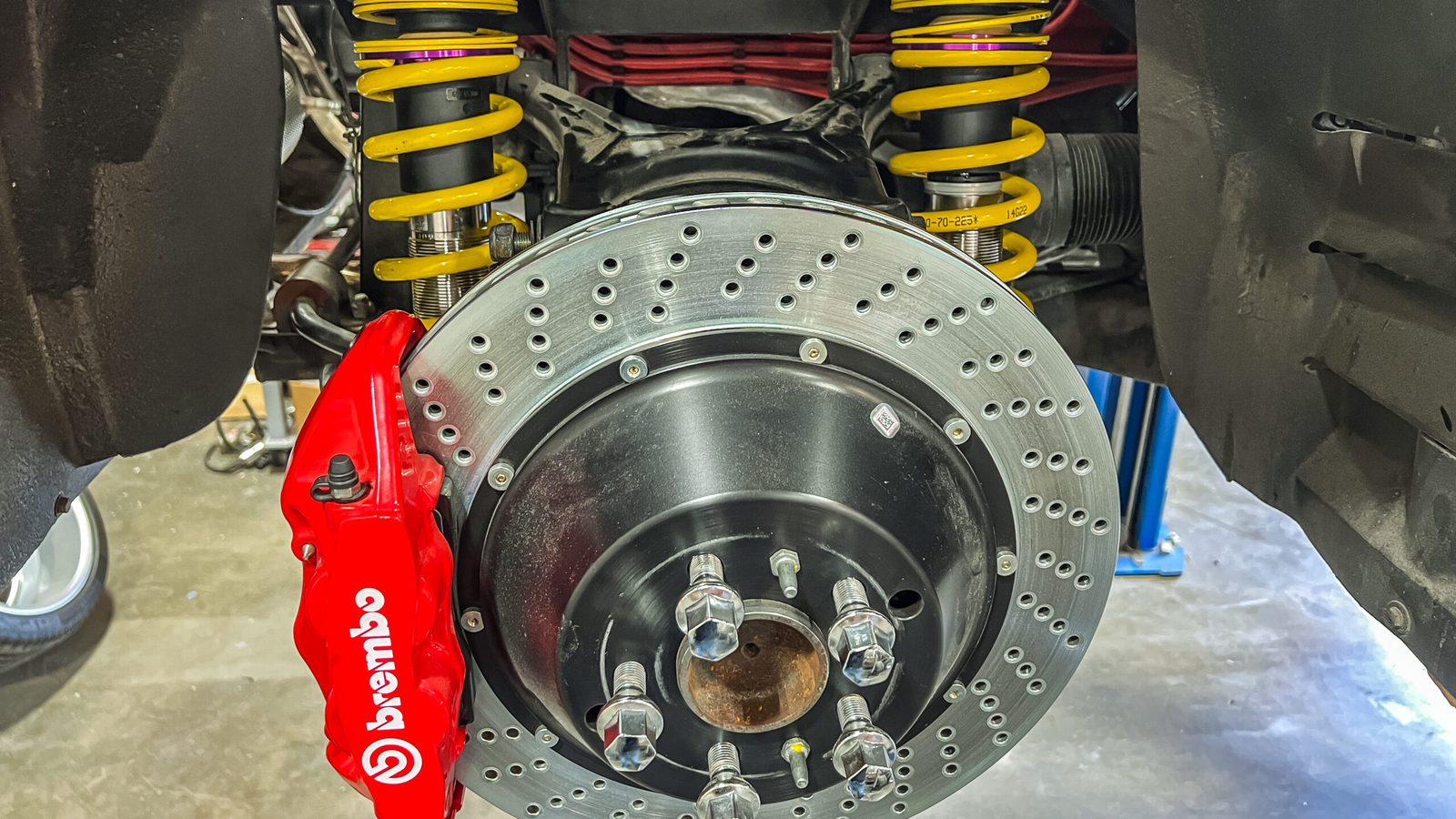
Suspension. Modern adjustable coilovers.
Brakes. Brembo six-piston calipers up front, four-piston at the rear.
Wheels. One-off forged wheels that nod to the classic two-piece designs of the era.
Brembo brakes and new coilovers.
Debra's cabin
If the outside is Tom's, the inside is Debra's. She worked on the car almost every day, and you can see it in the cabin. The dashboard, door panels, console and seats are all new, shaped with soft curves and covered in tan leather, suede and French seams. Black caviar-textured leather surrounds the gauges, and the steering wheel is cross-stitched leather and carbon. The Dione script is stitched into the headrests.
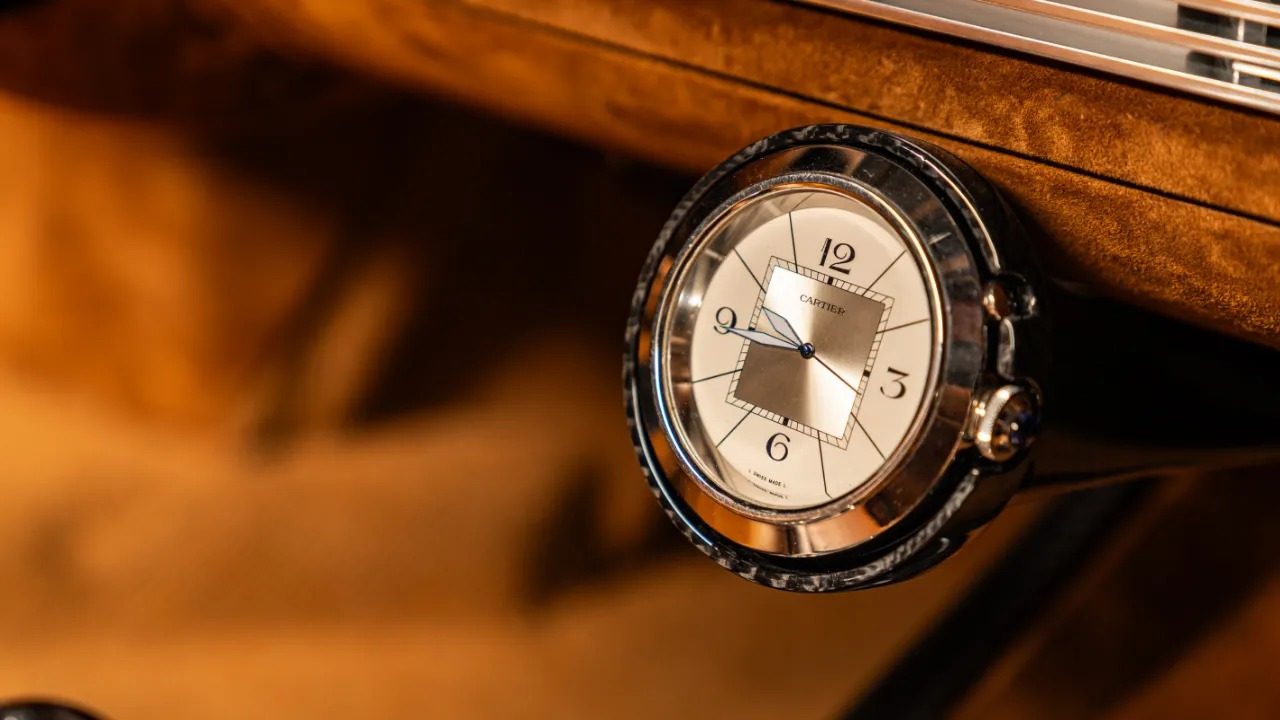
The signature detail is the clock. A Cartier Pasha clock, set with a jade jewel, sits in the dash. Debra pushed for it even though not everyone agreed, and she was right. It steals the show.
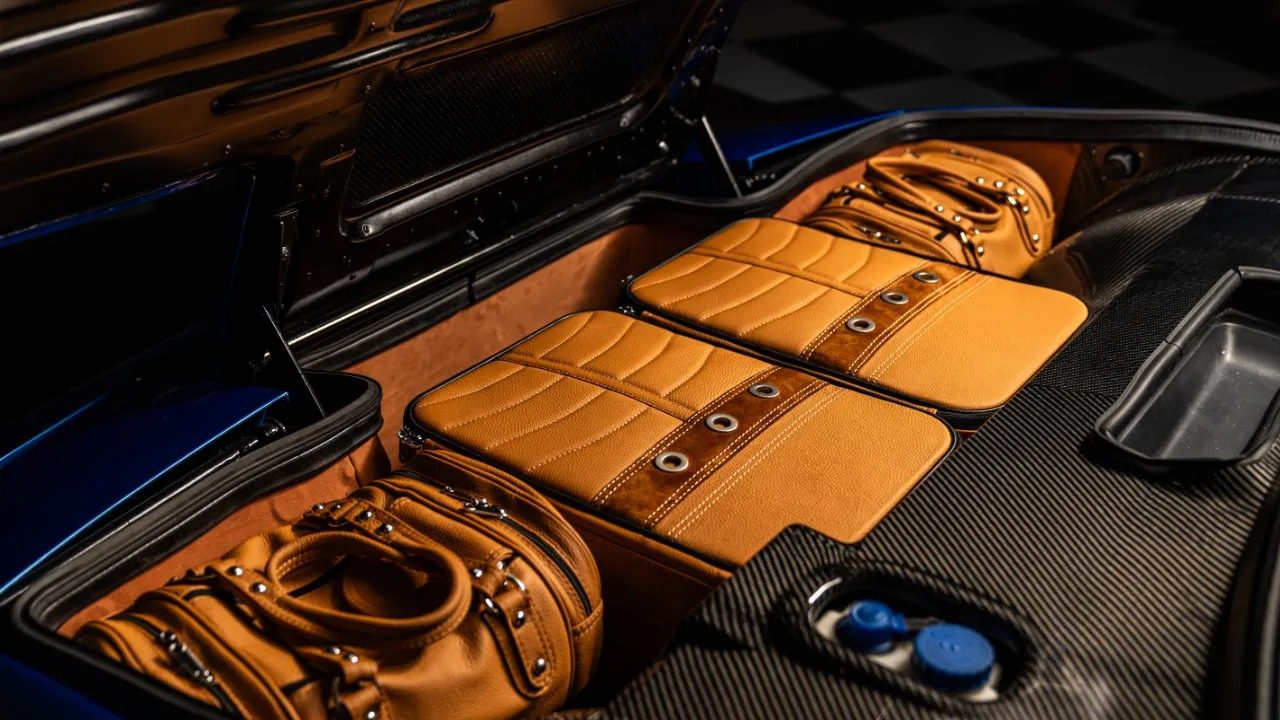
There are a few other nice touches. The original glovebox vanity mirror survived, the one piece of the old interior they kept. Apple CarPlay, a backup camera and Focal audio are tucked away so the cabin still feels like the 1980s. Roadster Bag, a Dutch luggage maker, built fitted bags for the shelf behind the seats and a matching set for the trunk, which makes the Tesoro a real weekend car.
The color has a family story too. It's a metallic pearl blue called Maliblu, named by the Kazameks' daughter Chanel, and it's reserved for this first car.
An all-new dash and console.The Cartier Pasha clock.Fitted luggage by Roadster Bag.The Dione Tesoro in Maliblu.
From Torrance to Monterey
The Kazameks showed the finished car at two private unveilings in Torrance, California. Its public debut followed in August 2026 during Monterey Car Week, with appearances at Motorlux and The Quail.
Want one?
Dione plans three customer cars, with the first ones due in late 2028. You supply a 1985–91 Testarossa; later 512 TRs don't qualify. Each car gets its own color and its own trim, so no two will match. Dione hasn't published a price.
For a sense of scale, a good Testarossa costs about $140,000 to $180,000 today. The closest rival, Officine Fioravanti's restomodded Testarossa in Italy, was reported at just under €500,000 for the work alone. Top-tier restomods generally run $500,000 to $800,000 before you buy the donor. Our guess is that a Tesoro will be in that territory, but that's our estimate, not Dione's number.
What it means for Testarossa values
Three cars won't move the market for a model Ferrari built roughly 7,200 of. But Dione joining Fioravanti means two serious builders now want clean early Testarossas as starting points. That gives decent driver-quality cars, usually the cheapest ones, a new kind of buyer. Very low-mile original cars sit at the other end of the market, and every car that gets reimagined makes the untouched ones a little rarer.
Analysis
Our take
We love it. The Tesoro is a genuinely bold reimagining of one of the most famous shapes of the 1980s, and it isn't a styling exercise. Under the surface it's a long list of fixes for everything Testarossa owners have grumbled about for 40 years. Built by a husband and wife, with their daughter naming the paint, it has more personality than most cars that come out of big studios.
Would we take one over an original? For driving, yes. A Tesoro with the top off, the gated shifter and twelve throttle bodies behind your head sounds like the better Sunday morning. As a collector's object, a pristine stock Testarossa still has something a one-off can't have: it's exactly how Ferrari built it. If our garage had room for one, it would be the Tesoro, but we can see why a purist would disagree.
Which would you choose: the original or the Tesoro? Tell us.
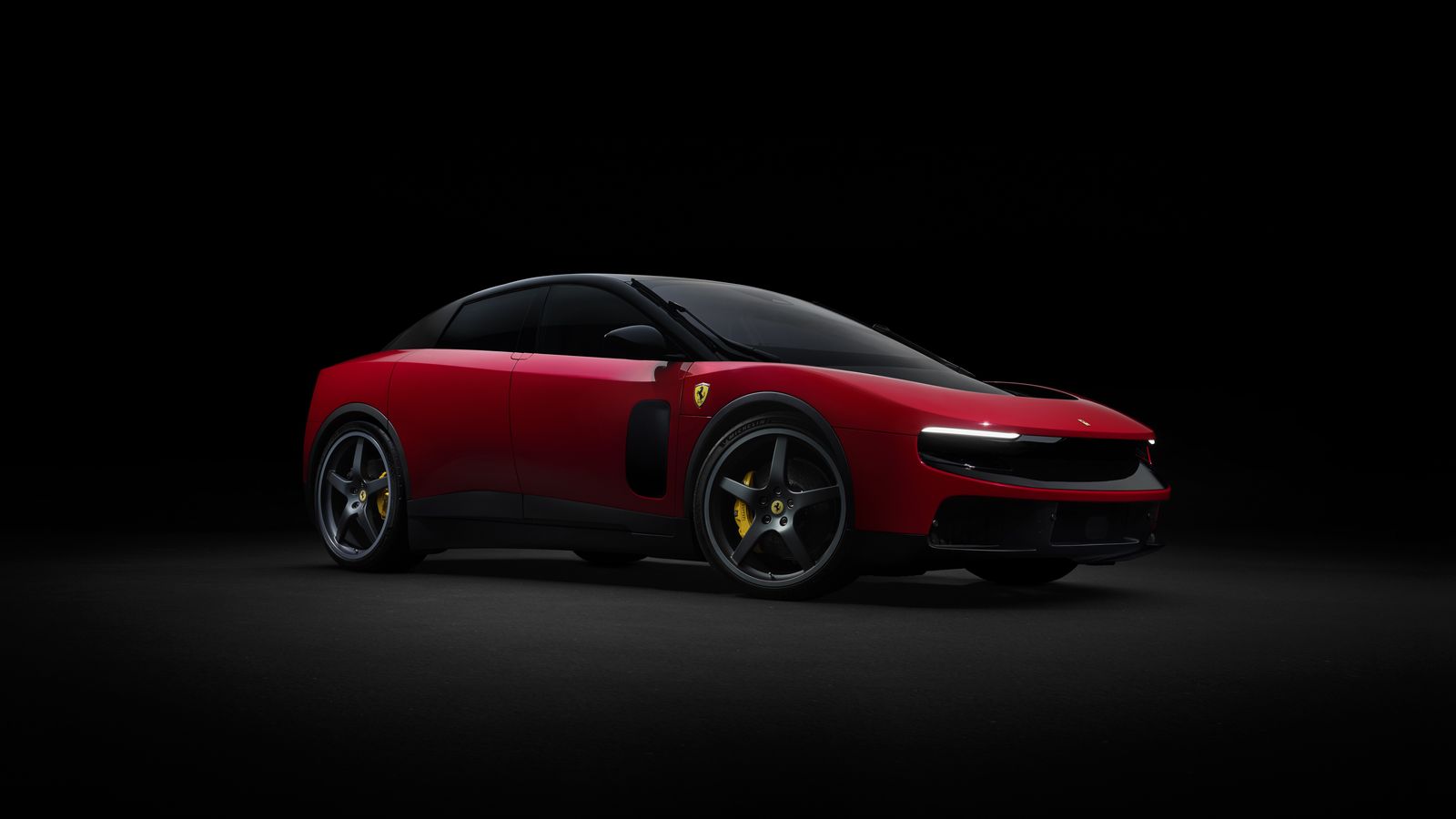
Ferrari's first electric car starts at $560,800 in the US, well under the roughly $640,000 expected at its May reveal but more than the V12 Purosangue. Here's what you get, when it arrives, and what that money buys in used Ferraris today.
Ferrari CEO Benedetto Vigna has confirmed on the record that Ferrari patented a car that fires jets of compressed air to press itself onto the road, so it can corner, brake and accelerate harder. Ferrari first filed the idea in December 2018 and hasn't announced a car that uses it.
Updated Oct 21, 2026 · Published Oct 18, 2026 · 5 min read
Camouflaged 296 prototypes in Germany point to a roadgoing Challenge Stradale with Challenge aero and reports of a non-hybrid V6, and a long-tailed 296 mule just seen in Modena suggests Ferrari may have more than one special 296 in testing. Here's what's confirmed, what's rumored, and what our 296 asking prices look like today.
Updated Oct 22, 2026 · Published Oct 12, 2026 · 6 min read