Ferrari Patents a Rear Wing That Moves on Airflow, Not Motors
US patent application 2026/0356443 A1, published Nov 12, 2026, describes a Ferrari rear wing that airflow would slide backward for more downforce, with a modest spring and cable so it can move forward in a crash. No motors are required, and no model is named.
By Exotic Car TrendsPublished 6 min read
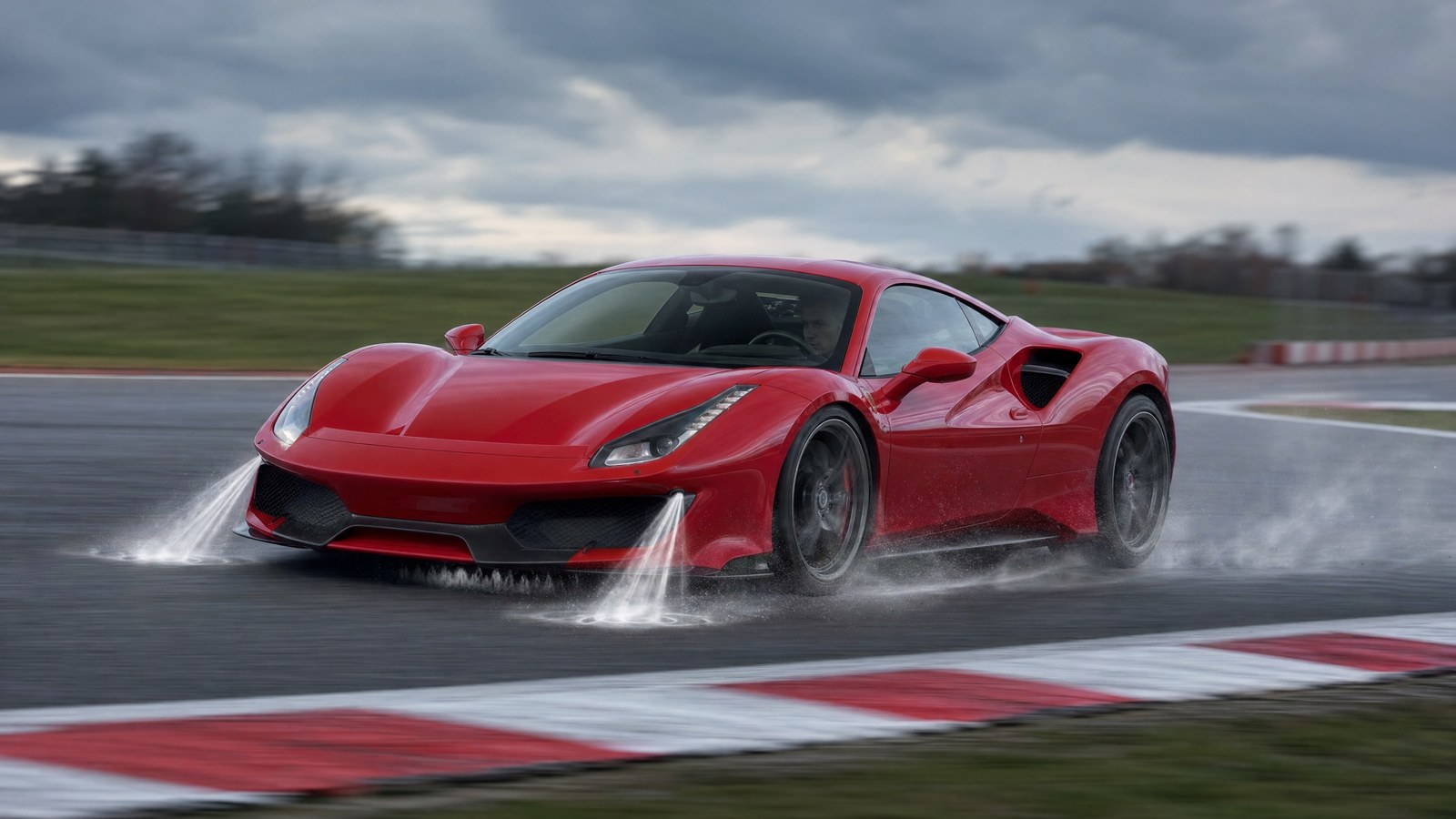
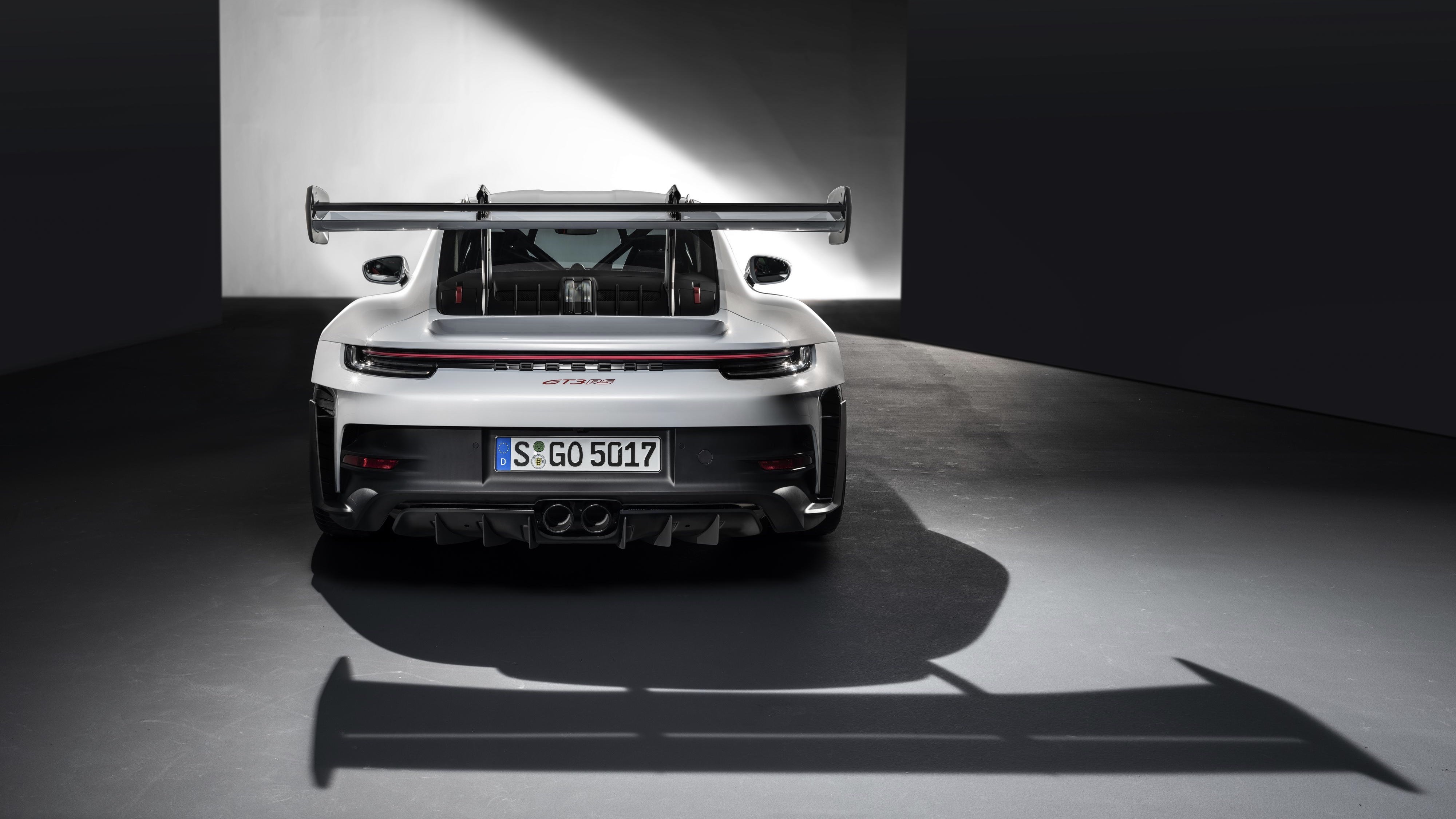
Illustration only, not the patented hardware. The filing names no model, and this is not a photograph of a real car.
Ferrari has a new idea for a rear wing that would not need motors, hydraulics, or a control unit to move. Airflow during driving would push the wing backward along tracks, hanging it out past the bumper and closer to the diffuser, where it can make more downforce. A modest coil spring and cable would help hold it there. In a rear impact, or even if you pushed it by hand, the wing could slide forward into a position that satisfies a low-speed crash test.
The application is US 2026/0356443 A1, titled "Automobile with Increased Rear Aerodynamic Load," published on Nov 12, 2026. CarBuzz and The Supercar Blog reported it on Nov 24, 2026. Ferrari S.p.A. of Modena is the applicant and assignee. The inventors are Stefano Dallari, Andrea Paolini, and Stefano Sartori. The US filing, number 19/671,352, is dated May 8, 2026, and claims priority from an Italian application filed May 12, 2025. This is a patent application, not a production announcement, and it names no model.
Figure 1 from US 2026/0356443 A1, published Nov 12, 2026. The drawings show a mid-engine two-seat berlinetta with a cantilevered rear wing on two vertical brackets. No model is named.
Why a road-legal wing sits farther forward than you want
A rear wing works best close to a diffuser, which points to hanging it out past the back of the car. Homologation gets in the way. Road cars have to pass a low-speed rear impact test that uses what the filing calls "a sort of pendulum," striking the rear in the center and at 30 degrees to the side. If the pendulum or its arm meets the wing first, the wing has to act as crash structure. So the patent says the rear wing is always set about 50 millimeters forward of the rear bumper: safer, and, in Ferrari's words, not optimal for downforce. The invention is meant to get around that compromise "in a simple and economical manner," with more rear downforce and less drag, while still passing the impact test.
Airflow slides the wing back. A spring holds it there.
The wing has two positions. In the extended position, which the filing says can be reached during forward motion, it projects rearward of the rear bumper. In the retracted position, it sits far enough forward to get through the pendulum test without damage. As the car moves, airflow loads the wing downward and toward the rear until stops at the back of the tracks halt it. "The rear wing, in the extended position, operates in clean air and is at a minimum distance from the diffuser," the specification says.
Figure 4, on the left, is the extended high-downforce position, with the wing projecting rearward of the bumper and closer to the diffuser. Figure 5, on the right, is the retracted position used for the low-speed rear impact test.
In the preferred example, that motion is a straight slide. Two vertical support brackets, described as slotted plates, rise from the rear deck. Each has a set of straight slots, four in the illustrated version, and projections on the wing ride in those slots. The wing is in three pieces: a central section between the brackets, and a lateral section outboard of each one. The center and the sides use different slots on the same bracket, so they can move independently. If only one section is struck, that section can move forward without necessarily taking the others with it.
A spring and cable keep the extended wing from wandering under ordinary road loads. For each bracket, a cylindrical coil spring is fixed to the chassis and tied, through a pulley and a cable (the filing gives a Bowden-type cable as an example), to the central section and the matching side section. That modest force, together with the airflow, is meant to hold the wing extended while the car is moving. The filing says the wing "does not resist a manual displacement or a displacement following a rear impact." In a rear hit, or if you shoved it by hand, the wing is simply pushed forward into the crash-test position.
The preferred mechanism, shown in Figure 8: slots in the support bracket, a cylindrical coil spring, a pulley, and a cable. The spring and cable help hold the wing in the extended position. A rear impact, or a push by hand, can overcome that modest force and slide the wing forward.
There are alternatives. The stabilizing members could be magnets or electromagnetic devices that attract the wing and keep it extended. A second preferred embodiment uses curved slots and hinge seats, so the three wing sections rotate between the two positions rather than sliding in a straight line. The car, the specification says, "is easy and economical to manufacture and features a reduced weight, since actuators are not required to move the rear wing between the extended and retracted positions."
This is not how Ferrari's current active wings work
Ferrari already sells cars in the US and Canada with active rear aero, and those systems are powered and computer-controlled. On the SF90 Stradale, a movable fairing lowers to close a gap, a patented shut-off Gurney, for cornering or hard braking. The 296 GTB uses a bumper-integrated spoiler to add 100 kilograms of rear downforce. The F80 goes further, with an infinitely adjustable active rear wing that, official launch materials said, works with the diffuser, flat underbody, front triplane, and S-Duct to generate 1,000 kilograms of downforce at 250 km/h.
The 296 GTB takes a different approach from this patent. Its active spoiler is built into the bumper and deploys with the car's control systems to add 100 kilograms of rear downforce.
All of those systems use actuators and vehicle electronics. The Nov 12 filing is interesting precisely because it does not. The drawings show a conventional mid-engine two-seat berlinetta with a wing on two vertical brackets, not the F80's adaptive wing and not the 296's bumper spoiler. The US application was filed in May 2026, after both cars were already public. The document still names no model, and we are not going to invent one.
The F80 already uses a computer-controlled active rear wing, one of the most extreme aero systems Ferrari has put on a road car. The new patent describes a different idea: a wing that airflow would slide backward, with no motors. Ferrari has not named a car for it.
What happens next
Nothing in the application commits this wing to a future model. Companies file patents to protect ideas, including ones they never build. CarBuzz made the same point this week: a filing is not confirmation of production intent. We will update this article if a prototype appears or if Ferrari confirms the system. This filing is also separate from Ferrari's earlier air-jet downforce patent, which uses compressed-air jets rather than a moving wing.
Analysis
Our take
This is one of the more charming Ferrari patents we have read in a while, and it is mechanically simple. It asks whether airflow, a couple of slots, and a spring could do a job that usually takes a motor. Crash rules push a cantilevered wing on a street-legal car forward of where it would work best with the diffuser. A wing that can hang out in clean air at speed, then get out of the way of a pendulum, is a neat answer on paper.
The modest spring is the part we would want to see proven. The filing wants enough force to keep the wing planted over ordinary bumps, and little enough that a parking-lot bump or a hand can send it forward. That is a narrow window, and the patent does not have to prove it in hardware.
What it means for buyers
If you own or want an F80, a 296 GTB, an SF90, or any other current Ferrari with active aero, this filing does not change the car you can buy now in the US or Canada. Those wings will still be motor-driven and computer-controlled. There is no reason, from this document alone, to delay or rush a purchase. Until a prototype appears or Ferrari confirms the system, treat the filing as an idea, not a feature on a future window sticker.
Ferrari CEO Benedetto Vigna has confirmed on the record that Ferrari patented a car that fires jets of compressed air to press itself onto the road, so it can corner, brake and accelerate harder. Ferrari first filed the idea in December 2018 and hasn't announced a car that uses it.
Updated Oct 21, 2026 · Published Oct 18, 2026 · 5 min read
German patent application DE102025119020A1, published Nov 19, 2026, describes a rear wing made of two halves that sit flush in the deck and open a gap down the middle as they rise, so the driver can still see through the rear-view mirror. Each half can tilt on its own. The filing does not name a model or confirm production.
The California YouTuber was handed the keys to the six real Grand Theft Auto VI cars West Coast Customs built for Rockstar, then took four of them on touring laps. She saved the Grotti Cheetah for last, and a builder on camera said the shop made two of them.