Porsche Patents a Steering Wheel That Gets Thicker in Sport Mode
Porsche's German patent application DE 10 2025 119 261 A1, published Nov 19, 2026, describes a steering wheel whose upper rim swells with hydraulic fluid while the shift paddles slide out to meet your fingers. Sport mode, a button, or your driver profile could trigger it, and the same fluid could cool or warm the rim.
By Exotic Car TrendsPublished 5 min read
Figures 1 and 2 from DE 10 2025 119 261 A1, published Nov 19, 2026. Left: the normal state, with a slim rim and retracted paddles. Right: the thickened rim sections and extended paddles.
Porsche wants your steering wheel to bulk up when you hit Sport. A German patent application published on Nov 19, 2026 describes a three-spoke wheel whose upper rim swells with hydraulic fluid while the shift paddles slide out of the side spokes to meet your fingertips. Back off, and the rim slims down and the paddles tuck away again. The same fluid could even cool the rim when you are working hard on track, or warm it on a winter morning.
The filing is DE 10 2025 119 261 A1, titled "Lenkrad, Kraftfahrzeug und Verfahren zum Betreiben eines Kraftfahrzeugs" (steering wheel, motor vehicle, and method for operating a motor vehicle). Dr. Ing. h.c. F. Porsche AG of Stuttgart is the applicant, and the inventors are David Schmidt and Richard Käfer. Porsche filed it with the German Patent and Trade Mark Office on May 19, 2025. AutoSpies was first to report it in English that we can find, on Nov 24, 2026, followed on Nov 25, 2026 by Autoblog and Road & Track, which both credit the patent sleuths at CarMoses with the find. This is a patent application, not a product announcement, and it names no model.
Slim for the commute, fat for the track
The drawings show two states of the same wheel. In Figure 1, the rim has its normal thickness all the way around and the paddles sit retracted against the two horizontal spokes. In Figure 2, two sections of the upper half of the rim, one on each side where your hands naturally sit, have grown thicker, and the paddles have swung out.
Advertisement
Figure 1: the everyday state. Normal rim thickness, paddles retracted.
The clever part is the direction of the growth. The filing says the rim thickens radially inward, toward the extended paddles, not outward. So the gap between your grip and the paddle closes from both sides at once: the rim moves in, the paddle moves out. Porsche calls that clearly reduced distance one of the advantages of the design. Each paddle can have two rocker levers that extend from opposite sides of its spoke, and the paddle spokes sit horizontal when the wheel is straight, which the filing says makes the paddles much easier to use with the thicker rim.
Figure 2: the sport state. The two upper rim sections have thickened inward and the paddles are extended, so the gap between hand and paddle is much smaller.
For the skin over the moving sections, the filing suggests an elastic material, preferably Alcantara. The alternative is a surface made of overlapping plastic panels that slide over one another as the rim grows.
Sport mode, a button, or your driver profile
Porsche describes the change as automatic. The rim thickening and the paddle movement could switch on when the driver selects a Sport mode, or with the press of a button. The method claims tie both to the selected drive mode, to a driver profile stored in the car, or to both, so one driver could get the fat rim and paddles every time while another never sees them. The claims specifically mention use on a racetrack, and the filing describes the target car as a passenger car that is also driven in a sporting way, including in racing.
The hydraulic fluid that inflates the rim could also handle temperature. Porsche says it could cool the wheel in extreme driving to keep it comfortable to hold, and warm it when needed, for example in winter.
Not the first fat-rim idea, and Porsche says so
Porsche is upfront that a wheel with adjustable thickness is not new. The filing cites a BMW application from November 1998 with a fluid chamber in the rim, a General Motors application with a hydraulically adjustable rim, and a Japanese application, JP H01-178078, that also used the fluid to control the wheel's temperature. It also cites a Daimler application with extendable paddles. Porsche's main claim is the combination: a hydraulically thickening rim with extendable paddles on two of the spokes.
Advertisement
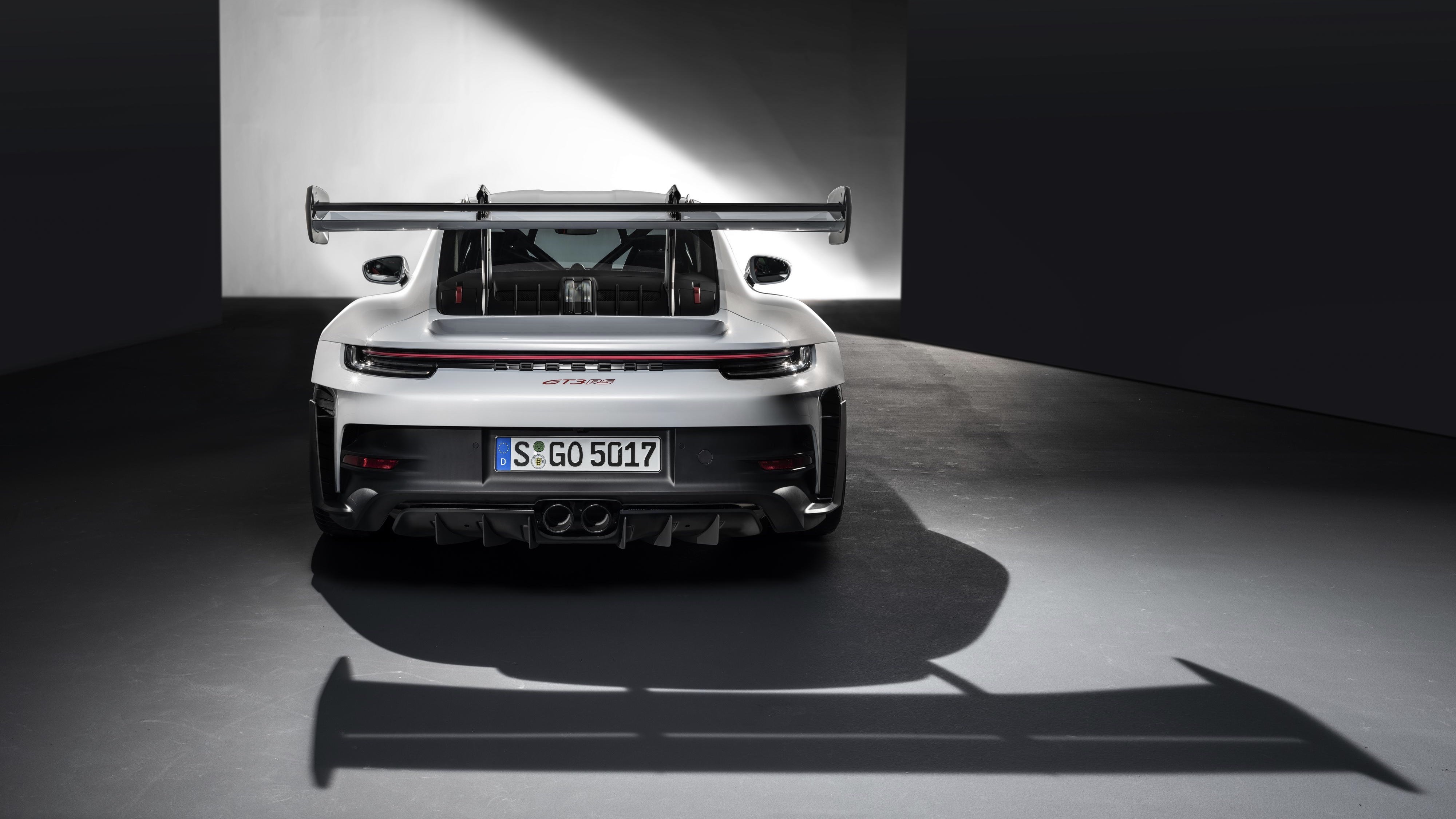
Today's 911 GT3 with Weissach Package. The patent drawings show a three-spoke wheel with a similar layout, including button clusters on the side spokes, though the filing names no model.
Look at the drawings next to a current Porsche and the family resemblance is obvious: three spokes and clusters of controls on the side spokes. Porsche's own 911 GT3 press kit says the GT3 cockpit puts the controls for all the essential driving functions directly around the steering wheel, with a 12 o'clock marker on the rim. A wheel that changes shape for the track would fit that driver-first thinking, and track-focused cars like the 911 GT3 are the obvious audience for it.
What happens next
An Offenlegungsschrift is a published application, not a granted patent, and nothing in it commits Porsche to building the wheel. The filing does not say what pump would move the fluid, how fast the rim changes, or how the hydraulics would be packaged around the airbag. Autoblog Netherlands flagged the missing pump and timing details, and Autoblog raised the airbag question. We will update this story if a prototype wheel shows up in a test car or Porsche confirms the system. For now, it joins Porsche's split rear wing patent on our list of Stuttgart ideas worth watching.
Analysis
Our take
We love this one. Anyone who has driven a GT car on track knows the feeling: you want a thick, grippy rim and big paddles right under your fingers, and then on the drive home that same wheel feels like overkill. Porsche's answer is to have the wheel change with the car, the same way the dampers, exhaust, and throttle already do when you turn the drive mode dial.
The inward growth is the smart bit. Making a rim fatter is easy. Making it fatter in the exact direction that closes the gap to the paddle, while the paddle reaches out to meet you, is the kind of detail that tells us track-minded people worked on this. Whether a fluid-filled rim feels as solid as a good Race-Tex wheel at the limit is the question only a prototype can answer, and we would very much like to grab one.
German patent application DE102025119020A1, published Nov 19, 2026, describes a rear wing made of two halves that sit flush in the deck and open a gap down the middle as they rise, so the driver can still see through the rear-view mirror. Each half can tilt on its own. The filing does not name a model or confirm production.
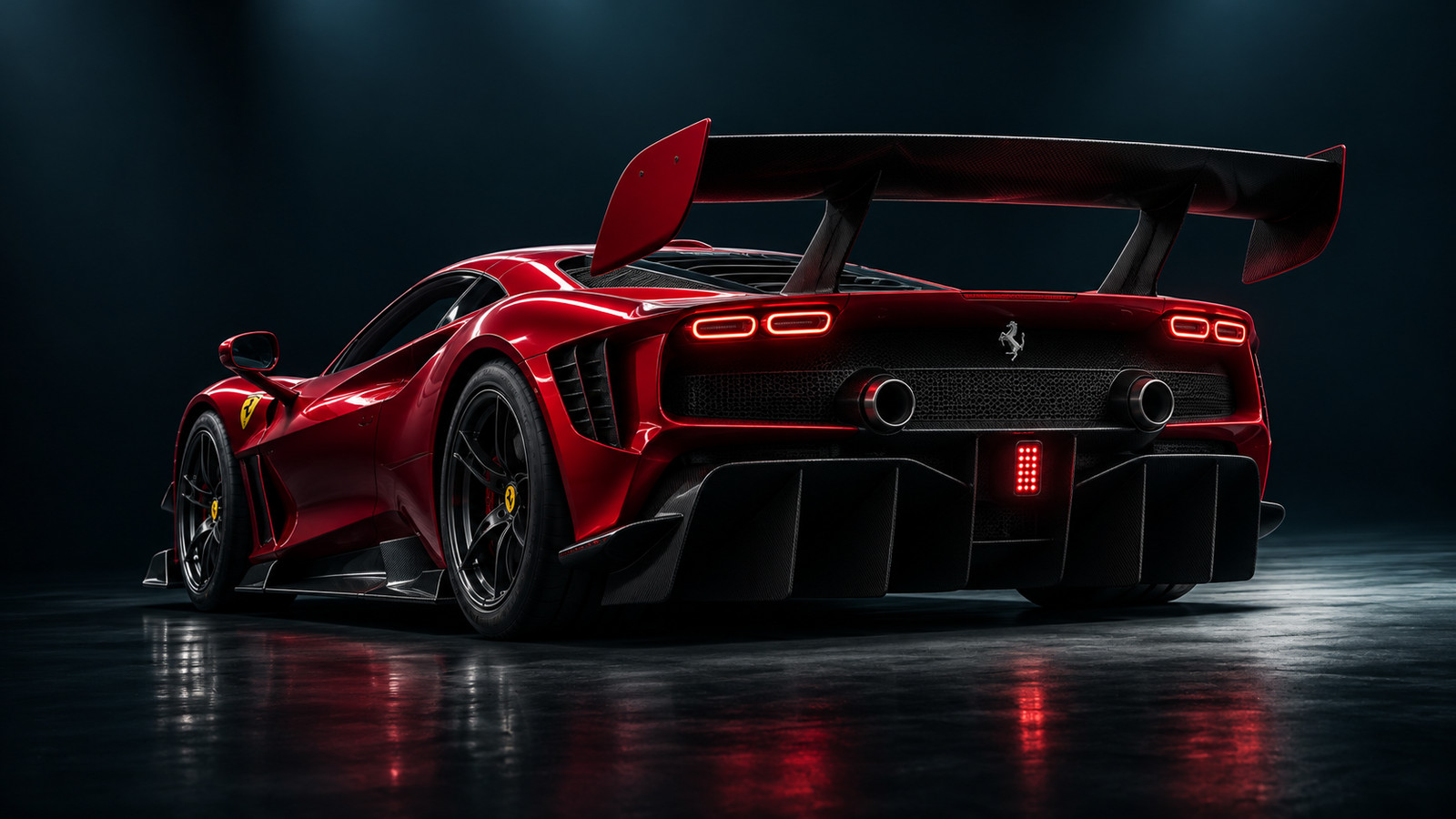
US patent application 2026/0356443 A1, published Nov 12, 2026, describes a Ferrari rear wing that airflow would slide backward for more downforce, with a modest spring and cable so it can move forward in a crash. No motors are required, and no model is named.
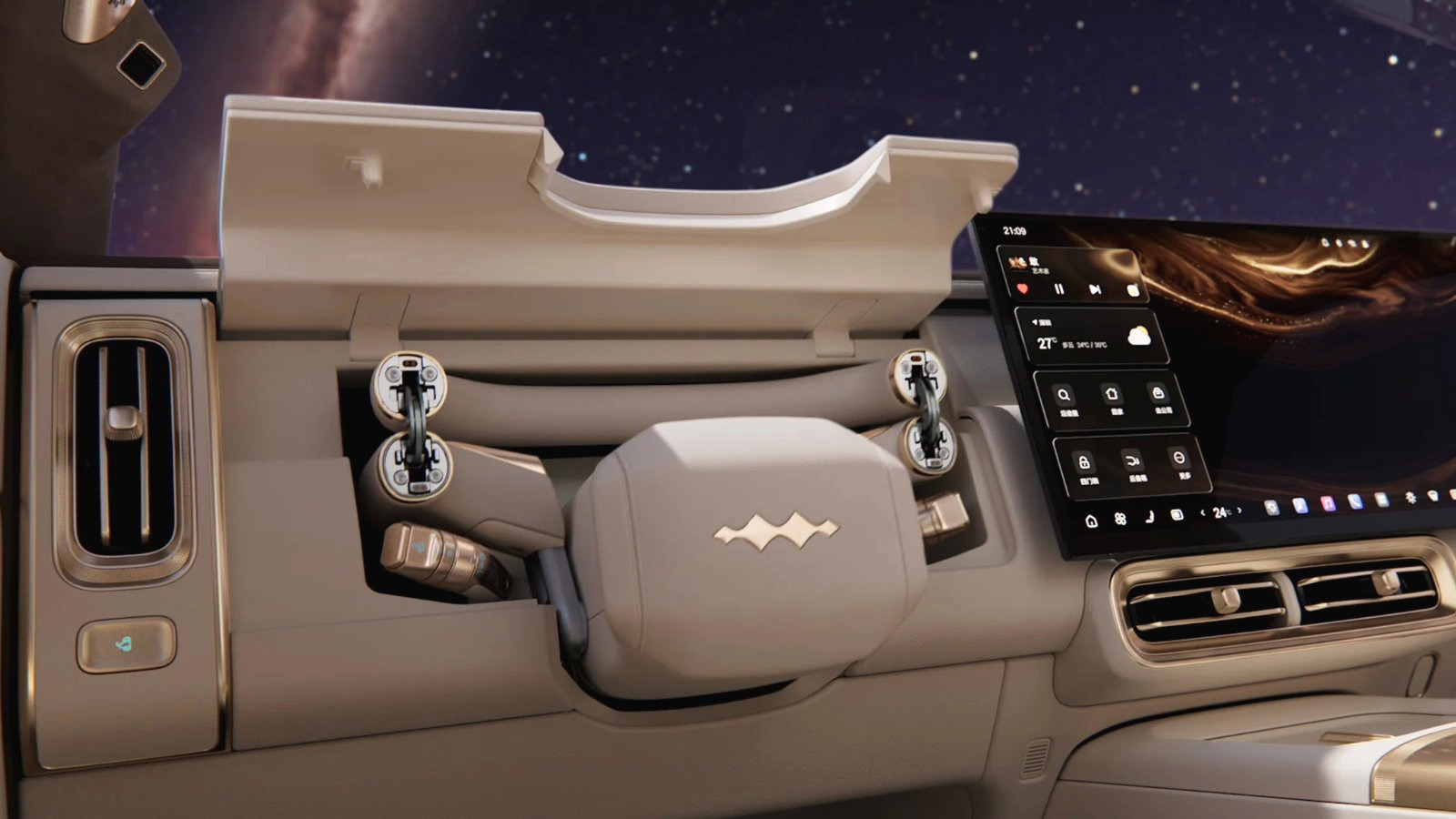
BYD's Fang Cheng Bao brand put a folding steering wheel into production on Nov 19, 2026. It is standard on the top Tai 9 trim, priced at 329,900 yuan, about $49,000, in China. The wheel folds into the dashboard in about 10 seconds, but only when the vehicle is stopped. There is no U.S. or Canada plan.
Updated Nov 20, 2026 · Published Nov 19, 2026 · 5 min read