The Jaguar XJ220C That Won Its Class at Le Mans, Then Didn't, Is Now Road Legal
Chassis 002 is the XJ220C that crossed the line first in the GT class at Le Mans in 1993, then lost the win on a paperwork technicality a month later. Now it has license plates, an 850 horsepower twin-turbo V6, and a price tag to match.
By Exotic Car TrendsPublished 4 min read
XJ220C chassis 002, the No. 50 car from Le Mans 1993, now wearing UK plates.
Some race cars win Le Mans. Some race cars lose Le Mans. This one managed to do both, and that's honestly what makes it one of the coolest Jaguars on the planet.
Meet XJ220C chassis 002. In June 1993 it crossed the finish line first in the GT class at the 24 Hours of Le Mans with John Nielsen, David Brabham and a young David Coulthard sharing the driving. About a month later, the win was taken away. And now, more than 30 years on, it has been made road legal in the UK and put up for sale by Furlonger Specialist Cars.
A Le Mans race car with license plates. I mean, come on.
Advertisement
What exactly is an XJ220C?
You probably know the XJ220 road car, the big, low, wildly wide early-90s Jaguar supercar. Jaguar built 281 of them, according to autoevolution, and they were among the fastest cars in the world when they came out.
The XJ220C is the version Tom Walkinshaw Racing and JaguarSport turned into a proper endurance racer. Furlonger says the team cut about 400 kilograms (about 880 pounds), swapped the aluminum body for fully detachable carbon composite panels, stripped the interior and fitted a 3.5-liter twin-turbo V6 good for 850 horsepower. Only four were built, and three of them went to Le Mans in 1993.
Only four XJ220C race cars were built. Three went to Le Mans.
The engine is a fun bit of history on its own. It's the same basic twin-turbo V6 family Jaguar used in its XJR-10 and XJR-11 Group C prototypes, per autoevolution. The road car made 542 horsepower. The race car made 850. Same idea, very different personality.
The race-spec 3.5-liter twin-turbo V6, rated at 850 horsepower.
The race it won, and the win it lost
Here's the story. Le Mans brought back a big GT class in 1993, and 32 GT cars started the race, according to Furlonger. TWR showed up with three XJ220Cs, and chassis 002, wearing No. 50, was the lead car.
It was not a smooth weekend. One sister car blew a head gasket after six laps and the other retired with overheating, per the Jaguar Daimler Heritage Trust and the race record. Brabham had a bag of frozen peas on his foot for part of the week after a jack dropped the car onto it in practice. In the night, No. 50 lost more than an hour having its fuel tank replaced. Then the crew clawed back the deficit and finished 15th overall and first in GT.
And then the lawyers showed up. Before the race, scrutineers had flagged that the Jaguars were running without catalytic converters. TWR had built the cars to IMSA rules, and the team was allowed to race under appeal. The Jaguar Daimler Heritage Trust says that about a month after the race, the car was disqualified on a technicality: the appeal paperwork was filed correctly with the race organizer, the ACO, but not on time with the French motorsport authority. The GT class win went to the Porsche 911 co-driven by Jürgen Barth, which had finished two laps behind.
No. 50, the car Nielsen, Brabham and Coulthard drove at Le Mans in 1993.
So, did it win Le Mans? The record books say no. The drivers kind of say yes. Coulthard told Motor Sport in 2007, "I've still got the trophy, it's up in Scotland with all the others." Furlonger says all three drivers kept their trophies and count it as a Le Mans win. Honestly, I'm with them. They crossed the line first. That counts for something.
From the TWR museum to the Sultan of Brunei
After Le Mans, chassis 002 spent a short time in the TWR museum and was then sold to the Sultan of Brunei, Furlonger says. Of course it was. If you were going to guess which collector ended up with a Le Mans XJ220C in the 90s, that'd be the first name on the list.
In 2000 it went back on loan to Jaguar for its traveling Jaguar Heritage display. David Brabham was reunited with it at the 2011 Goodwood Festival of Speed, and more recently it has lived in a big UK collection of Group C and Le Mans race cars.
Not much luxury left in here. Lots of carbon, though.
Now it has license plates
This is the part I love. Furlonger spent the last couple of months doing a full mechanical appraisal on the car and then took on the job of registering it for the road in the UK. Because the race car still shares its basic structure with the XJ220 road car, they called the work "significant but manageable." The result, according to Furlonger, is the only road-legal XJ220C in the world. Endurance-Info notes the same thing: you could, in theory, drive the No. 50 car to get bread.
Inside, it's exactly what it should be: bare carbon, a race wheel, a bucket seat with harnesses and a whole lot of switches. Outside, it still wears its 1993 race livery, now with plates front and back.
Advertisement
Plates on a Le Mans car. Still can't get over it.The TWR chassis plate.
The price
Furlonger is asking about $5.95 million (£4,499,990). That's a lot more than a regular XJ220, but this isn't a regular XJ220. It's a Le Mans GT class finisher with three famous drivers, a disqualification saga, a sultan in its history file and plates.
Would I drive it on the street? Absolutely, for about ten minutes, and then I'd find the nearest track. But I'd tell everyone at every gas station that it won Le Mans. Technically. Sort of.
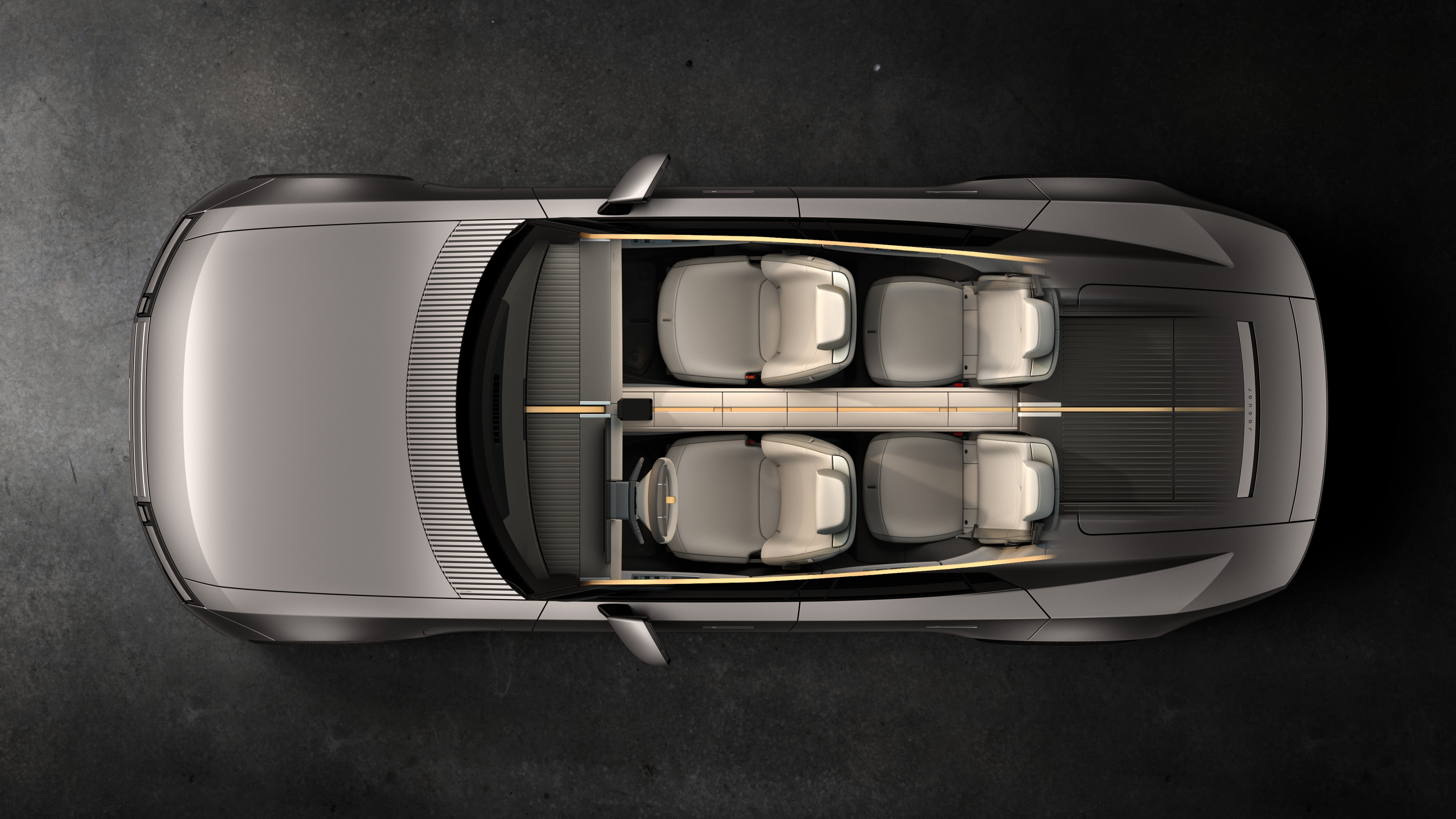
Jaguar's own designers just walked through the Type 01 cabin on the company's YouTube channel. You get four individual seats, a 24-inch driver display, and a brass-effect spine that runs the length of the car. The back row is intimate, to put it kindly.
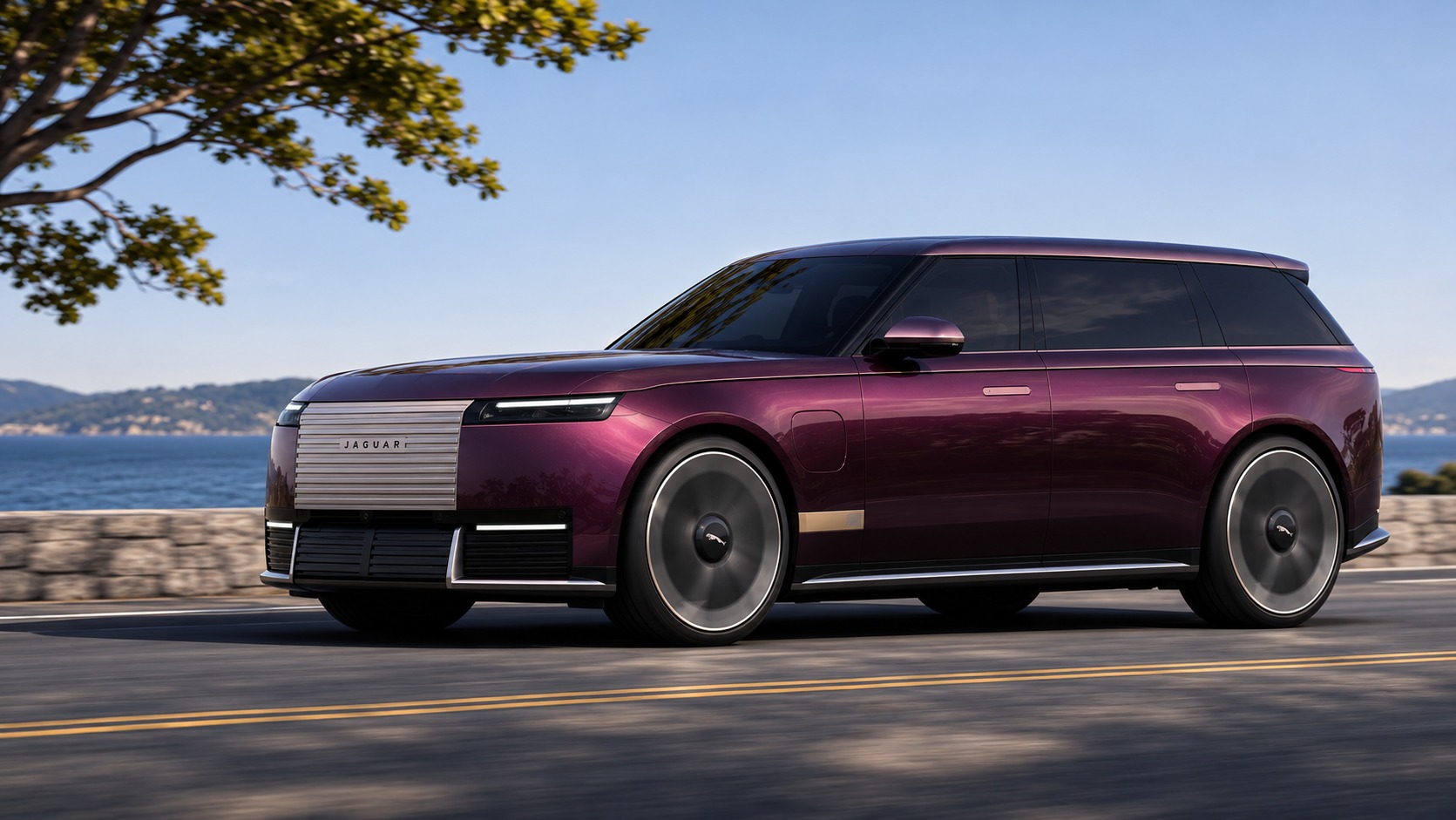
Jaguar reserved the Type 02 name on Nov 9, 2026. The paperwork does not confirm a body style, but the brief Jaguar has already given (more practical than the Type 01, same design language, no fight with Range Rover) points at a long, low electric SUV. That is the car we are expecting, and the Type 01 already tells us how it should look.