Porsche's Electric Boxster Is Nearly Ready, Fake Flat-Six and All
On Nov 24, 2026, Porsche said its first all-electric 718 Boxster is nearly ready for production, with an 800-volt battery behind the seats, a virtual 981 flat-six, and a world premiere in the first quarter of 2027.
By Exotic Car TrendsPublished 7 min read
Official camouflaged prototypes of the all-electric 718 Boxster, photographed during development. The production car will be shown in the first quarter of 2027.
Porsche has put its first all-electric two-door sports car on the last stretch of development. On Nov 24, 2026, the company said the new 718 Boxster, built around a mid-engine-style battery layout it calls E-Core, is nearly ready for production. The car will be built at Porsche's main plant in Stuttgart-Zuffenhausen and will have its world premiere in the first quarter of 2027.
That timing sits in an awkward place for the brand. Earlier this year Porsche reset its strategy under chief executive Michael Leiters, with more investment in combustion and plug-in hybrids after electric demand arrived late. The gas Boxster and Cayman are already out of production, and Porsche has pointed to the end of those cars as one reason deliveries fell this year. The 718's replacement is still electric. Journalists were given prototype drives the same day, including Jeff Glucker at Motor1 and Dave VanderWerp at Car and Driver.
Porsche's official studio photographs still show a camouflaged prototype, not the finished production car.
A battery where the engine used to be
Keeping the old car's layout was the point. Porsche fitted an 800-volt battery directly behind the seats, in the space a combustion engine would occupy. The company says that E-Core design, unlike most electric cars that put the pack under the floor, keeps a low sports-car seating position and concentrates the weight in the middle of the car. The split is 40 percent over the front axle and 60 percent over the driven rear axle, which Porsche says matches a traditional mid-engined sports car.
Officially, overall weight is similar to the current 911 Cabriolet models with the T-Hybrid powertrain. Porsche has not published a curb weight. Motor1 was told the figure would fall somewhere between a base 911 and a Turbo S. Car and Driver reported a wider band, from a 3,350-pound Carrera to a 4,000-pound Turbo S Cabriolet, and said it hoped the Boxster would land toward the lighter end of that range. Until Porsche publishes a number, that is all we have.
911 hardware, and the first 718 with rear-axle steering
A lot of the chassis is borrowed from the 911. The steering is based on the 911 Carrera GTS. Rear-axle steering is available on a 718 for the first time. The wheel and tire sizes and the brakes are also based on the 911, and the electronically controlled PTV+ limited-slip differential is derived from the 911 as well. Every 718 Boxster will be rear-wheel drive.
Porsche says the all-electric 718 Boxster will be the most powerful 718 ever. The top model accelerates from 0 to 62 mph (100 km/h) in under three seconds and has a top speed of more than 155 mph (250 km/h). Porsche has not released horsepower, battery capacity, range, or pricing. Car and Driver, which drove the top model around the Porsche Experience Center in Los Angeles, said that car wore Pirelli P Zero R Elect tires in staggered 20- and 21-inch sizes, 255/35ZR-20 up front and 305/30ZR-21 at the rear, more tire than even the last 718 Spyder RS. The same report said the charge port is a NACS connector behind a powered door in the middle of the rear bumper, and that it is the first Porsche NACS port to handle both AC and DC charging.
A development prototype on track. Porsche gave journalists passenger rides and short drives in camouflaged cars on Nov 24, 2026, the same day as the official announcement.
A fake flat-six, on purpose
Every 718 Boxster will get E-Shift as standard. At the touch of a button, a virtual seven-speed PDK can be switched on, with automatic shifts or manual paddles behind the steering wheel. Porsche says a targeted increase in torque during the shifts keeps performance the same whether E-Shift is on or off. In E-Shift mode the soundtrack is a recreated six-cylinder boxer, based on the 981-generation Boxster GTS. When E-Shift is off, the paddles switch to three stages of recuperation.
Car and Driver says Porsche engineers chose the 981 Boxster GTS 3.4-liter flat-six as the high-water mark for that sound, and that later engines were passed over because of emissions compromises. The same review noted a bit of revisionist history: the electric car's simulated redline is 8,000 rpm, against 7,600 rpm in the 981. VanderWerp wrote that the noise, played through speakers inside and outside the car, absolutely sounds like a flat-six, even if a blindfolded test would still give the real engine away.
The 718 Boxster gives you more feedback than I've ever experienced with any other all-electric car.
Walter Röhrl, after driving a prototype
The rear light bar and the prototype lettering on the deck, from Porsche's studio set.
First drives: it still feels like a Boxster
Motor1's Jeff Glucker, after California canyon roads and laps at the Porsche Experience Center in Los Angeles, wrote that a few corners in it simply felt like a regular Boxster, with no EV whine and no jerky motions. He praised sharp turn-in, real steering feel, and brakes without the usual electric-car strangeness, and called the launch-control run brutal. The fake gearbox, he said, felt like a proper paddle-shifted Boxster, and the 981 soundtrack, once you stop thinking about it, sounds like an older Boxster a car length behind you.
Car and Driver's Dave VanderWerp reached a similar conclusion after laps at the same Los Angeles track, including a little beyond the cornering limits. He said the steering, inherited from the 992.2 911 Carrera GTS, is eager and sharp, and that you can feel the rear-biased weight in the way the tail steps out when you lift off the throttle. He could not call the car heavy, though the wide tires sometimes sounded more tortured than he remembered from the gas Boxster, which he put at just over 3,000 pounds. After a few hot laps with E-Shift on, he said it felt weird to switch back to silent, shift-free running.
Porsche says the test team covered about four million kilometers, or about 2.5 million miles, in more than 20 countries. Components were run on ice and snow in Sweden at temperatures as low as -22 degrees Fahrenheit (-30 Celsius), and in Death Valley at up to 124 degrees Fahrenheit (51 Celsius). Everyday driving and driver assistance work included Las Vegas, Los Angeles, and Shanghai. Test routes ran from 86 meters (about 282 feet) below sea level to 2,750 meters (about 9,020 feet), and charging was tested against five standards.
Heat testing in Death Valley, California, where Porsche says temperatures reached 124 degrees Fahrenheit (51 Celsius).Cold-weather testing in Finland. Porsche says development also included ice and snow in Sweden at temperatures as low as -22 degrees Fahrenheit (-30 Celsius).Everyday testing in Las Vegas. Porsche says city work there, and in Los Angeles and Shanghai, focused on usability and driver assistance.
Leiters called the electric Boxster "a compelling entry point into our world of two-door sports cars." After driving a prototype, Walter Röhrl said the car brings power, braking, handling, and driving experience together, and that turning on E-Shift makes the enjoyment jump again.
There is still no official horsepower figure, no battery size, no range, no US or Canadian price, and no firm on-sale date for this market. Porsche has previously said the all-electric 718 Boxster and Cayman are expected to support sales in their first full year of production in 2028, which would leave a gap between this premiere and the first busy year of deliveries.
Analysis
Our take
The interesting part is not that Porsche built an electric Boxster. We have known that was coming. It is that the company is finishing this car, complete with a fake 981 flat-six, after a year of saying it bet too heavily on electric cars and needed to get back to combustion. The Mission S, the mid-engined car above the 911, is being developed with gas and hybrid power. The 718, the entry two-door, is the one that stays electric. That split may be the most honest read of the reset: keep the halo cars on gas, and let the entry sports car absorb the EV brief, then try to make it feel like a Boxster anyway.
The first drives suggest the chassis work is real. When Glucker, VanderWerp, and a string of other testers all come back saying it still feels like a mid-engined Porsche, that is not nothing. The virtual gearbox and the recorded flat-six will be the argument. Some of us will hate it on principle. The people who have already driven it say it adds to the car, and that switching it off feels worse.
What it means for buyers
If you wanted another gas Boxster or Cayman from Porsche, that chapter is closed. A good used 718 is now the end of a line, not a placeholder for something similar coming next year. If you can live with an electric two-seater, the early driving reports are encouraging, but you still cannot shop one in the US or Canada. Price will decide a lot of this. In October, evo reported that the electric 718 was expected to cost considerably more than the old car, which would fit Leiters' wider push toward higher prices. We would wait for the first-quarter 2027 premiere, and for Porsche to publish horsepower, range, and a US price, before drawing a conclusion about value. The official photos are still camouflaged prototypes, not the production car.
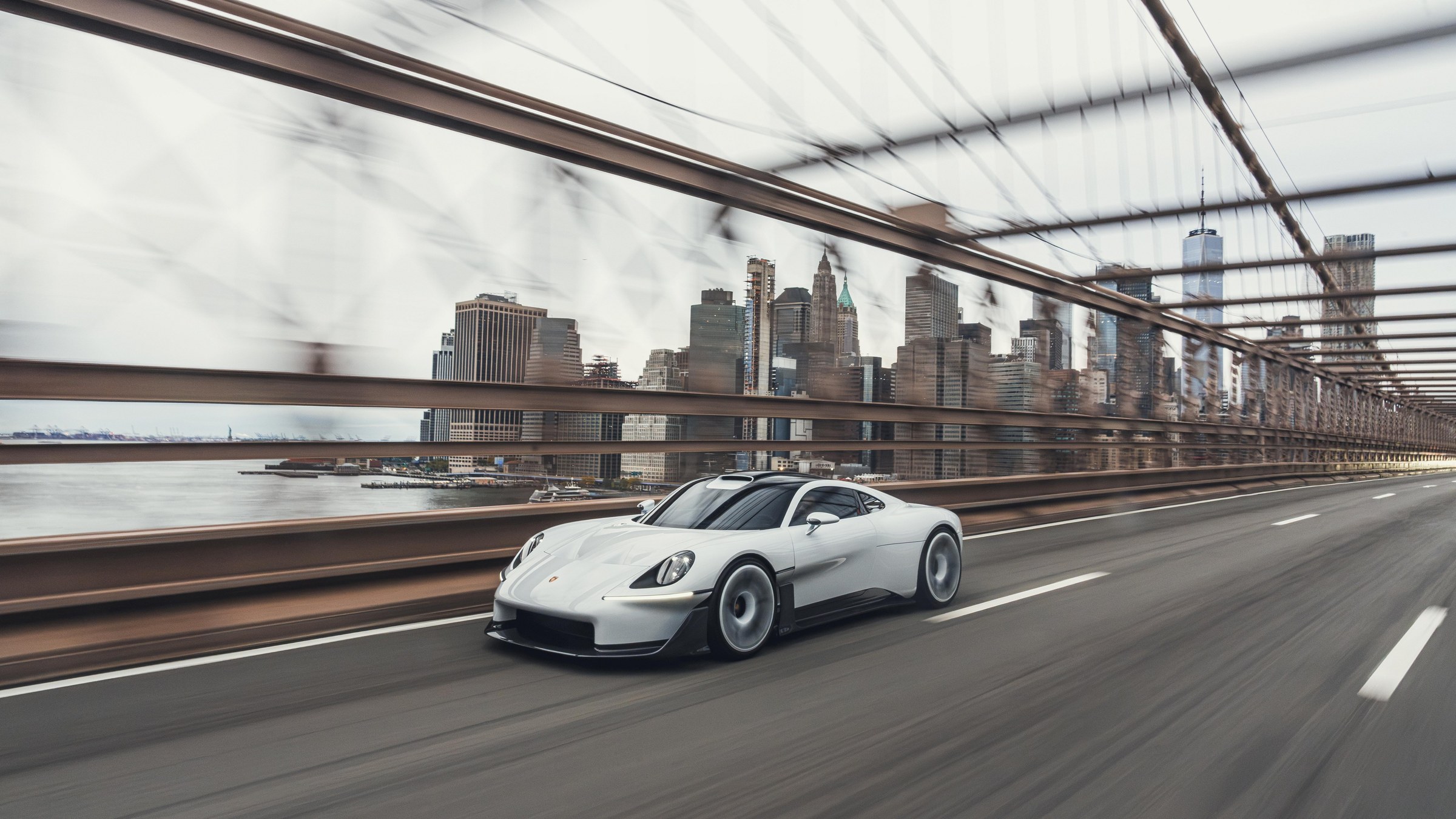
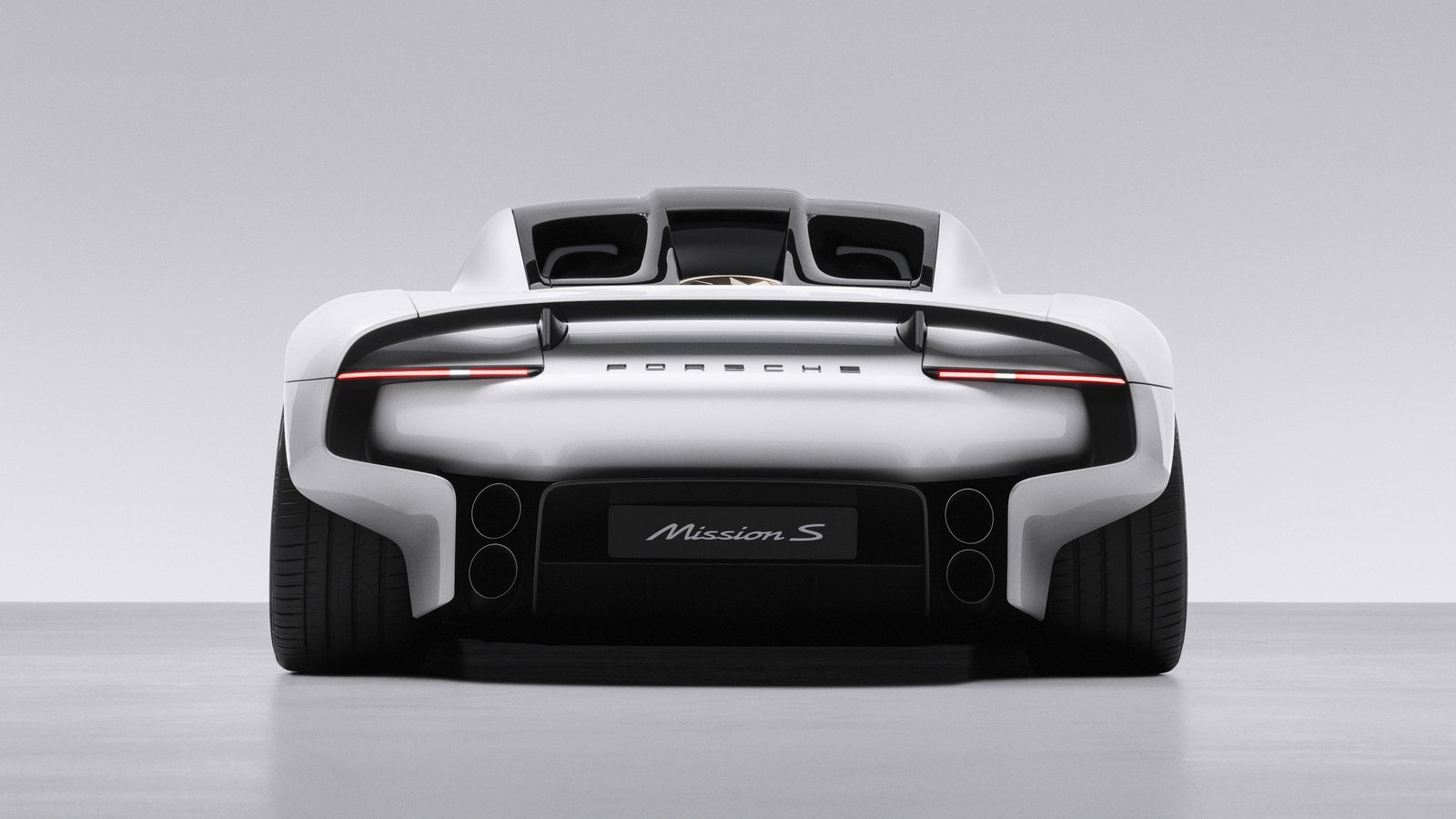
Profit collapsed in 2025, China keeps shrinking and the new CEO wants a smaller, more exclusive Porsche. The Mission S concept, revealed October 15 in New York, is the first look at a car that sits above the 911.
Updated Oct 27, 2026 · Published Oct 7, 2026 · 12 min read
Porsche pulled the cover off the Mission S on a Queens pier on October 15. It's a design study for a permanent mid-engined model line above the 911, with a 917-style cooling fan, 928-style wheels and no center screen. Engine, power and price are still unannounced, but CEO Michael Leiters says it will offer gasoline, hybrid or plug-in power, no EV, could take a manual or PDK, and will cost 'much more' than a 911.
Updated Nov 20, 2026 · Published Oct 15, 2026 · 10 min read
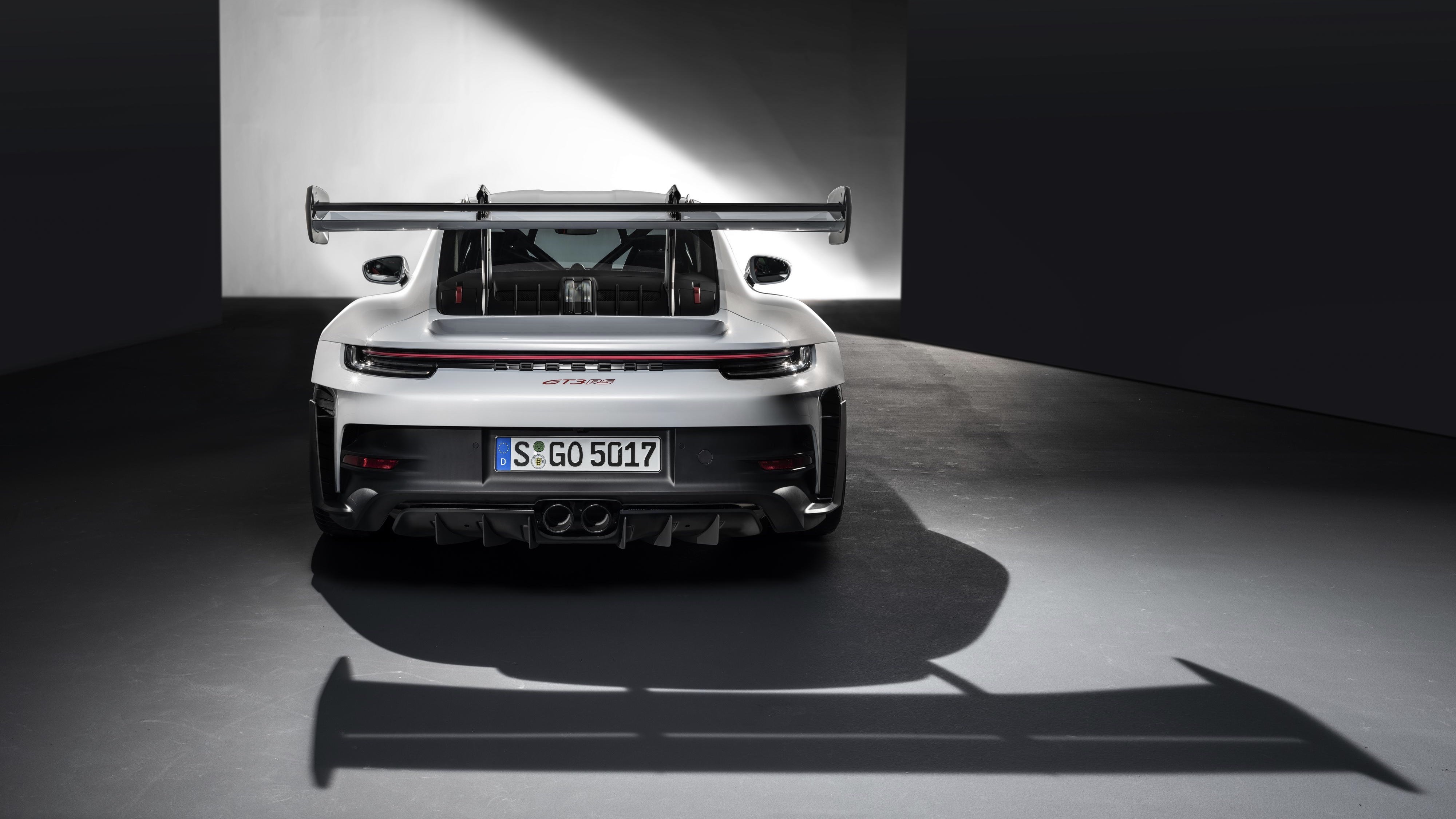
German patent application DE102025119020A1, published Nov 19, 2026, describes a rear wing made of two halves that sit flush in the deck and open a gap down the middle as they rise, so the driver can still see through the rear-view mirror. Each half can tilt on its own. The filing does not name a model or confirm production.