Ford Le Mans Hypercar reveal set for Nov 26: what we know about Ford's return
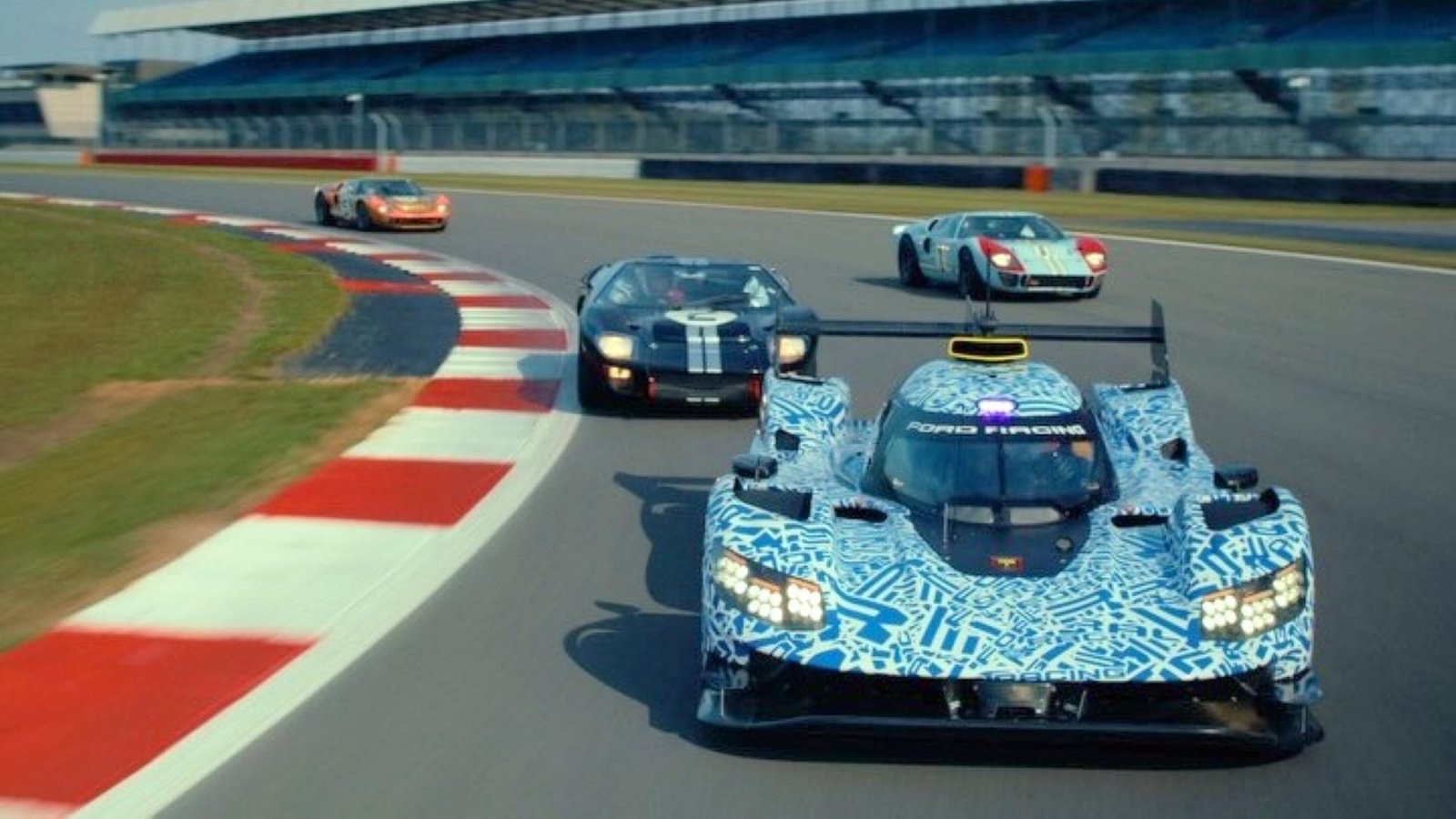
A Ford Racing teaser puts the new prototype ahead of its Le Mans-winning ancestors at Silverstone. The car, powered by a 5.4-liter Coyote-based V8, races for the first time in Qatar in March 2027.
Ford will show its new Le Mans Hypercar on Nov 26, 2026. Ford Racing announced the date in a short social video that opens with Ford's past Le Mans winners, cuts to the new prototype at Silverstone, shows it driving past them to the front, and ends on the line "The New Era Begins" (The Supercar Blog). The reveal lines up with earlier reporting that the car's name will be announced at the end of November (Autosport). It is Ford's first serious attempt to win Le Mans outright since its fourth straight victory in 1969.
What Ford has confirmed so far
Reveal: Nov 26, 2026, per Ford Racing's teaser as reported by The Supercar Blog. Autosport separately reported the type name would come at the end of November.
Class and rules: an LMDh car, built on a chassis developed with ORECA and using the spec Bosch hybrid system (RACER, Ford Racing).
Engine: a naturally aspirated 5.4-liter V8 based on the Coyote V8 family used in the Mustang, designed and built in-house in Dearborn (Ford Racing, RACER).
Debut: the FIA World Endurance Championship season opener in Qatar at the end of March 2027, then the 24 Hours of Le Mans (Autosport, 24h-lemans.com).
Drivers: Logan Sargeant, Mike Rockenfeller, Matt Campbell, Tom Blomqvist, Nick Yelloly and Sebastian Priaulx (24h-lemans.com, Autosport).
The video is short and built around history. Older Ford Le Mans cars lead on track at Silverstone before the camouflaged prototype passes them and moves to the front, followed by "The New Era Begins" (The Supercar Blog). The still frame above shows the new car running ahead of a GT40 and later Ford GTs. Ford Racing posted it on Instagram with the caption "See you November 26th" (@fordracing). We haven't found the date in a Ford press release yet.
Testing milestones
The engine first ran in the car, with the hybrid system, at ORECA in July (Ford Racing). Before that, Ford ran full simulated laps of the Le Mans circuit on a dyno in Dearborn (FordMuscle).
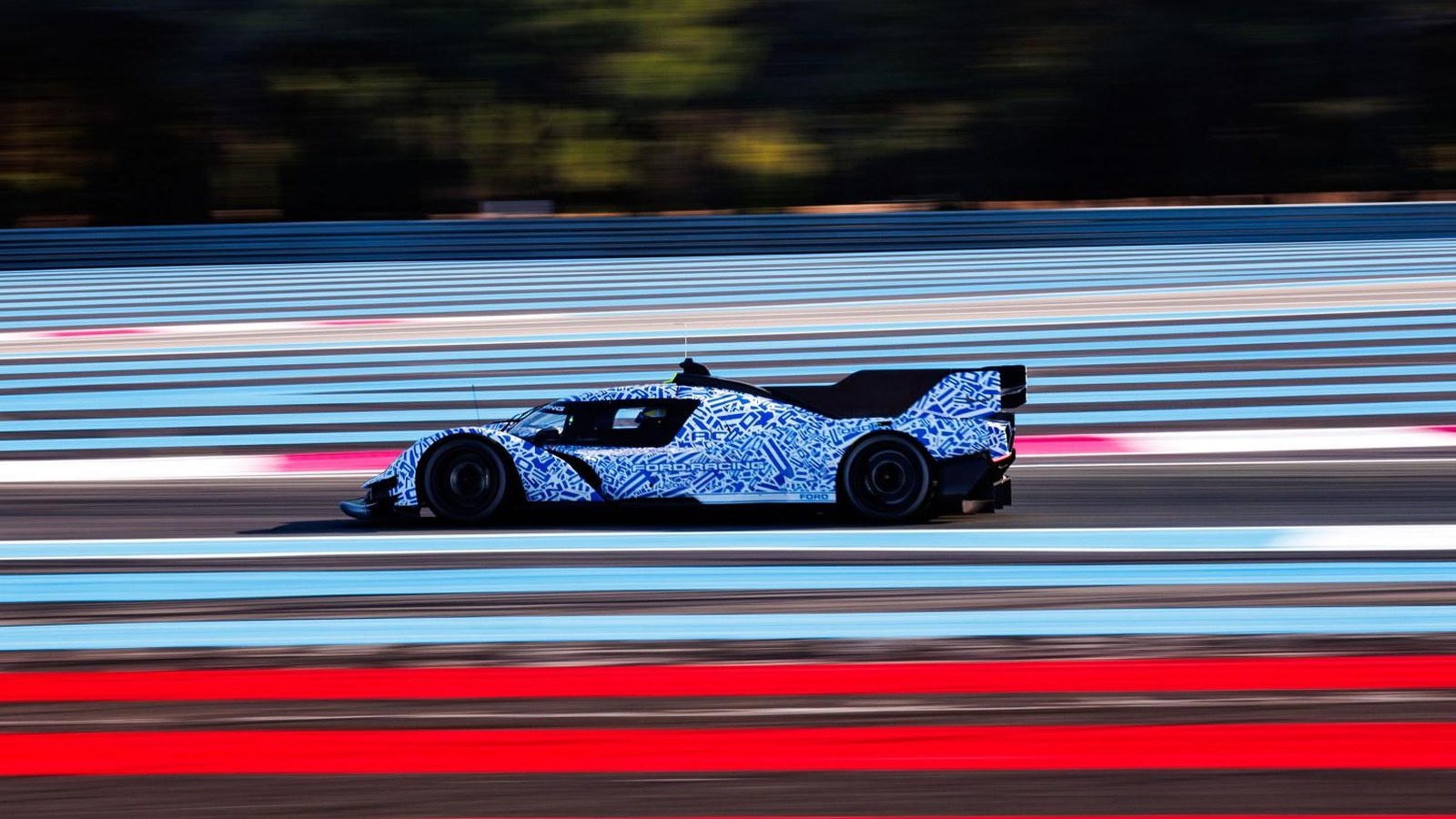
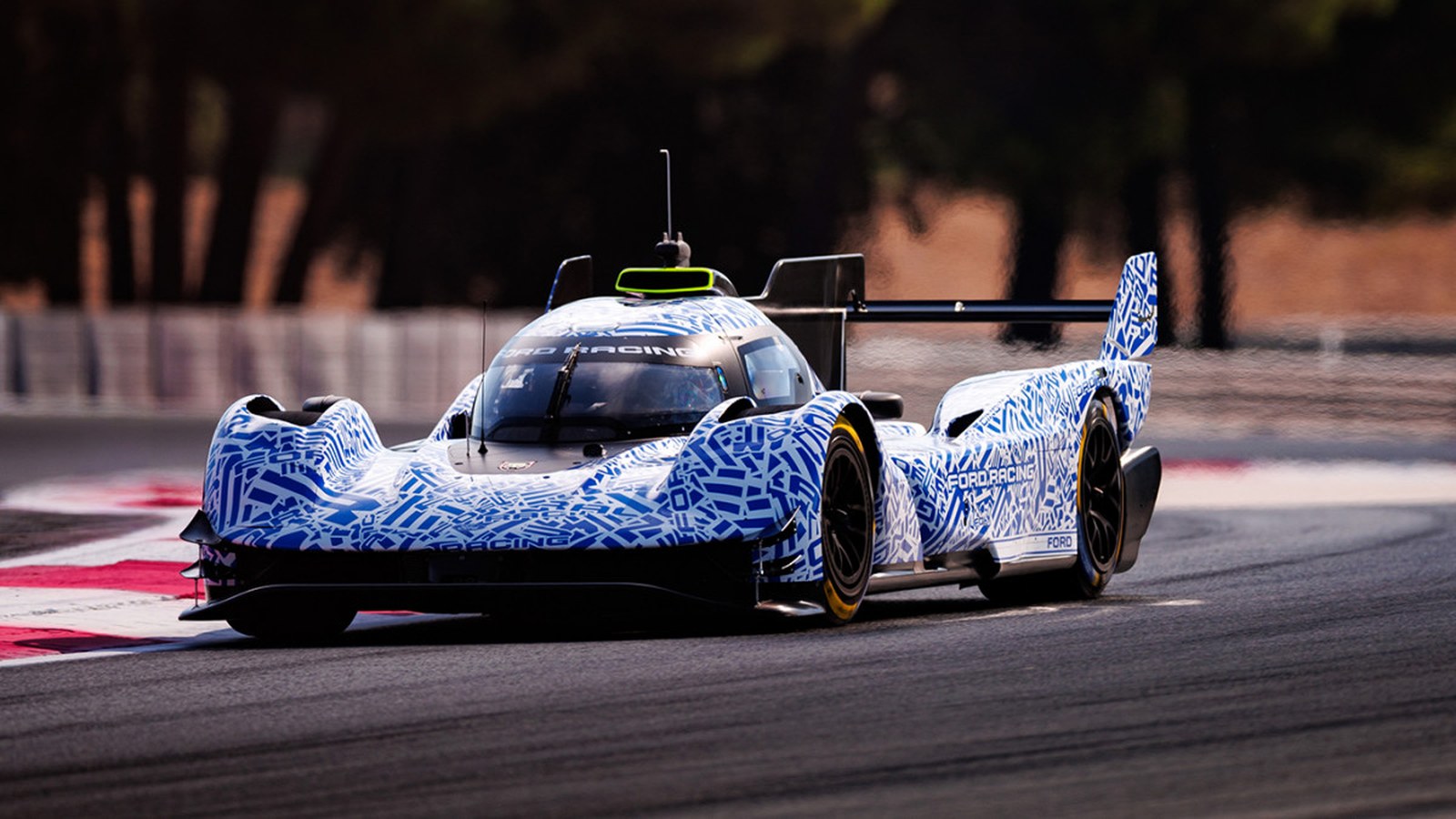
The car turned its first wheel on Aug 5 at Paul Ricard in France, with systems checks and then full-track running. Ford released the first track photos on Aug 17, with Matt Campbell and Logan Sargeant driving (24h-lemans.com, Autosport). Autosport reports the car covered about 800 miles at Paul Ricard and a similar distance at Portimão in Portugal, followed by two days at Silverstone.
Program manager Dan Sayers told Autosport: "We are hitting all the test milestones." He added that the team is "on a condensed schedule so we have to maximise every second we are on the track" (Autosport).
What comes next, per Autosport: a Monza test later in October with two cars for the first time (chassis 1 and chassis 3, while chassis 2 is in North Carolina for wind tunnel work), a first endurance run at Aragón in November, then running at Austin and Sebring, and another endurance test at Sebring early in 2027. RACER's Oct 12 report also covers the move to endurance testing and a second car (RACER).
The engine: a Mustang V8, rebuilt for Le Mans
Ford confirmed the engine in January at its season launch in Detroit. It is a naturally aspirated 5.4-liter V8 that shares its architecture with the Mustang GT3 engine (RACER). Autosport describes it as the first bespoke race engine developed and built in-house by Ford at its Dearborn headquarters. Sayers said at the launch: "When you hear a Ford coming down the Mulsanne Straight at three in the morning, you shouldn't have to look at the badge to know who it is. That is why we chose the Coyote" (RACER).
Ford Racing engineer Hertrich told Road & Track the valvetrain changes are large, and that the engine has to rev well above the 8,250 rpm the GT3 engine is homologated at, without giving a number. The Supercar Blog and FordMuscle both say it should rev to around 9,000 rpm; Ford hasn't confirmed that figure. Road & Track estimates Ford is aiming for roughly 740 to 750 horsepower at the crank, which is the outlet's estimate from the class rules, not a Ford number. Nearly every rival uses a turbocharged engine, so a big naturally aspirated V8 will stand out on the grid.
Ford won Le Mans outright four years in a row from 1966 to 1969. The first win came in 1966 with Chris Amon and Bruce McLaren in a Shelby American GT40 Mk II, and the last in 1969 with Jacky Ickx and Jackie Oliver in a Gulf GT40 (Autosport, 24h-lemans.com).
Fifty years after the first win, the modern Ford GT won the GTE Pro class at Le Mans in 2016, on its debut. Ford Racing global director Mark Rushbrook told Autosport that the GT's success "re-whetted" the appetite of the Ford family and company leadership for the top class, and that Ford looked at a top-class return as the GT program wound down but held off because the rules were unclear. Ford returned to Le Mans in 2024 with the Mustang GT3 and announced the Hypercar program in January 2025 (Autosport).
Rushbrook is clear about the odds: "Are we trying to win in 2027? Absolutely, but we recognise what a massive challenge it will be" (Autosport).
The Ford GT market
Ford GT sold results we follow show a clear gap between the two road-car generations. The 2005–06 Gen 1 cars have a median sold price of $547,500 across 114 sales. The 2017–22 Gen 2 cars have a median of $891,000 across 43 sales. See the Gen 1 and Gen 2 price pages, or the side-by-side comparison, for every sale.
Analysis
Our take
Ford has tied this car tightly to its Le Mans past, and the teaser makes the point by literally putting the new prototype in front of a GT40 and later GTs. Both Ford GT generations exist because of Le Mans: the Gen 1 as a tribute to the GT40, the Gen 2 as the road version of the 2016 class winner.
What it means for buyers: a top-class Le Mans program puts the Ford GT story back in front of a wide audience, and a strong showing in 2027 would add to that. That is a reason for interest, not a forecast. There's no sign yet of a price effect, and none should be expected before the car races. The more likely effect, if any, is on the best-documented cars, especially Gen 2 cars and heritage liveries that echo Ford's Le Mans winners. Watch sold results around the Nov 26 reveal and the June 2027 race.
What to watch
Nov 26, 2026: the reveal, the car's name and its race livery.
Late October: Monza testing with two cars.
November: first endurance simulation at Aragón, then Austin and Sebring.
End of March 2027: race debut at the WEC opener in Qatar.
June 2027: the 24 Hours of Le Mans.
Still unknown: the official power figure and rev limit, and the car's type name.
The most talked-about new supercars of 2026 share something old-fashioned: a clutch pedal. Here's what's real and what's simulated, what they cost, how few will be built, and what the market says analog cars are worth.
Paris is a heritage show this year: an 816 hp Peugeot hatch, a 500 hp electric RCZ revival, a carbon NSX rebuild from €880,000, a retro Alpine and a hybrid V6 Alfa. Porsche's Mission S is still to come on October 15.
Updated Oct 14, 2026 · Published Oct 12, 2026 · 9 min read