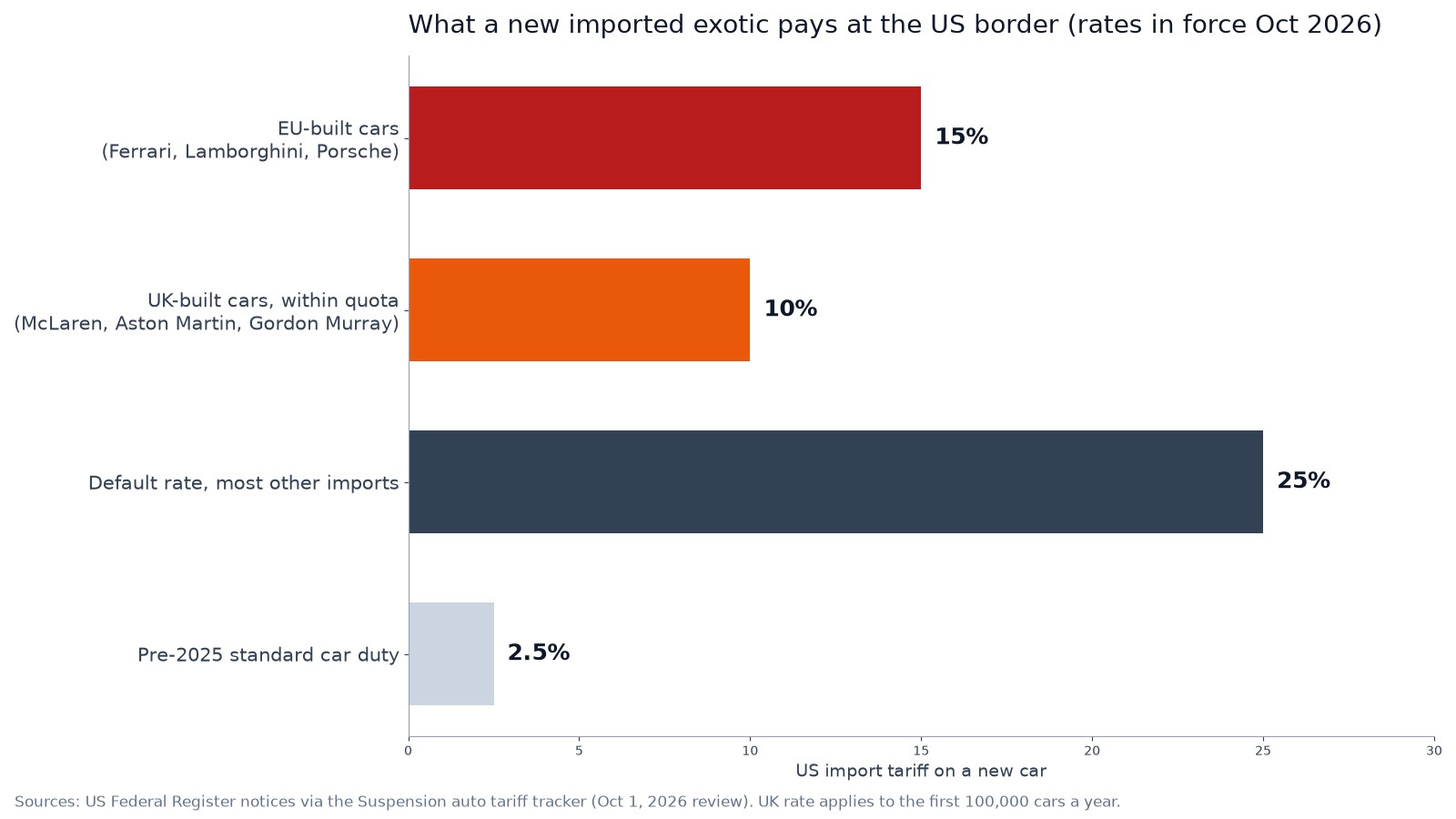
If you're buying a new exotic in the US this fall, here's the tariff picture in one line: a car built in the EU, which means every new Ferrari, Lamborghini and Porsche, pays 15% at the border, and a UK-built McLaren pays 10% as long as it falls within Britain's annual quota of 100,000 cars. Those rates have been in place since 2025. Headlines this year about raising the EU rate to 25% haven't changed them.
Where the rates stand
The US put a 25% tariff on most imported cars in April 2025. Trade deals then cut it to 10% for UK cars within the quota (June 2025) and to 15% all-in for EU cars, backdated to August 1, 2025, according to the Suspension auto tariff tracker, which links each rate to its Federal Register notice. Before 2025 the standard duty on an imported car was 2.5%.
On May 1, 2026, President Trump said he would raise the EU rate to 25% (Reuters), and Al Jazeera noted at the time that luxury makers that build everything in Europe, such as Ferrari and Lamborghini, would be most exposed. As of the tracker's October 1 review, no implementing order followed and the 15% rate is still in the tariff schedule. A threat isn't a rate until it's published.
What the makers did
- Ferrari raised US prices by up to 10% on the Purosangue, 12Cilindri and F80 from April 2025, and held prices on the 296, SF90 and Roma, Car and Driver reported. The US took about a quarter of Ferrari's new cars in 2024.
- Porsche booked about €700 million of US tariff costs in 2025, part of the charges that cut its operating profit to €413 million (Porsche). It raised US prices in mid-2025 (Reuters), and Road & Track, citing Automotive News, reported a US tariff bill of about $811 million and that Porsche is studying US production, most likely for the Cayenne and Macan (Road & Track).
- Lamborghini said US tariffs and currency moves hurt its first half: operating profit fell to €395 million from €431 million and the margin to 22.7% from 26.5%, even as revenue hit a record €1.74 billion (Lamborghini, Reuters).
- McLaren, Aston Martin and Gordon Murray build in Britain and get the lower 10% rate within the quota, a small edge over Italian and German rivals.
Why used cars feel it differently
A tariff is paid once, when a new car enters the country. A Ferrari 812 or Lamborghini Aventador already registered in the US doesn't pay it again when it changes hands. So tariffs raise the price of new cars and leave used ones untaxed, which makes nearly new used cars relatively better value.
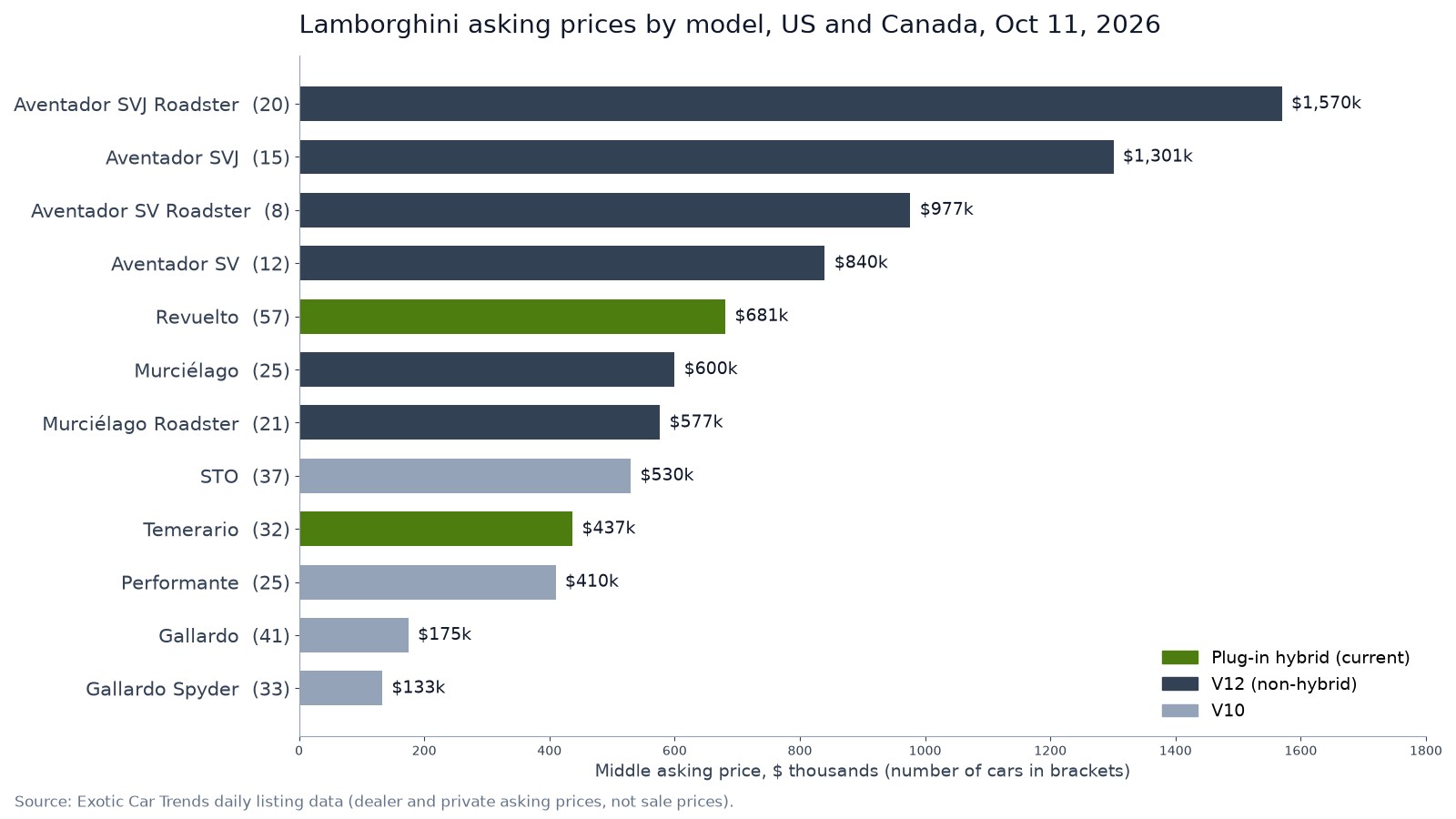
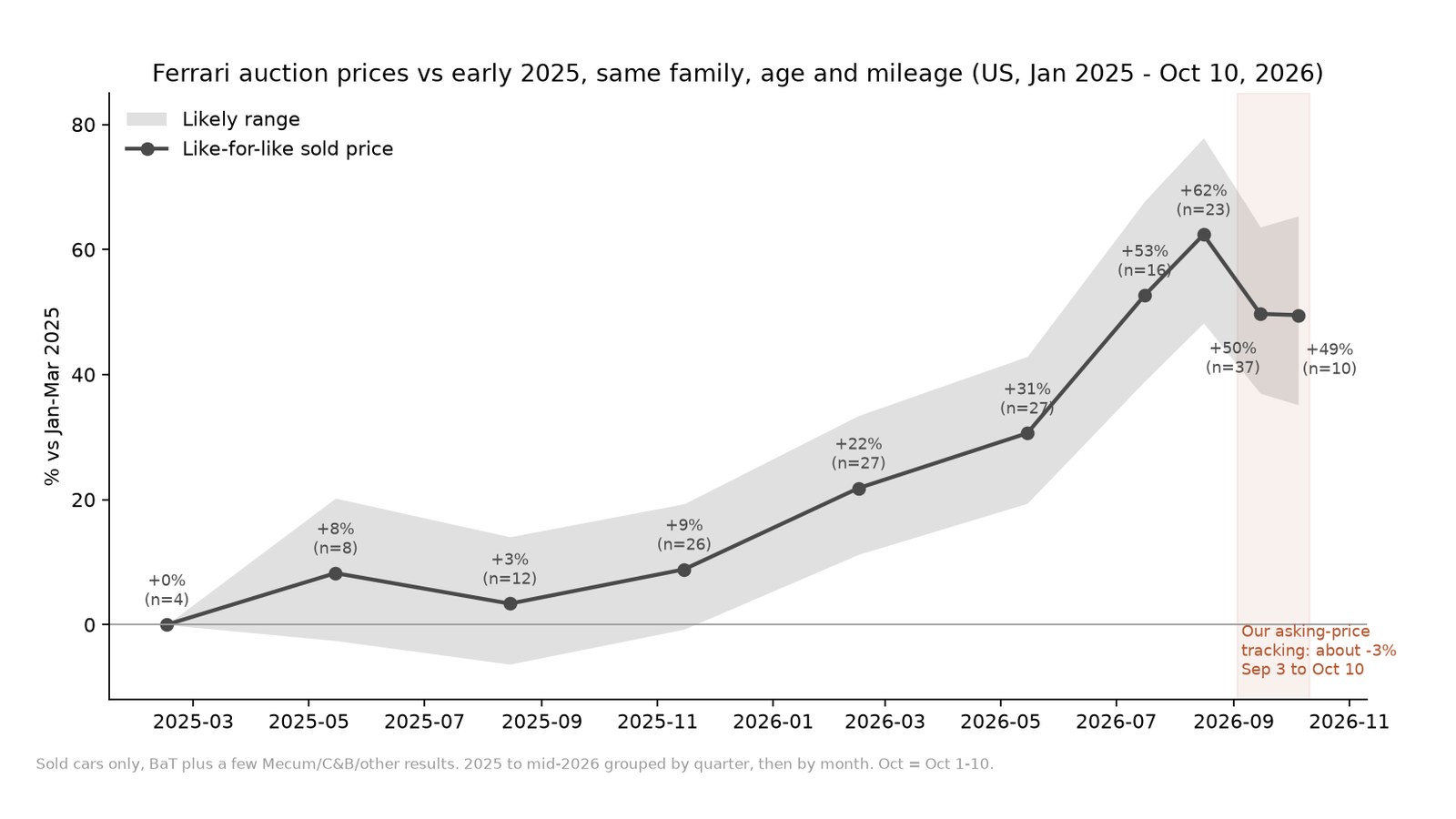
That doesn't mean tariffs explain used prices. Our Ferrari auction index rose about 60% from early 2025 to its August 2026 peak and has since eased about 8%, and that move is far bigger than any tariff. Lamborghini's used Temerarios are asking close to sticker. The tariff is one input among many.
Analysis
Our take
Tariff headlines move faster than tariff policy. Twice this year, rate increases on European and Korean cars were announced and not implemented. For an exotic buyer, the practical rule is to price off the rate in the tariff schedule, not the latest post.
The bigger effect is the one you can't see on the window sticker. Tariffs are squeezing makers' profits, and that pressure shows up in decisions: Porsche's push upmarket, Ferrari's selective price rises, Lamborghini's lower margin. Expect makers to keep passing costs on through options, special series and allocation rather than base prices.
Analysis
What it means for buyers
- Buying new: the 15% (EU) or 10% (UK) is already in today's prices. There's no reason to rush an order on tariff fears alone.
- Buying used: cars already in the US carry no new tariff. A low-mile used car can be a better deal than a new order.
- Importing a car yourself: the same rates apply by country of origin. Check the current schedule before you commit.
What to watch
- Any Federal Register notice changing the EU or UK rate. We'll update this article the day one appears.
- Porsche's decision on US production.
- Ferrari and Lamborghini price changes for the 2027 model year.