Two Ford GTs, four minutes apart: a 2005 GT closes to within $135,000 of a 2020 Carbon Series
On Oct 20, 2026, a 2k-mile 2005 Ford GT sold for $815,000 on Bring a Trailer, four minutes after a 738-mile 2020 Carbon Series sold for $950,000. One afternoon proves nothing on its own, but auction results over the past two years show the price gap between the two generations getting much smaller.
By Exotic Car TrendsPublished 7 min read
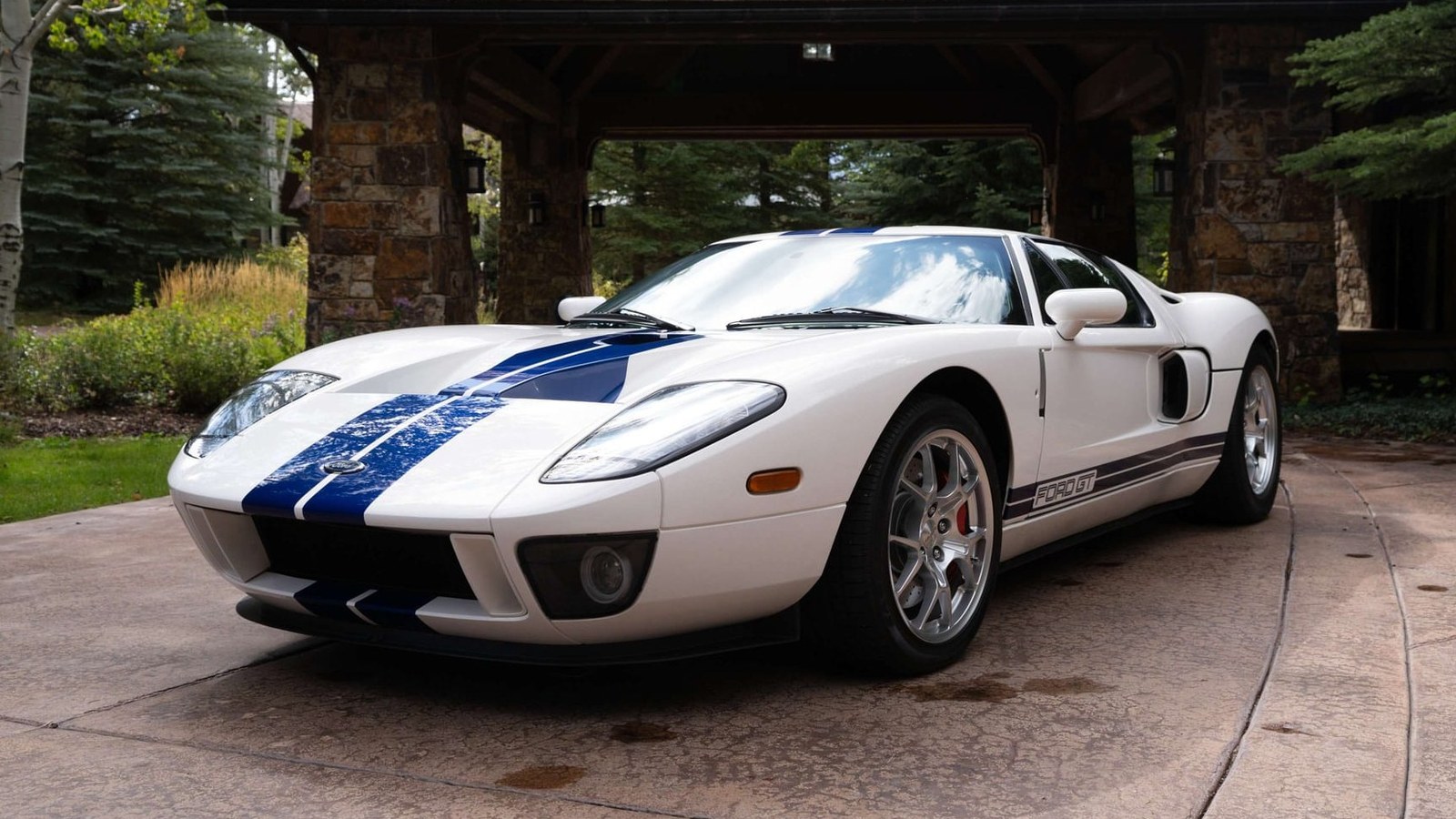
The 2k-mile 2005 Ford GT, one of two Ford GTs that sold on Bring a Trailer on Oct 20, 2026. It brought $815,000. Credit: Photo: Bring a Trailer
Two Ford GTs finished on Bring a Trailer four minutes apart on Tuesday, Oct 20, 2026. At 1:30 PM ET, a 738-mile 2020 Ford GT Carbon Seriessold for $950,000. At 1:34 PM ET, after bidding ran past the scheduled finish, a 2k-mile 2005 Ford GTsold for $815,000. That left $135,000 between a 20-year-old first-generation car with a six-speed manual and a nearly new second-generation car with a carbon-fiber body.
Both prices are BaT's winning bids and don't include its buyer's fee, which is 5% capped at $7,500. At these prices each buyer paid the full $7,500 on top, so $822,500 for the 2005 car and $957,500 for the 2020 car. The gap is $135,000 either way.
One afternoon doesn't set a price. But it fits what public auction results have shown over the past two years: first-generation (2005–06) prices have climbed fast, while regular second-generation (2017–22) cars have stayed about where they were. The newer car still costs more. It just doesn't cost nearly as much more as it used to.
The two cars
2005 Ford GT, about 2,000 miles: $815,000, 65 bids. Centennial White with blue stripes over Ebony leather, with all four factory options: BBS forged wheels, painted stripes, red brake calipers and a McIntosh stereo. BaT says it has been registered to the seller and her partner since new. It was offered from Carbondale, Colorado, with a clean Carfax and a clean Colorado title, and the seller says the airbag inflators were replaced under recall in 2018. (BaT listing)
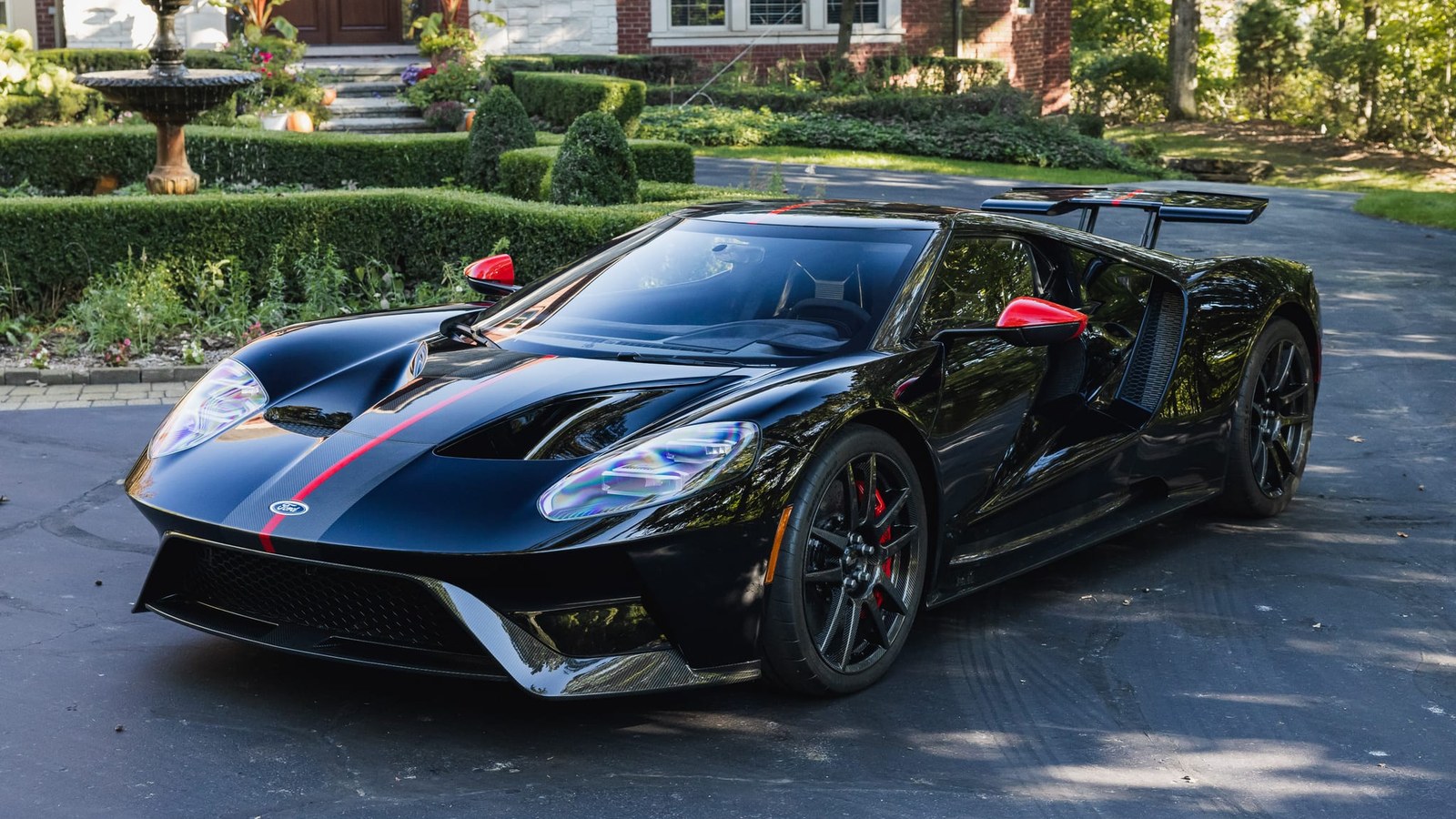
2020 Ford GT Carbon Series, 738 miles: $950,000, 13 bids. Shadow Black with a red stripe over a carbon interior, with the Carbon Series package and the $20,000 Carbon Series Graphics package, which matches the mirror caps and brake calipers to the stripe. Bought new by the seller and offered from Clarkston, Michigan, it has an Akrapovič titanium exhaust and came with the window sticker, service records and an accident-free Carfax. (BaT listing)
The 738-mile 2020 Ford GT Carbon Series sold for $950,000, four minutes before the 2005 car. Credit: Photo: Bring a Trailer
How the bidding went
The two auctions played out very differently. The 2005 car went into its final day at $558,000 with 10 bids and stood at $636,000 with 22 bids on Tuesday morning. Then 43 more bids added $179,000, and the auction ran about nine minutes past its scheduled 1:25 PM ET finish. The Carbon Series went into its final day at $875,000 with 6 bids, and 7 more bids took it to $950,000.
Against dealer prices, the two results pointed in opposite directions. On Oct 21, 2026, the middle asking price for regular first-generation cars at US dealers was about $780,000 (23 cars, not counting the one Heritage Edition listed), so the 2005 car sold about 4% above it. The middle asking price for regular second-generation cars was about $1,065,000 (13 US cars, Heritage Editions left out), so the Carbon Series sold about 11% below it. Asking prices aren't sale prices. Still, the dealer gap between the two generations is about $285,000, roughly twice what separated these two cars at auction. (Gen 1 prices, Gen 2 prices)
The bigger picture: first-gen prices moved, second-gen didn't
We compared public auction sales in two windows. For regular first-generation cars with under 5,000 miles (Heritage Editions left out), the middle of 10 sales from October 2024 through March 2025 was $471,500. From April through October 2026, including Tuesday's car, the middle of 14 sales was $712,500, about 51% higher. Some auction houses include their buyer's premium in the published price and BaT doesn't, so we also checked BaT on its own: the middle of its 6 sales in the later window was also $712,500.
Regular second-generation cars (Heritage Editions and Liquid Carbon cars left out, Carbon Series included) went slightly the other way. The middle of 7 sales was $895,000 in the first window and $863,500 across 7 sales in the second, including Tuesday's $950,000 car. The distance between the two generations' middle sale prices shrank from about $424,000 to about $151,000.
Hagerty's valuations point the same way. In its July 2026 price guide update, Hagerty listed the 2005–06 GT among the quarter's most notable gainers, with an average increase of 25% and 54% for Heritage Editions. It wrote that a no-mile car with all four options now costs more than $700,000, which it called "approaching new (2017–22) GT money." A second Hagerty report at the end of July put the rise for a car in excellent (#2) condition at 35%, from $521,000 to $704,000, and called a 35% jump in one quarter "new territory." The two figures differ because they measure different things: one is Hagerty's average change for the model, the other is the value of an excellent car. Ford Authority reported the same rise in August.
Where the two generations already overlap
Some first-gen cars have already sold for more than some second-gen cars this year, though the second-gen cars in question had more miles, and in one case damage:
Second-gen: an 8,000-mile, one-owner 2019 sold for $755,000 on BaT on Apr 16, 2026 (listing). A 2017 brought $775,000 including buyer's premium at Broad Arrow's Quail auction on Aug 13, 2026 (lot). A 3,900-mile 2017 sold for $721,000 at no reserve on BaT on Aug 21, 2026, but it had unrepaired rear damage from a low-speed collision, and the dealer listed parts quotes totaling $91,000 (listing).
First-gen: a 166-mile 2005 with all four options sold for $802,000 on BaT on Sep 21, 2026 (listing). The ex–Mac Davis 2006, with a dashboard signed by Carroll Shelby, brought $815,000 on Sep 18, 2026 (listing). Tuesday's 2k-mile car brought $815,000.
So the $721,000 2017 isn't a fair measure of a clean second-gen car. It's closer to a price for a damaged one. The cleaner comparison is Tuesday's: a well-kept, low-mile car from each generation, sold on the same site within minutes.
Heritage and Liquid Carbon cars: a separate tier
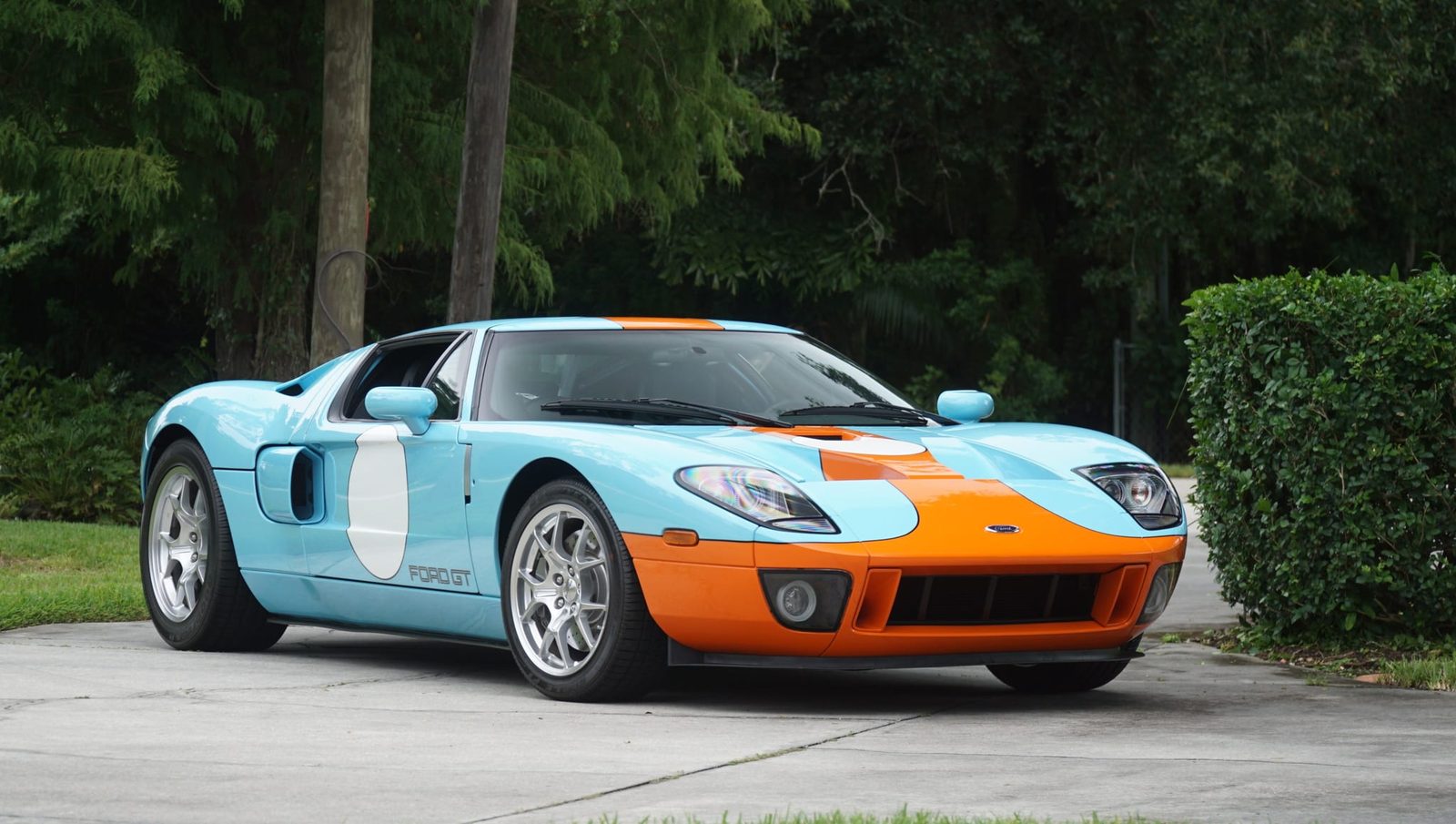
Special editions trade in their own market and aren't part of the comparison above. On BaT this fall, a 37-mile 2019 '68 Heritage Edition sold for $1,566,000 on Sep 25, 2026 (listing), and a 17-mile 2022 Liquid Carbon car sold for $1,806,900 on Oct 16, 2026 (listing). For first-gen cars, an 8-mile 2006 Heritage Edition brought $2,101,000 in August (listing), while a 554-mile car was bid to $1.4 million on Oct 19, 2026, and didn't sell. We covered that one in our Heritage mileage story.
Analysis
Our take
The gap is closing, not closed. A regular second-gen GT still costs more at auction and at dealers. What has changed is how much more. Between October 2024 and March 2025, the middle regular second-gen sale was almost twice the middle low-mile first-gen sale. Since April 2026 it has been about 20% more.
Rarity alone isn't setting these prices. Ford planned about 1,350 second-gen cars and built 4,038 first-gen cars, yet the older car is the one rising. It's also the one with a supercharged V8 and a manual gearbox, and analog cars are what the collector market has paid up for in 2026.
Keep the sample sizes in mind. Each window has 7 to 14 sales, and a single extra bidder can swing a result by six figures. Tuesday's 2005 car added $179,000 on its last morning. If a few more regular second-gen cars sell near $950,000, the gap will look wider again.
Analysis
What it means for buyers
Shopping for a first-gen car: low-mile, well-optioned cars now sell in the $700,000s and $800,000s at auction, and the middle dealer asking price is about $780,000. Hagerty says you'll be hard-pressed to find a decent one under $500,000.
Choosing between generations: at auction, a low-mile 2005–06 car and a regular second-gen car can now cost about the same. Pick the car you'd rather drive: the supercharged V8 and manual, or the carbon-bodied twin-turbo V6 with the dual-clutch.
Selling a regular second-gen car: dealer asking prices around $1.07 million sit well above where regular cars have been selling at auction in recent months. Set your price with recent sales in mind, not asking prices.
Check the paperwork: look up the VIN on NHTSA's recall site. First-gen cars had an airbag inflator recall (Tuesday's car had the work done in 2018), and many 2017–18 second-gen cars had a rear-wing hydraulic recall.
What to watch
Thursday, Oct 22, 2026: a 32-mile 2005 Ford GT ends on BaT at 2:14 PM ET. A near-delivery-mile car will show where the top of the regular first-gen market is right now.
Tuesday, Oct 27, 2026: a 559-mile 2006 Heritage Edition ends on BaT, a second chance to read the Heritage market a week after the 554-mile car didn't sell.
Wednesday, Oct 28, 2026: a 5k-mile 2005 Ford GT with BBS wheels, stripes and McIntosh stereo ends on BaT. It will be a check on how much those extra miles cost.
Hagerty's next quarterly update: whether the first-gen rise continues, and whether second-gen values start to move.
A 554-mile 2006 Ford GT Heritage Edition was bid to $1.4 million on Bring a Trailer on Oct 19 and didn't meet its reserve. In August, an 8-mile Heritage sold for $2,101,000. Here's what a few hundred miles seem to be worth, and why the gap isn't only about miles.
Updated Oct 20, 2026 · Published Oct 19, 2026 · 5 min read
The most talked-about new supercars of 2026 share something old-fashioned: a clutch pedal. Here's what's real and what's simulated, what they cost, how few will be built, and what the market says analog cars are worth.
Updated Oct 21, 2026 · Published Oct 11, 2026 · 8 min read
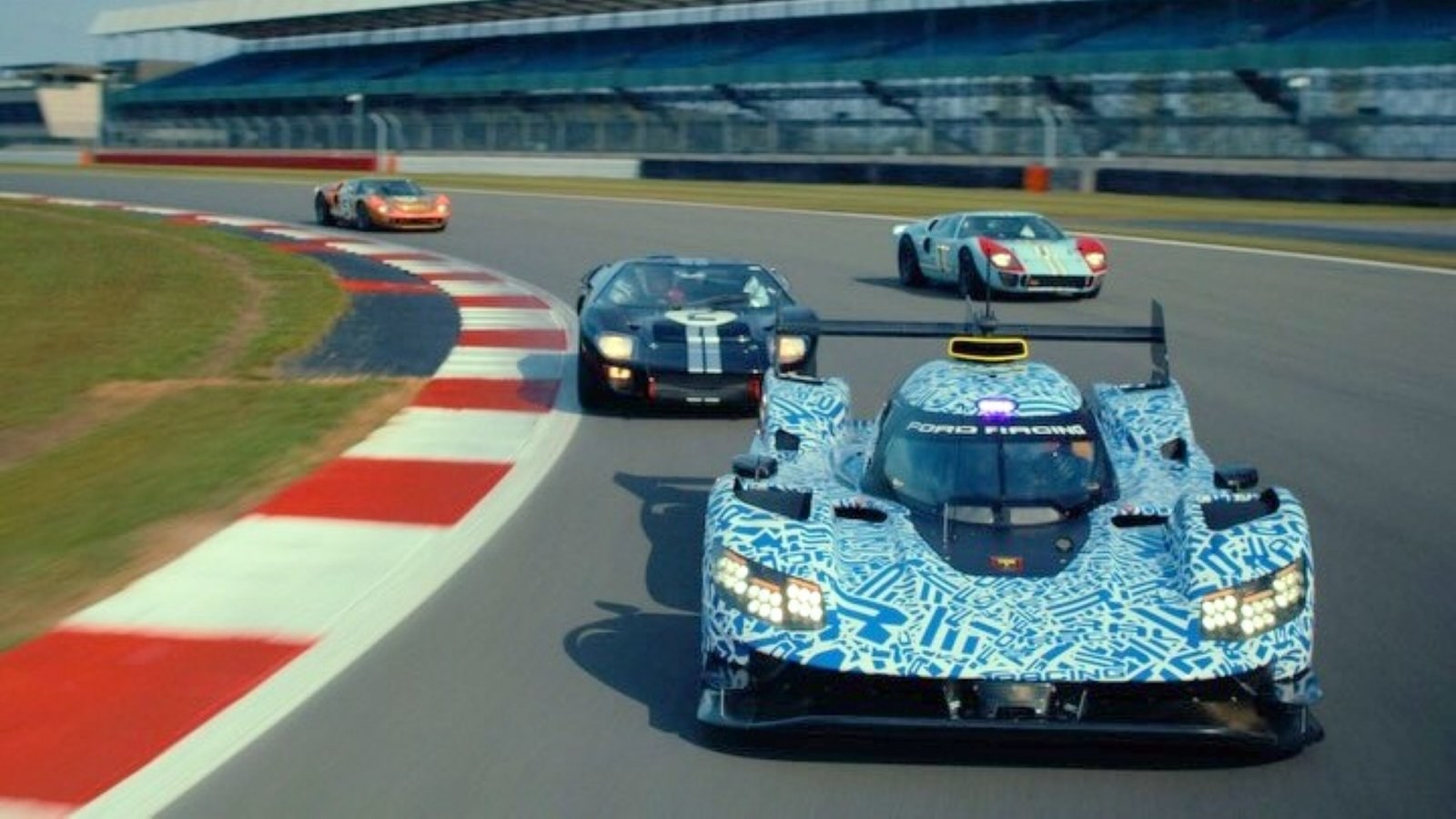
A Ford Racing teaser puts the new prototype ahead of its Le Mans-winning ancestors at Silverstone. The car, powered by a 5.4-liter Coyote-based V8, races for the first time in Qatar in March 2027.