Ferrari 296 Challenge Stradale Revealed: No Hybrid, 670 Horsepower
Ferrari unveiled the 296 Challenge Stradale in Barcelona on Nov 21, 2026: a road-legal 296 with the hybrid system taken out, 670 horsepower from the twin-turbo V6 alone, a 1,330 kg (2,932-pound) dry weight and 1,360 pounds of downforce. It's a regular production model, not a limited run, and Ferrari calls it the car in its range with the most direct link to a race car.
By Exotic Car TrendsPublished 9 min read
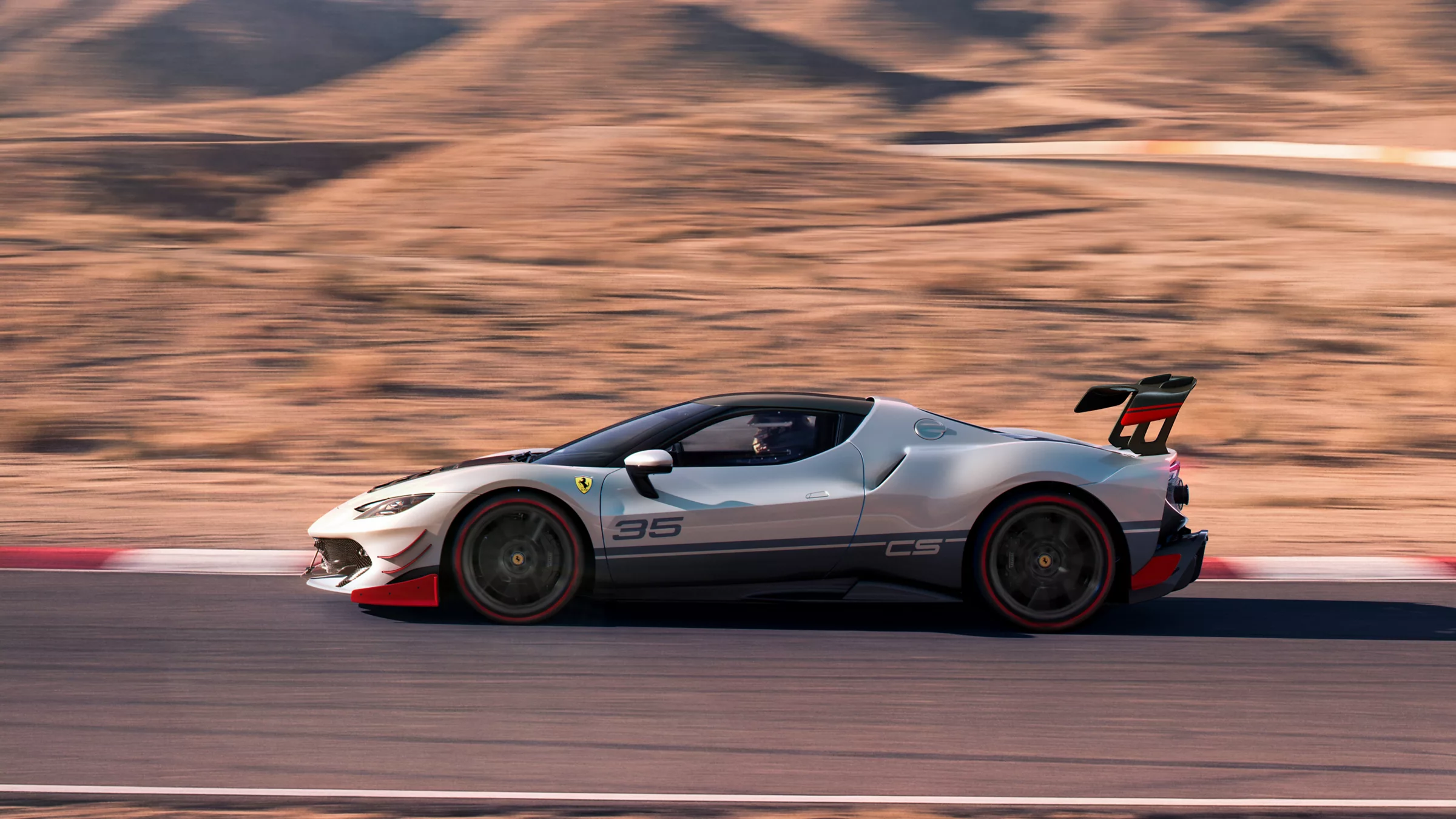
The new 296 Challenge Stradale: no hybrid, 670 horsepower and a wing from the Challenge Evo race car.
The hybrid is gone. Ferrari pulled the covers off the 296 Challenge Stradale at its Finali Mondiali at the Circuit de Barcelona-Catalunya on Nov 21, 2026, and it is the most stripped-down, race-bred road car Maranello has sold in years: no battery, no electric motor, 670 horsepower from the 3.0-liter twin-turbo V6 alone, a 1,330 kg, or 2,932-pound, dry weight, and a fixed rear wing lifted from the race car. Ferrari calls it "the Ferrari currently in the range that can offer the most direct link to a race car" (Ferrari).
Better still for anyone who has ever been told to wait for an allocation, it is not a limited edition. Car and Driver, Road & Track and Top Gear all report that it joins the regular range, which means a buyer does not need a long Ferrari history to order one. It is the first Challenge Stradale since the 360 Challenge Stradale of the early 2000s, and it was revealed alongside the new 296 Challenge Evo race car it was developed with.
The engine is the 2,992 cc, 120-degree "hot V" twin-turbo V6 from the 296, in the combustion-only form used in the 296 Speciale. Ferrari rates it at 670 cv at 8,000 rpm, which it quotes as 670 hp; by the US measure that is about 661 horsepower (Auto Express). Torque is 740 Nm, or 546 pound-feet, at 6,250 rpm, and it revs to 8,500 rpm. Ferrari says it completely recalibrated the V6 to work without electric help: boost pressure and cam phasing were reworked for faster response, and for the same maneuver the engine now builds dynamic torque more than 32 percent faster than in the 296 GTB (Ferrari).
Advertisement
The turbochargers and their heat shields come from the 296 Challenge race car, and the twin exhaust tips are enlarged versions of the racer's. The eight-speed F1 dual-clutch gearbox runs two personalities: at high loads it uses race-derived logic with shifts in the region of 170 milliseconds, while at low and medium revs it switches to a smoother calibration taken from the SF90 XX Stradale. Taking out the hybrid also forced some firsts. With no high-voltage system, the car gets a mechanical air-conditioning compressor and a Belt Starter Generator, a combined starter and alternator, which Ferrari says is an absolute first for one of its road cars (Ferrari).
It should sound properly angry, too. Ferrari reworked the "hot tube" that pipes engine sound into the cabin for raspier, higher harmonics all the way to the limiter, and it will offer a track-only exhaust on request that official dealers can fit and remove, free of road homologation limits.
The official numbers
Power: 670 cv (670 hp in Ferrari's figures, about 661 horsepower by the US measure) at 8,000 rpm
Torque: 740 Nm, or 546 pound-feet, at 6,250 rpm; 8,500 rpm limit
Transmission: eight-speed F1 dual-clutch, rear-wheel drive
Dry weight: 1,330 kg, or 2,932 pounds, 140 kg (309 pounds) less than a 296 GTB; 1.98 kg per cv
0 to 62 mph: 2.8 seconds; 0 to 124 mph: 7.9 seconds; top speed: over 186 mph
Braking: 124 mph to zero in 101 meters, or 331 feet
Downforce: 617 kg, or 1,360 pounds, at 155 mph, 72 percent more than a 296 GTB; the rear wing alone makes 270 kg, or 595 pounds
Fiorano lap: 1 minute 18.5 seconds
Size: 184.2 inches long, 80.3 inches wide, 51.2 inches tall, on a 102.4-inch wheelbase
Tires: Pirelli P Zero R or P Zero Trofeo RS semi-slicks, 245/35 R20 front and 305/35 R20 rear
Brakes: carbon-ceramic, 398 x 38 mm front and 380 x 34 mm rear
Figures from Ferrari's model page and press release; US unit conversions are ours. A few outlets have run slightly different comparison figures (one puts the saving over the 296 GTB at 328 pounds and quotes peak torque at a different rpm), so we have stuck to Ferrari's own numbers.
Race-car aero you can drive to the track
Aero is where the Challenge Stradale and the Challenge Evo racer are closest. An extended splitter, curved flicks on the bumper, side wings and endplates work with a fully enclosed underbody, three pairs of vortex generators at the front and two at the rear, and an "aero damper" that keeps downforce steadier as the nose pitches under braking. The radiators sit ahead of the front wheels, and their hot air exits through the big technical insert in the hood and is steered over the windshield and roof, away from the wing (Ferrari, Car and Driver).
One detail matters for North American buyers. According to Motor1, the fixed wing is not swan-neck mounted like the race car's; its supports attach from underneath to meet road homologation rules, particularly in the United States. Top Gear notes that Ferrari still kept a small front trunk, 67 liters, flanked by the radiator ducts.
Stiffer, harder, less help
The springs are roughly twice as stiff as before, so Ferrari added a helper spring in series with each main spring, a design taken straight from the Challenge Evo. Against a 296 GTB, Ferrari claims 7 percent more lateral grip, 34 percent better stability and a 68 percent lower roll gradient. The semi-active dampers have their own calibration, and the electronics include predictive slip control tuned for track use, which Ferrari says is a first for one of its road cars, plus the F80's FIVE vehicle-state estimator and ABS Evo in every Manettino setting (Ferrari). With no regenerative braking to lean on, the carbon-ceramic brakes are bigger and better cooled, and the pedal is firmer with less travel.
Ferrari is not pretending this is a soft car. "This is not a car for everyone. If you want to slide, you don't want this car," senior product manager Matteo Turconi told Top Gear. "This is like going back 30 years, it's more precise, more challenging, with less assistance." He also told Top Gear the Challenge Stradale is quicker than the 296 Speciale at Fiorano and tighter tracks, while the more powerful hybrid Speciale is quicker at fast circuits such as Monza. Road & Track and Auto Express put the Fiorano gap at half a second.
A stripped cabin, by choice
Inside, the layout follows the 296 Speciale, but the door panels are one-piece carbon with no armrests or storage pockets, and the optional carbon tubular seats are 25 percent lighter than standard racing seats (Corriere della Sera, Motor1). Top Gear says the seats come from the F80. For the first time on a regular-production Ferrari, buyers can also ask for an even barer cockpit that removes trim and carpet to leave parts of the chassis exposed. It is not a gutted race car, though: adaptive cruise control, automatic emergency braking, lane keeping and blind-spot detection all stay (Ferrari).
Head-on, the splitter and hood vents dominate.
The rear: twin tips set in a black mesh panel, with the diffuser below.
From above and behind, the wing and engine cover.
Twin exits and the full-width diffuser on track.
Cornering on the press-launch track.
The 296 Challenge Stradale in the studio.
The driver's view, based on the 296 Speciale's cabin.
Carbon-shell seats with harnesses.
The center tunnel and seat bases, with trim kept to a minimum.
Design, colors and the Challenge Evo
Ferrari's design studio under Flavio Manzoni set out to strip visual mass and make the technical parts readable. The hood insert, a wing slung between two bumper-mounted "claws," black metal mesh at the tail that Auto Express says nods to the 2003 360 Challenge Stradale, and seven split-spoke forged wheels all serve the aero. There is a dedicated livery, three matte wheel finishes, and colored tire inserts through Pirelli's Color Edition program (Car and Driver, Corriere della Sera).
Its twin, the 296 Challenge Evo, is a track-only racer for Ferrari's one-make series. It makes 700 cv at 7,500 rpm through a seven-speed gearbox, weighs the same 1,330 kg dry, adds 12 percent more peak downforce than the current 296 Challenge, and will debut in Ferrari Challenge Europe and North America in 2027 (Ferrari, Dailysportscar).
Price and availability
Ferrari has not announced US pricing. In Italy, the 296 Challenge Stradale is listed at about 291,000 euros, which Il Sole 24 Ore says is 1,000 euros less than a 296 GTB; Corriere della Sera puts it at 291,500 euros. Top Gear says UK pricing lands almost exactly in line with an entry 296 GTB. That's the striking part: the hardcore, lighter, quicker-at-Fiorano 296 costs about the same as the regular one in Europe.
On timing, reports differ. Corriere della Sera says deliveries start in the first quarter of 2027, while Car and Driver expects US deliveries to begin in late 2027. That likely reflects Europe first and North America later, but Ferrari has not published a US date.
Advertisement
What the teaser reports got right, and wrong
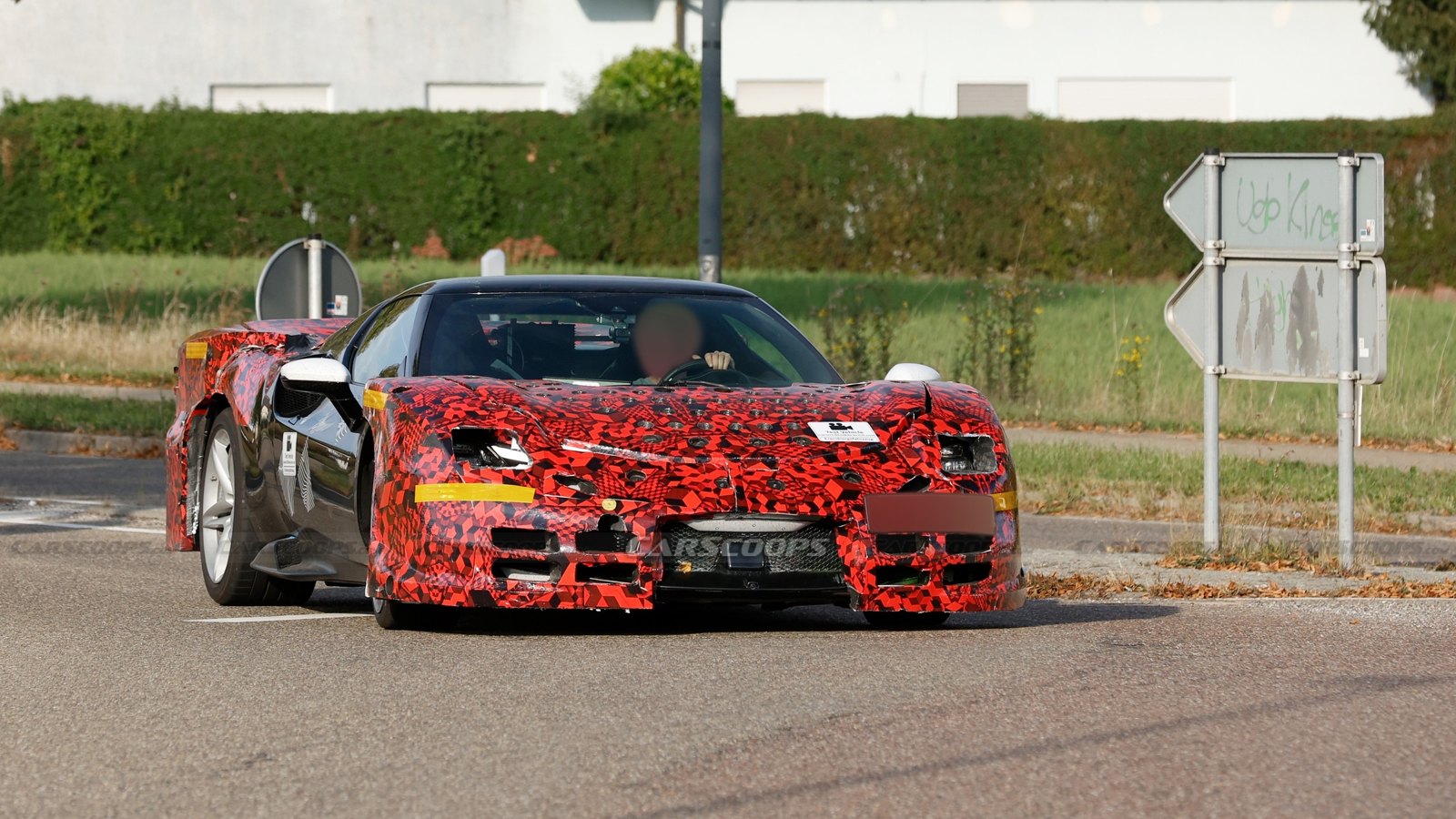
Before the reveal, our preview carried the leading reports: about 720 horsepower, about 1,300 kg dry, and a price near 320,000 euros. The recipe was right: no hybrid, a road car built from the Challenge racer, revealed in Barcelona. The numbers were not. Official power is 670 cv, not 720; dry weight is 1,330 kg, matching the race car rather than undercutting it; and the Italian price is about 291,000 euros. The spy-photo history is in our running story.
On Nov 3, we were tracking 64 296 GTBs listed in the US at a typical asking price of about $350,000 (from $289,995 to $479,900), and 66 296 GTS spiders at about $438,000, with none listed in Canada. Those are asking prices, not sales, and they mix years and mileage. Follow them on our 296 GTB price page and Ferrari dashboard.
Analysis
Our take
This is the 296 we hoped for. Every road-going 296 until today has been a plug-in hybrid. Ferrari took the battery out, gave up about 160 horsepower against the hybrid GTB, and made the car quicker around its own test track anyway. Making it a regular production model at roughly GTB money in Europe, instead of a sold-out special for top clients, is the biggest surprise of the day.
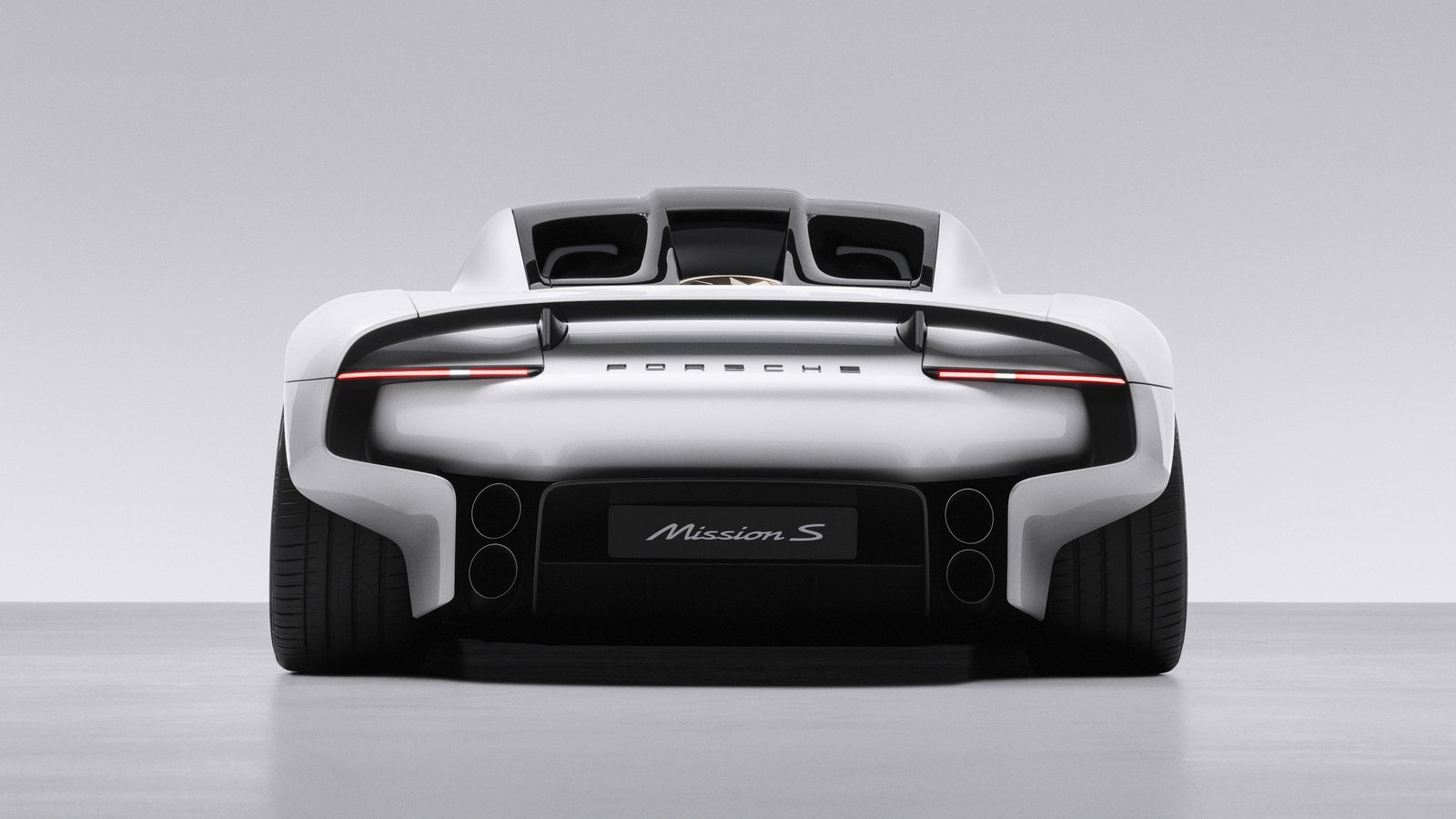
And it's part of a bigger, very welcome swing back toward the driver. Ferrari brought back a (simulated) manual with the 12Cilindri Manuale this year, the manual is back at the top end of the market, and Porsche's Mission S skipped the center screen for five round analog dials. Now Maranello is pulling a hybrid out of a car to make it rawer. Ferrari's product chief Gianmaria Fulgenzi did rule out a manual for this one, telling Corriere della Sera that the paddles are much faster (our translation), but the early reaction says the message landed: Car and Driver called it "the purest Prancing Horse in years," and Top Gear called it "the coolest 296 yet." More of this, please. See also our story on the return of the manual.
What it means for buyers
In the US and Canada, the key number is still missing: Ferrari's North American price. If it lands near the 296 GTB's, as it does in Europe, the Challenge Stradale becomes the obvious pick for drivers who want a track-capable new Ferrari without the allocation game. Because it is not limited, do not expect instant flipping premiums like a special series. The more interesting question is used 296 GTB and GTS asking prices, which we will watch as order books open.
What to watch
Ferrari's US and Canadian pricing and the first US delivery date.
Whether the 296 Challenge Stradale counts as one of the two new models CEO Benedetto Vigna promised before year end, and what the other one is. Nothing else new for the road had been shown at Barcelona as of Nov 21.
First drives, and how the US-spec car handles the wing, lighting and emissions rules.
How used 296 GTB and GTS asking prices move now that a lighter, non-hybrid 296 is on order sheets.
Ferrari unveiled the hybrid-free 296 Challenge Stradale in Barcelona on Nov 21, 2026, with 670 horsepower and a 1,330 kg (2,932-pound) dry weight, below the 720 horsepower and 1,300 kg that reports had predicted. The second new Ferrari CEO Benedetto Vigna promised before year end has not been shown yet.
Updated Nov 21, 2026 · Published Nov 3, 2026 · 6 min read
Camouflaged 296 prototypes point to a roadgoing, hybrid-free Challenge Stradale, and a new report says it could debut Nov 21 at Ferrari's Finali Mondiali in Barcelona from about €320,000. Here's what's confirmed, what's rumored, and what our 296 asking prices look like today.
Updated Oct 31, 2026 · Published Oct 12, 2026 · 7 min read
Porsche pulled the cover off the Mission S on a Queens pier on October 15. It's a design study for a permanent mid-engined model line above the 911, with a 917-style cooling fan, 928-style wheels and no center screen. Engine, power and price are still unannounced, but CEO Michael Leiters says it will offer gasoline, hybrid or plug-in power, no EV, could take a manual or PDK, and will cost 'much more' than a 911.
Updated Nov 20, 2026 · Published Oct 15, 2026 · 10 min read